

Why Dog Dental Health Deserves More Attention
According to the American Veterinary Medical Association, periodontal (gum) disease is the most common clinical condition in adult dogs — yet it's largely preventable with consistent home care. The trouble is that dental disease progresses silently. Dogs rarely stop eating or visibly complain, so owners often miss the warning signs until significant damage has already occurred.
What starts as plaque buildup can harden into tartar within days, leading to gingivitis, tooth root infections, and eventually tooth loss. More concerning to many vets is what happens beyond the mouth: chronic oral bacteria can enter the bloodstream and contribute to inflammation affecting the heart, kidneys, and liver. Oral health, in other words, is a systemic health issue — not just a cosmetic one.
Dental problems are also among the issues most commonly skimped on at annual checkups. Our guide on things owners overlook at annual vet visits covers why oral exams deserve a dedicated conversation with your vet every year.
80%
Dogs with dental disease by age 3
The American Veterinary Medical Association estimates that by age three, approximately 80% of dogs show some sign of periodontal disease.
~70%
Tooth surface unreachable without anesthesia
Veterinary dental specialists note that roughly 60–70% of each tooth lies below the gumline, making professional subgingival cleaning essential.
Best Practices for At-Home Dental Care
Building an effective dental routine doesn't require expensive equipment — it requires consistency. The practices below represent what veterinary dental specialists consistently recommend for everyday owners.
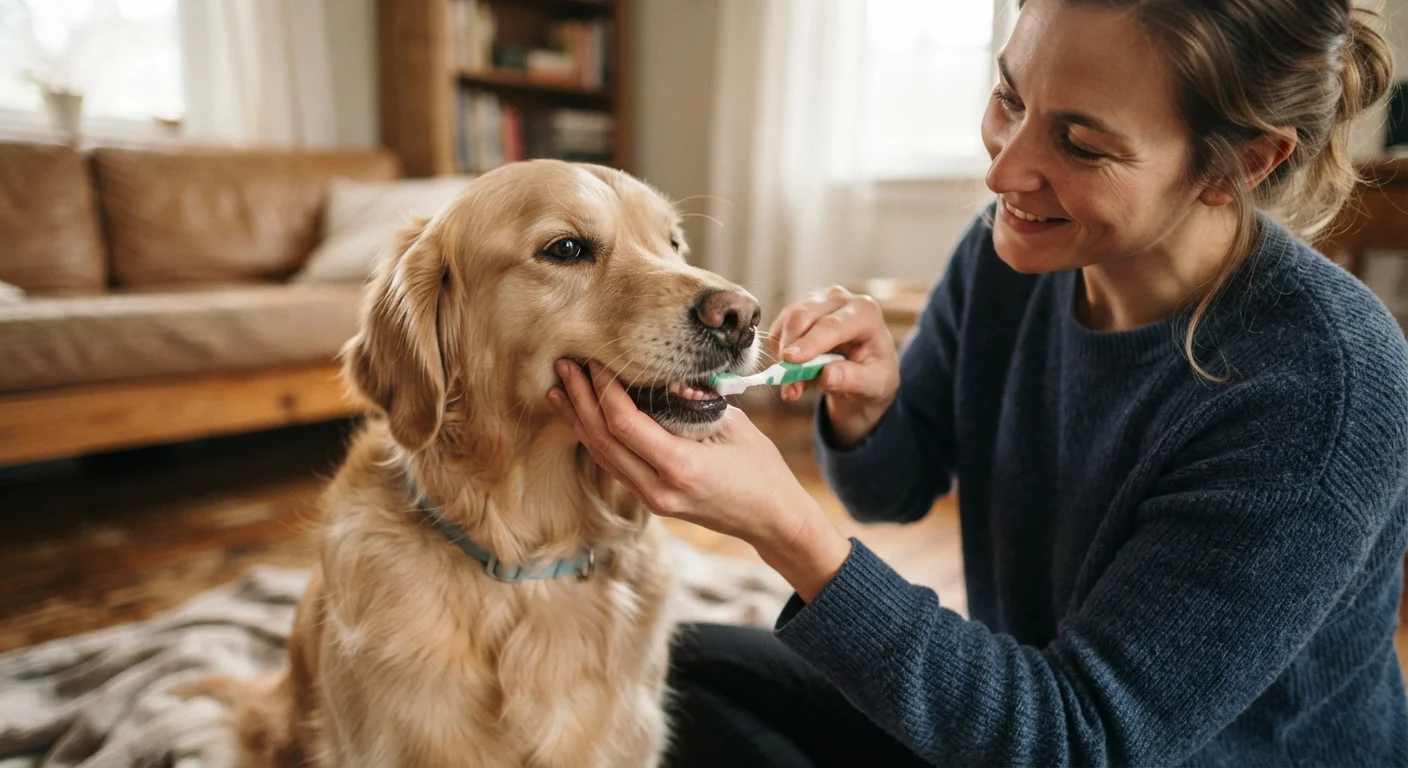
Brush your dog's teeth daily using a dog-safe enzymatic toothpaste
Daily mechanical removal of plaque is the single most effective home intervention for preventing periodontal disease. Enzymatic toothpastes are specifically formulated to work without rinsing — safe to swallow and palatable for dogs. Human toothpaste contains xylitol or fluoride, both of which are toxic to dogs.
Introduce brushing gradually, using positive reinforcement at every step
Dogs that resist tooth brushing are usually dogs that were introduced to it abruptly. A slow, reward-based introduction — touching the muzzle, then lips, then teeth over several days — builds tolerance and often makes daily brushing genuinely easy within a few weeks.
Use dental chews that carry the Veterinary Oral Health Council (VOHC) seal
Not all dental chews deliver meaningful plaque reduction. The VOHC seal indicates a product has passed independent testing for efficacy. Chews that are too hard — harder than a thumbnail — can fracture teeth, a surprisingly common veterinary emergency.
Schedule professional dental cleanings as recommended by your vet
Home care slows tartar accumulation but cannot reverse it once hardened or address subgingival disease. Professional cleanings under anesthesia allow full assessment including dental X-rays, which catch problems invisible during a basic oral exam.
Monitor your dog's mouth regularly for early warning signs
Catching dental problems early — before infection spreads to the root or jawbone — significantly reduces the complexity and cost of treatment. Most owners only notice dental disease at an advanced stage because they rarely look inside their dog's mouth.
Consider diet's role in dental health when making feeding decisions
Dry kibble provides slightly more mechanical abrasion than wet food, though no diet alone provides sufficient plaque control. Some prescription dental diets are specifically engineered with larger kibble sizes and fiber matrices that scrub the tooth surface more effectively — ask your vet if one is appropriate.
What Professional Cleanings Actually Involve
Even the most diligent brusher can't remove tartar that has already mineralized onto the tooth surface or clean below the gumline. That's why professional dental cleanings — performed under general anesthesia — remain an essential part of dog dental care, not a last resort.
During a professional cleaning, a veterinarian or veterinary technician scales both the visible tooth surface and the subgingival (below the gum) areas, where periodontal disease begins. Anesthesia isn't optional here: it allows a thorough, stress-free cleaning and the use of dental X-rays, which can reveal bone loss, root abscesses, and other problems invisible to the naked eye.
A Note on Anesthesia-Free Dental Cleanings
Anesthesia-free dental scaling has grown in popularity, but major veterinary organizations — including the American Animal Hospital Association — do not recommend it as a substitute for professional cleaning. Without anesthesia, it is not possible to safely scale below the gumline or take diagnostic X-rays, meaning the most clinically significant disease is left untreated. If cost or anesthesia risk is a concern, discuss it openly with your vet; there are often options to manage both.
How often your dog needs a professional cleaning depends on breed, size, diet, and home care habits. Small breeds tend to accumulate tartar more quickly and may need cleanings more frequently. Your vet is the best judge of your dog's individual schedule — ask for a dental grade (a standardized 0–4 scale vets use to assess disease severity) at each visit.
Quick Wins You Can Start Today
If you've never built a dental routine before, these immediate actions will move the needle on your dog's oral health right away.
Remember that oral health fits into the broader picture of your dog's overall wellbeing. Just as you'd watch for subtle pain signals, foul breath, pawing at the mouth, or reluctance to chew hard food can all be early indicators of dental discomfort worth discussing with your vet.
This article is for general informational purposes only and is not a substitute for professional veterinary advice. Always consult a licensed veterinarian for guidance specific to your dog's health needs.
The content on this site is for informational purposes only and is not a substitute for professional advice. Always consult a qualified professional for guidance specific to your situation.