

Why Solo Cats Need Active Enrichment
In the wild, cats spend a significant portion of their day hunting, exploring, and problem-solving. Even a well-fed, comfortable house cat carries those same instincts. For a cat living alone — without feline companionship to wrestle with, chase, or groom — the responsibility for meeting those needs falls squarely on you and your home setup.
Boredom in cats isn't just a comfort issue. Understimulated cats may develop stress-related behaviors like over-grooming, excessive vocalization, destructive scratching, or compulsive eating. Some become lethargic or clingy; others become aggressive or unpredictable. Enrichment isn't a luxury — it's a core part of daily care for a solo cat.
If you've ever wondered whether adding a second cat might help, that's worth considering carefully. Our article on managing multi-cat households walks through the real tradeoffs. But for many single-cat homes, the strategies below can make a solo life genuinely rich and satisfying.
Schedule daily interactive play sessions
Play is the single most direct way to satisfy a cat's predatory instincts. Wand toys with feathers, small crinkle balls, or laser pointers (always end with a tangible toy so the cat can "catch" something) mimic prey movement and engage hunting drive. Aim for two sessions of 10–15 minutes each day rather than one long session. Consistency matters — cats develop expectations and feel more secure when play happens on a predictable schedule.
Two short daily play sessions outperform one long session for mental satisfaction.
Use puzzle feeders and food-dispensing toys
Turning mealtime into a mental challenge is one of the most effective enrichment strategies available. Puzzle feeders, lick mats, and food-dispensing balls slow eating and require problem-solving. This mimics the effort a cat would naturally exert to obtain a meal and provides cognitive engagement throughout the day. Start with easier puzzles and gradually increase difficulty as your cat gains confidence. Even hiding small portions of dry food around the home encourages foraging behavior.
Puzzle feeders satisfy both the body and the mind during every mealtime.
Create vertical space and climbing opportunities
Cats feel safest when they can survey their territory from above. Cat trees, wall-mounted shelves, and cleared-off furniture surfaces all give a solo cat the ability to move through different elevations and claim vantage points. Vertical space also functions as exercise — climbing and jumping engage muscles and provide physical stimulation. Multiple perches at different heights mean your cat can choose where they feel most comfortable at any given time.
Vertical space meets a cat's need for safety, territory, and physical exercise at once.
Maximize window access with safe bird or squirrel viewing
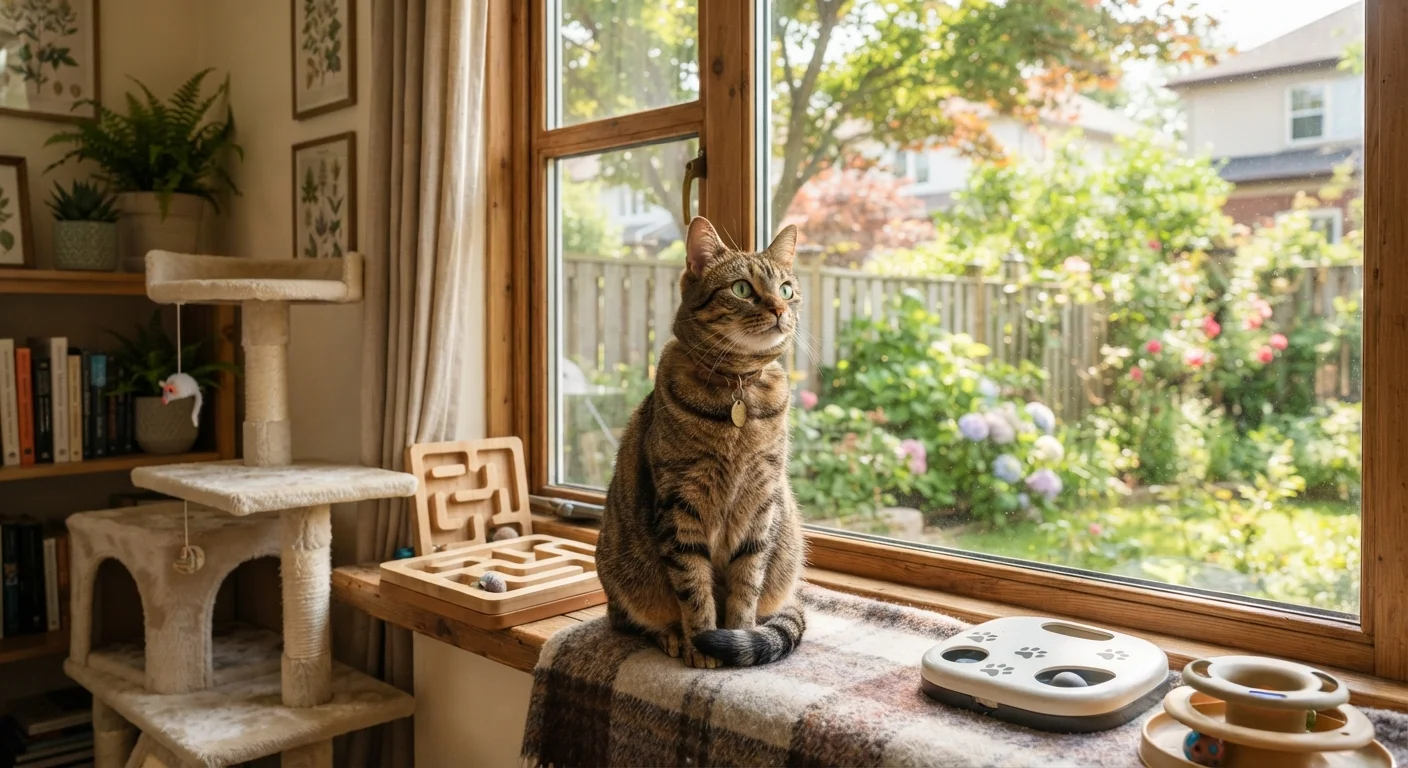
A window with an interesting outdoor view is sometimes called "cat TV" — and for good reason. Watching birds, squirrels, or even passing pedestrians engages a cat's visual tracking instincts for extended periods. A stable perch or padded shelf at windowsill height makes the view accessible and comfortable. If outdoor access is relevant to your situation, our overview of indoor vs. outdoor cat tradeoffs can help you weigh the options thoughtfully.
A well-positioned window perch can occupy a solo cat for hours each day.
Rotate toys regularly to maintain novelty
Cats habituate quickly to familiar objects — a toy that excited them last week may be completely ignored today. Rotating a collection of toys by putting some away and reintroducing them periodically restores novelty without constant spending. Aim to swap out toys every few days. Introducing new textures, sounds, or scents (such as a toy lightly rubbed with dried catnip or silvervine) can also refresh interest in existing items.
Rotating toys regularly makes old items feel new again and keeps curiosity alive.
Offer scratching surfaces in multiple locations
Scratching is a natural, necessary behavior that serves communication, claw maintenance, and stress relief. A single scratching post tucked in a corner isn't enough for a solo cat who has full run of the home. Provide both horizontal and vertical options in areas your cat actually uses — near sleeping spots, along travel routes, and by windows. Cats that have adequate scratching outlets are less likely to redirect the behavior to furniture.
Multiple scratching surfaces placed strategically prevent both stress and furniture damage.
Try clicker training and trick learning
Training isn't just for dogs. Cats are capable of learning a variety of cued behaviors — sitting, touching a target, coming when called — and the process of learning itself provides meaningful mental engagement. Clicker training uses a sound marker paired with a small food reward to reinforce desired behaviors. Short sessions of three to five minutes, repeated two or three times a day, are ideal. Training also deepens the human-animal bond, which is especially valuable for a cat without feline companions.
A few minutes of clicker training each day provides cognitive challenge and strengthens your bond.
Building a Stimulating Life for One Cat
Consistent enrichment doesn't require a big budget or major home renovations. The key is variety and routine — cats benefit from knowing when to expect play while also encountering novelty in their environment. Start with two or three of the strategies below and build from there, paying attention to what your individual cat responds to most enthusiastically.
Observe What Your Cat Actually Enjoys
Every cat has a distinct personality — some are energetic chasers, others are methodical puzzle-solvers, and some prefer calm observation over active play. Watch how your cat responds to different enrichment types during the first few days of introducing something new. Double down on what gets genuine engagement and set aside what consistently draws no interest. Tailoring enrichment to your individual cat's preferences makes it far more effective than following a generic checklist.
For older cats, stimulation remains just as important, though the intensity should be adjusted. Our guide to senior cat care covers how a cat's needs evolve with age, including how to keep enrichment appropriate as mobility changes.
The content on this site is for informational purposes only and is not a substitute for professional advice. Always consult a qualified professional for guidance specific to your situation.