

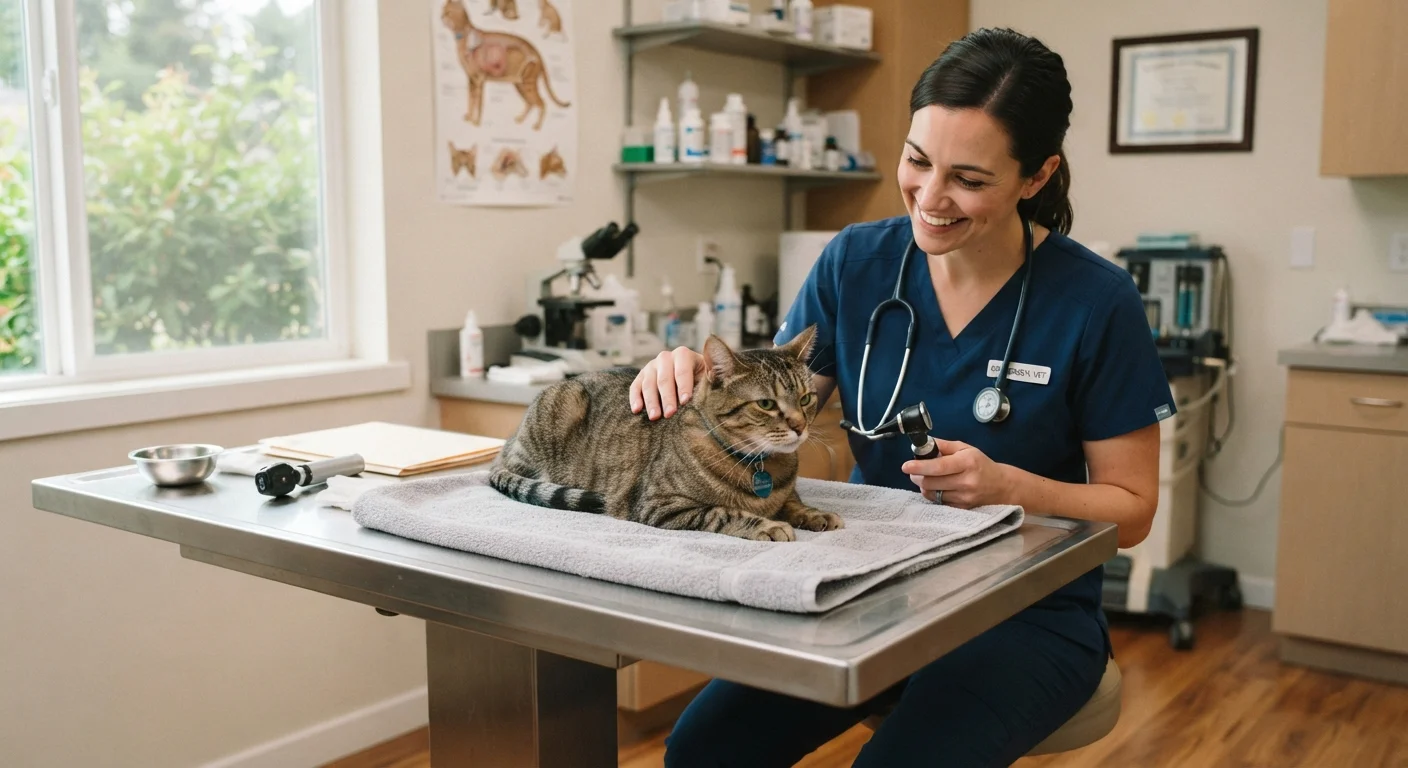
What Actually Happens During the Procedure
Both spaying and neutering are performed under general anesthesia, meaning your cat will be completely unconscious and pain-free throughout. Before surgery, your veterinarian will typically conduct a physical exam and may recommend pre-anesthetic blood work, especially for older cats, to confirm it is safe to proceed.
For a spay (ovariohysterectomy), the surgeon makes a small incision in the abdomen, removes the ovaries and uterus, and closes the incision with sutures. The procedure usually takes 20 to 45 minutes. For a neuter, one or two small incisions are made in the scrotum, the testicles are removed, and the incisions may be closed with sutures or left to heal on their own — the surgery typically takes under 15 minutes.
After surgery, your cat will spend time in recovery as the anesthesia wears off before being sent home, usually the same day. Your vet will provide specific discharge instructions covering pain management, activity restrictions, and incision care. It is worth discussing any questions at this point — or preparing them in advance at a routine vet visit.
Ask About Pre-Surgical Bloodwork
For kittens, pre-anesthetic bloodwork is not always required, but it can provide peace of mind by identifying any underlying conditions that could affect anesthesia safety. For cats over five years old or those with known health issues, many veterinarians recommend it as a standard precaution. Ask your vet what they recommend for your specific cat.
Health Benefits: Why Veterinarians Recommend It
The health case for spaying and neutering cats is well established in veterinary medicine. For female cats, spaying before the first heat cycle significantly reduces the risk of mammary (breast) cancer, which can be malignant in cats. It also eliminates the risk of pyometra — a serious, potentially fatal infection of the uterus that is relatively common in intact female cats as they age.
For male cats, neutering eliminates testicular cancer and reduces the risk of certain prostate problems. It also reduces the likelihood of fighting injuries and abscesses that result from territorial conflicts with other intact males — a meaningful benefit for cats who spend any time outdoors.
90%
Reduction in mammary tumor risk with early spaying
According to veterinary oncology guidance, spaying before the first heat cycle can reduce mammary tumor risk by approximately 91% in cats.
~85%
Male cats that stop spraying after neutering
Veterinary behavioral literature suggests urine spraying resolves in approximately 85% of male cats following neutering.
Millions
Cats entering U.S. shelters each year
The ASPCA estimates that millions of cats enter U.S. animal shelters annually, with unplanned litters being a significant contributing factor.
Beyond individual health, spaying and neutering plays a direct role in controlling cat overpopulation. Shelters across the United States take in millions of cats each year, and unplanned litters are a significant contributor. Sterilizing your cat is one of the most impactful steps an owner can take for community animal welfare.
Behavioral Changes to Expect
Owners sometimes worry that the procedure will change who their cat is. In practice, the behavioral effects are largely limited to hormone-driven behaviors — and most of those changes are welcome. Common improvements include:
- Reduced urine spraying in male cats, which is primarily a territorial, hormone-linked behavior
- Less yowling and restlessness in female cats during heat cycles, which can occur every two to three weeks in intact cats
- Decreased roaming and the urge to escape outdoors in search of a mate
- Lower aggression between male cats competing for territory or mates
A cat's underlying personality — its curiosity, affection, playfulness, or independent streak — is not driven by reproductive hormones and generally remains unchanged. Some popular ideas about the procedure altering personality fall into the category of common misconceptions; our article on cat myths veterinarians want debunked covers several of these.
Home Recovery: What to Do in the Days After Surgery
Good post-operative care at home makes a meaningful difference in how smoothly your cat heals. Key steps include:
- Restrict activity for the recommended period — usually 7 to 14 days. No jumping, running, or rough play, even if your cat seems to feel fine.
- Check the incision daily for signs of infection: redness spreading beyond the incision edges, swelling, discharge, or a bad odor. A small amount of bruising or mild swelling in the first couple of days is normal.
- Use the e-collar (cone) if your vet provides one. Cats are prone to licking surgical sites, which can introduce bacteria and delay healing.
- Provide a quiet, comfortable space away from other pets and children so your cat can rest undisturbed.
- Follow any medication instructions your vet prescribes, including pain relief. Do not give over-the-counter human pain medications to cats — many are toxic to them.
Contact your veterinarian promptly if your cat stops eating for more than 24 hours after returning home, shows signs of significant pain, or has any unusual changes at the incision site. Ongoing nutrition and overall wellness remain important during recovery — our guide to feline nutrition basics can help you support your cat through healing and beyond.
This article provides general educational information about veterinary procedures and is not a substitute for advice from a licensed veterinarian. Always consult your vet for guidance specific to your cat's health and circumstances.
Frequently Asked Questions
Most veterinarians recommend spaying or neutering cats around 4 to 6 months of age, before they reach sexual maturity. Some shelters perform the procedure earlier, at 8 weeks, under what is called pediatric or early-age spay/neuter. Adult cats can also be safely spayed or neutered — talk to your vet about the best timing for your individual cat.
The procedure can reduce hormone-driven behaviors such as spraying, yowling, roaming, and aggression, but it does not alter a cat's core personality or temperament. Cats generally remain as affectionate, playful, or independent as they were before surgery. Any behavioral changes are typically positive or neutral.
Most cats recover within 10 to 14 days. Male cats generally bounce back faster, sometimes within a few days, since their procedure is less invasive. Female cats require a bit more recovery time due to the abdominal incision. Limiting activity and monitoring the incision site are the two most important aspects of home recovery.
As with any surgery involving anesthesia, there are small inherent risks, but serious complications are uncommon in otherwise healthy cats. The long-term health benefits — including reduced cancer risk and elimination of life-threatening infections like pyometra — generally outweigh the surgical risks for most cats. Your veterinarian can assess your cat's individual health status beforehand.
Hormonal changes after the procedure can slow a cat's metabolism slightly, which may lead to weight gain if diet and activity aren't adjusted. Monitoring food portions and encouraging regular play can help maintain a healthy weight. Your vet can recommend appropriate feeding guidelines for your cat's life stage after surgery.
Yes, and it is especially important for cats who spend time outdoors, since they have more opportunities to reproduce and encounter intact cats. Outdoor and free-roaming cats benefit from the same health protections as indoor cats. See our guide on <a href="/pets-animals/cat-care/indoor-vs-outdoor-cats-understanding-the-tradeoffs-for-your-pets-wellbeing">indoor vs. outdoor cats</a> for more context on managing outdoor cat health.
The content on this site is for informational purposes only and is not a substitute for professional advice. Always consult a qualified professional for guidance specific to your situation.