

Our Verdict
Raw feeding is a genuinely contested topic in veterinary nutrition, with plausible benefits offset by documented risks around food safety, bacterial contamination, and nutritional balance. The strongest scientific and veterinary consensus currently advises caution, particularly for households with young children, elderly people, or immunocompromised individuals. That said, some dogs may do well on carefully formulated, commercially prepared raw diets under close veterinary supervision.
Dog owners willing to invest significant time, cost, and professional guidance into a nutritionally complete, safely handled feeding plan — and who have had an honest conversation with their veterinarian about their specific dog's health needs.
What Is a Raw Diet for Dogs?
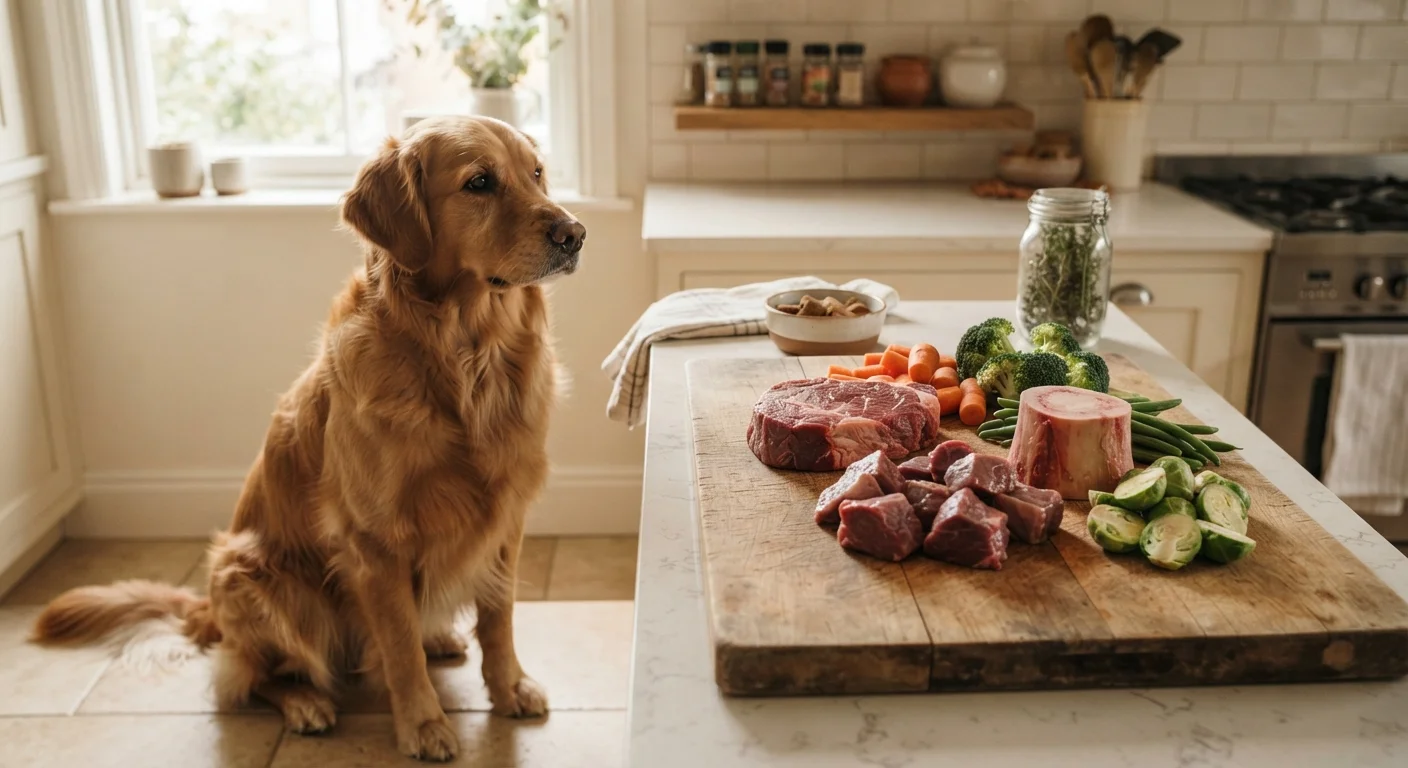
A raw diet — sometimes called a BARF diet (Biologically Appropriate Raw Food) or a prey-model diet — typically consists of uncooked muscle meat, organ meat, raw meaty bones, and sometimes raw eggs, dairy, fruits, or vegetables. Proponents argue that this more closely mirrors what dogs' wild ancestors ate before commercial kibble existed.
Raw feeding can take two main forms: commercially prepared raw meals (sold fresh or frozen) and homemade raw diets assembled by owners. The two carry meaningfully different risks. Commercial products are more likely to meet formulation standards, while homemade versions frequently fall short on key nutrients without expert guidance.
If you're new to dog ownership and weighing feeding options from the start, our guide for first-time dog owners covers the broader decisions you'll face in those early weeks — including nutrition.
The Case For Raw Feeding
Advocates of raw diets — including some holistic veterinarians and many long-time dog owners — point to a range of perceived benefits. It's worth understanding their reasoning, even if the scientific backing varies.
May improve coat shine and skin condition
Many raw-feeding owners report a noticeably shinier coat and reduced flakiness. This is often attributed to the higher fat content and absence of processed ingredients, though controlled studies are limited.
Can reduce stool volume and odor
Raw diets tend to produce smaller, firmer stools because more nutrients are absorbed and less filler passes through. This is one of the more consistently reported owner observations.
Avoids artificial additives and preservatives
Raw diets contain no synthetic preservatives, artificial colors, or flavor enhancers — which appeals to owners concerned about ultra-processed foods in their pet's diet.
Raw bones may support dental health
Chewing raw meaty bones can help mechanically reduce tartar buildup. Our dog dental care guide explains what vets consider most effective for oral hygiene overall.
High protein content matches carnivore biology
Dogs are facultative carnivores with digestive systems adapted to processing animal protein efficiently. A meat-heavy diet aligns with that biology, at least in principle.
The improvements some owners observe in coat sheen, stool consistency, and energy levels are real experiences worth acknowledging. However, veterinary nutritionists generally note that these outcomes are difficult to attribute specifically to raw food versus other dietary changes, and that controlled research on the topic remains limited.
The Case Against Raw Feeding
Major veterinary organizations — including the American Veterinary Medical Association (AVMA) and the American Animal Hospital Association (AAHA) — have issued formal position statements discouraging raw protein diets for dogs. Their concerns are grounded in peer-reviewed research rather than preference.
High risk of harmful bacterial contamination
Raw meat commonly carries Salmonella, Listeria, and E. coli. Studies have detected these pathogens in a significant proportion of commercial raw pet food samples, posing risks to dogs and the humans who handle the food.
Nutritional deficiencies are common in homemade versions
Research consistently shows that most homemade raw diet recipes fail to meet established nutritional standards for dogs. Long-term deficiencies can cause serious health problems that may not be immediately visible.
Bone fragments can cause injury or obstruction
Cooked bones are well-known hazards, but raw bones also carry risk — particularly splintering, choking, digestive tract puncture, or intestinal blockage, especially in smaller or more aggressive chewers.
Significant time, cost, and expertise required
Preparing a nutritionally complete raw diet properly demands careful sourcing, safe food handling, and ideally professional formulation — making it substantially more labor-intensive and expensive than commercial kibble.
Household cross-contamination is a genuine public health concern
Pathogens from raw meat can transfer to kitchen surfaces, bowls, and human hands. The AVMA specifically highlights this as a concern for households with vulnerable individuals.
Not recommended for dogs with certain health conditions
Dogs with compromised immune systems, pancreatitis history, or kidney disease may face heightened risks on a raw diet. Veterinary guidance is especially critical for these animals.
What Major Vet Organizations Say
The AVMA, AAHA, and the Centers for Disease Control and Prevention (CDC) have all issued guidance advising against raw protein diets for pets, citing contamination risks and the potential for disease transmission between animals and people. Their positions are based on multiple peer-reviewed studies, not anecdote. If your vet recommends against raw feeding for your dog, this is the scientific basis for that advice.
It's also worth noting that raw diets can affect more than just your dog. Bacteria shed in a raw-fed dog's feces or saliva can pose a health risk to people in the household — a concern that becomes especially serious around young children, older adults, pregnant people, or anyone with a compromised immune system.
Nutritional Balance: The Hidden Challenge
One of the most underappreciated risks of raw feeding is nutritional incompleteness. A 2022 study published in PLOS ONE analyzed hundreds of homemade raw diet recipes and found that the vast majority contained significant deficiencies or imbalances in essential nutrients — including calcium, phosphorus, zinc, and vitamin D.
~60%
Homemade raw diets with major nutrient gaps
A 2022 PLOS ONE analysis found the majority of homemade raw dog food recipes reviewed contained nutritionally significant deficiencies.
~25%
Commercial raw food samples testing positive for Salmonella
Multiple independent studies and FDA sampling have found Salmonella contamination in a notable share of commercially available raw pet food products.
Even well-intentioned owners following popular online recipes can inadvertently deprive their dog of what it needs over months or years. Dogs may appear healthy on the surface while developing bone density issues, immune dysfunction, or organ stress. If you're curious about how environment and lifestyle further shape your dog's nutritional needs, our article on indoor vs. outdoor dogs and health offers useful context.
If you do choose a raw diet, working with a board-certified veterinary nutritionist — rather than relying on general internet guidance — is strongly advisable to ensure the plan is complete and appropriate for your dog's age, weight, and health status.
This article is for general informational purposes only and is not a substitute for professional veterinary advice. Always consult a licensed veterinarian before making significant changes to your dog's diet.
The content on this site is for informational purposes only and is not a substitute for professional advice. Always consult a qualified professional for guidance specific to your situation.