

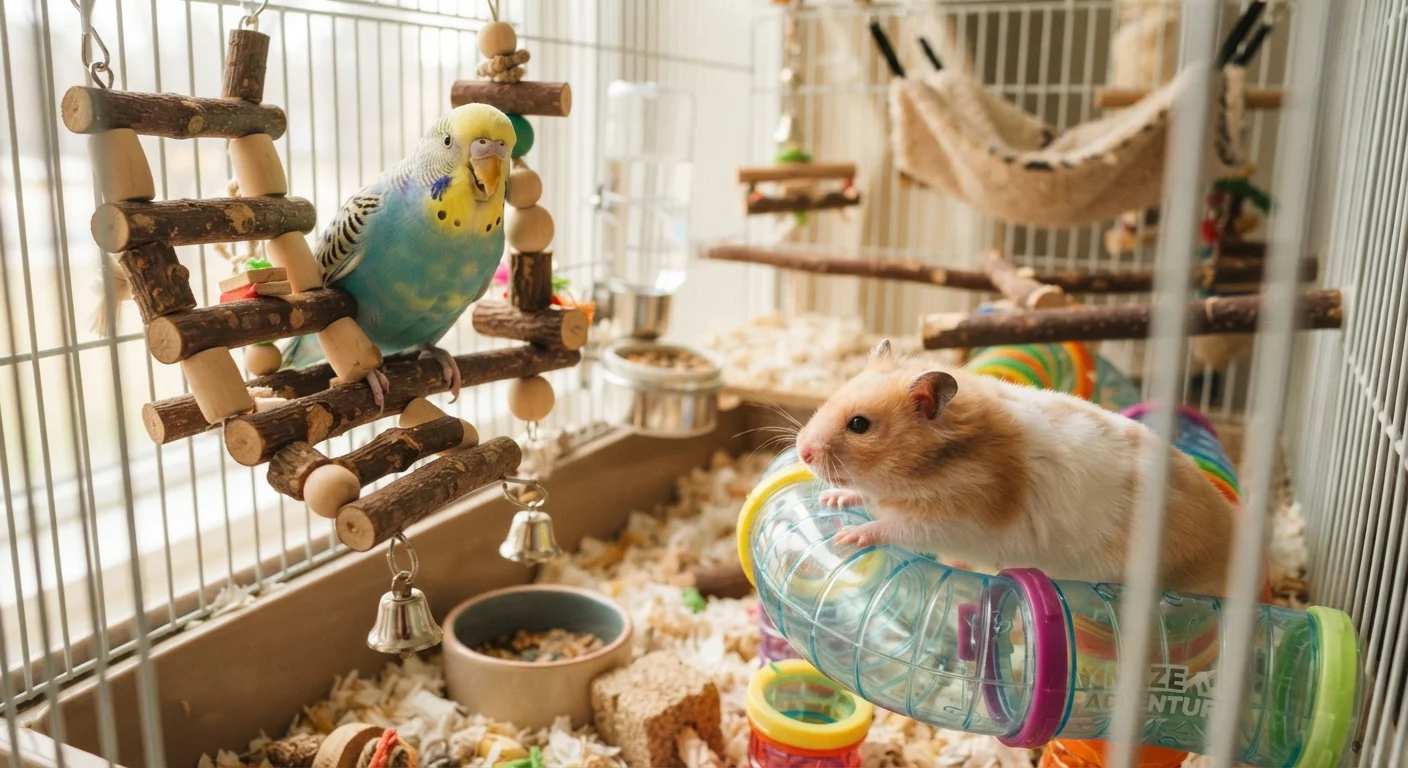
Why Mental Stimulation Matters for Caged Pets
Caged animals — whether a parrot, a guinea pig, or a bearded dragon — are often intelligent, curious creatures whose wild counterparts spend hours each day foraging, exploring, and solving problems. When kept in captivity without adequate mental stimulation, many small pets develop signs of stress or boredom: repetitive behaviors like bar-chewing or pacing, feather-plucking in birds, over-grooming, loss of appetite, or lethargy.
Enrichment is the practice of adding variety, challenge, and sensory interest to an animal's environment in ways that encourage natural behaviors. It's not just about entertainment — it supports psychological wellbeing, physical health, and can even strengthen the bond between you and your pet.
The good news is that enrichment doesn't require expensive equipment. Understanding your pet's species-specific instincts is the real starting point. Below are seven practical strategies that apply across birds, small mammals, and reptiles — with notes on which animals benefit most from each approach.
Foraging Opportunities
In the wild, most small animals spend a significant portion of their day searching for food. Replicating this through foraging enrichment is one of the most effective ways to keep caged pets mentally active. Instead of placing food directly in a bowl, hide portions of your pet's daily diet in puzzle feeders, wrapped in paper, or tucked under bedding.
Guinea pigs and rabbits benefit from hay scattered throughout their enclosure rather than piled in one spot. Birds can be offered food wrapped in paper strips or placed inside hanging foraging toys. Even reptiles like bearded dragons can be encouraged to hunt live or moving feeder insects rather than eating from a dish. See our small mammal care comparison for species-specific dietary notes to guide what you hide and where.
Hiding food throughout the enclosure mimics natural foraging and keeps pets mentally active for hours.
Tunnels, Hides, and Burrowing Substrate
Prey animals like hamsters, gerbils, mice, and rabbits are driven by a deep instinct to burrow and hide. Providing deep substrate — such as paper-based bedding at least four to six inches deep for hamsters — allows them to dig and create tunnels, which is a primary source of psychological comfort and stimulation.
Cardboard tubes, wooden hideaways, and commercially available tunnel systems all support this instinct. Rearranging these structures periodically adds novelty. Rabbits that live indoors benefit from enclosed hides and cardboard boxes they can chew and rearrange — a behavior that doubles as dental enrichment. Our indoor rabbit housing guide goes deeper on setting up a safe, stimulating rabbit environment.
Deep, diggable substrate satisfies burrowing instincts and reduces stress in prey-species small mammals.
Climbing and Perching Structures
Vertical space is enrichment. Birds naturally move between different heights throughout the day, so a cage with multiple perch levels — ideally made from varied materials like natural wood branches, rope, and textured plastic — exercises both the body and the mind. Different diameters help maintain foot health by varying the grip required.
Reptiles like crested geckos and chameleons are arboreal (tree-dwelling) and need climbing branches, cork bark, and live or artificial plants to feel secure and behaviorally engaged. Even ground-dwelling reptiles like leopard geckos benefit from elevated flat rocks or half-log hides that offer a change in perspective. Adding height complexity to any enclosure gives animals more choices about where to spend their time — and choice itself is a form of enrichment.
Vertical complexity gives climbing animals meaningful choices about where to rest and move throughout the day.
Chewing and Gnawing Materials
Rodents' teeth grow continuously, and gnawing is not optional — it's a biological necessity. Providing safe chewing materials satisfies this drive while preventing your pet from redirecting the behavior onto cage bars or plastic components. Untreated wood blocks, willow sticks, apple branches, and compressed hay cubes are all appropriate options for most small rodents and rabbits.
Birds also chew instinctively, using their beaks to explore and manipulate objects. Destructible toys — made from untreated wood, palm leaves, or paper — are ideal because birds enjoy dismantling them. The act of destruction itself is the reward. Avoid any materials treated with dyes, varnishes, or chemical preservatives, and double-check that any wood species used is non-toxic to your specific pet.
Chewing materials serve both dental health and behavioral needs — destruction is the point, not a problem.
Sensory and Social Enrichment
Not all enrichment involves objects. Sound, smell, and social contact are powerful stimulants for many small pets. Birds, in particular, are highly social and thrive with regular vocal interaction, exposure to varied sounds (such as calm household noise or nature recordings), and time outside the cage in a safe, supervised area.
For species that live in social groups in the wild — such as guinea pigs, gerbils, and parakeets — having a companion of the same species is one of the most meaningful forms of enrichment available. Solitary housing can lead to chronic stress in these animals. If your pet lives alone, increased daily human interaction becomes even more critical. Our article on what to know before bringing home a pet bird explores the social needs of birds in more detail. Novel, pet-safe scents — such as a fresh herb placed in the enclosure — can also provide olfactory stimulation for mammals.
For naturally social species, companionship is often the single most effective form of enrichment available.
Puzzle Feeders and Problem-Solving Toys
Puzzle feeders require animals to manipulate an object to access a reward, which engages problem-solving skills and provides a sense of accomplishment. These are especially valuable for intelligent species like parrots, cockatoos, and rats, which can learn to associate cause and effect and benefit from increasing levels of challenge.
Start with simpler puzzles and gradually increase difficulty as your pet gains confidence. A rat that quickly masters a basic ball dispenser may be ready for a multi-step foraging box. Parrots can be offered layered puzzles where food is inside a container that's inside another container. Even simpler versions — a toilet paper roll folded at both ends with a treat inside — work well for mice, hamsters, and small birds. The key is that the animal has to work for the reward.
Increasing puzzle complexity over time keeps intelligent pets challenged and prevents habituation.
Environmental Rearrangement and Novelty
One of the easiest enrichment strategies is also one of the most overlooked: periodically rearranging the layout of your pet's enclosure. Moving hides, perches, and feeding locations to different spots introduces novelty without requiring new materials. Animals explore a rearranged space with heightened interest, just as they would a new environment.
Introducing entirely new objects on a rotation — a new branch, a different hide shape, an unfamiliar safe food — also drives exploratory behavior. For reptiles, seasonal variation in lighting schedules (within safe, species-appropriate parameters) can support natural behavioral cycles. Even brief exposure to a new, supervised space outside the enclosure — a playpen on the floor for a guinea pig, or a play gym for a bird — counts as meaningful environmental novelty. Keep records of what you've tried so you can cycle items back in after they've been out of rotation long enough to feel fresh again.
Rearranging enclosure contents regularly is a free and effective way to sustain long-term behavioral interest.
Building an Enrichment Routine That Sticks
Consistency matters as much as creativity. Rather than overhauling your pet's environment all at once, introduce new enrichment elements one at a time and observe how your animal responds. Some pets — particularly prey species like rabbits and hamsters — may be cautious around unfamiliar objects and need time to warm up before interacting. Patience is essential.
Start Small, Observe Carefully
When offering enrichment for the first time, introduce just one new item and watch how your pet responds before adding more. Anxious or shy animals may freeze, hide, or refuse to interact with something unfamiliar — that's normal. Give them time to investigate at their own pace, and remove the item if it causes visible distress. Gradual introduction builds confidence over time.
Rotate enrichment items on a regular schedule (every few days to once a week) so that previously seen objects feel new again when reintroduced. Keep a simple log if it helps you track what's been offered and what got the most engagement.
For birds, consider how enrichment fits with social time — many parrots and parakeets engage best when their owner is nearby. For reptiles, enrichment is often environmental and passive, so it's worth revisiting your terrarium setup periodically. Our guide on reptile habitat setup covers the foundational environment your enrichment additions should work within.
Finally, always supervise new enrichment items initially to make sure they're safe — no sharp edges, no toxic materials, and no pieces small enough to be swallowed. If you're ever unsure about a specific material or approach for your pet, your veterinarian is the best resource.
This article is for general informational purposes only. For guidance specific to your pet's health or behavior, consult a qualified veterinarian or certified animal behaviorist.
The content on this site is for informational purposes only and is not a substitute for professional advice. Always consult a qualified professional for guidance specific to your situation.