

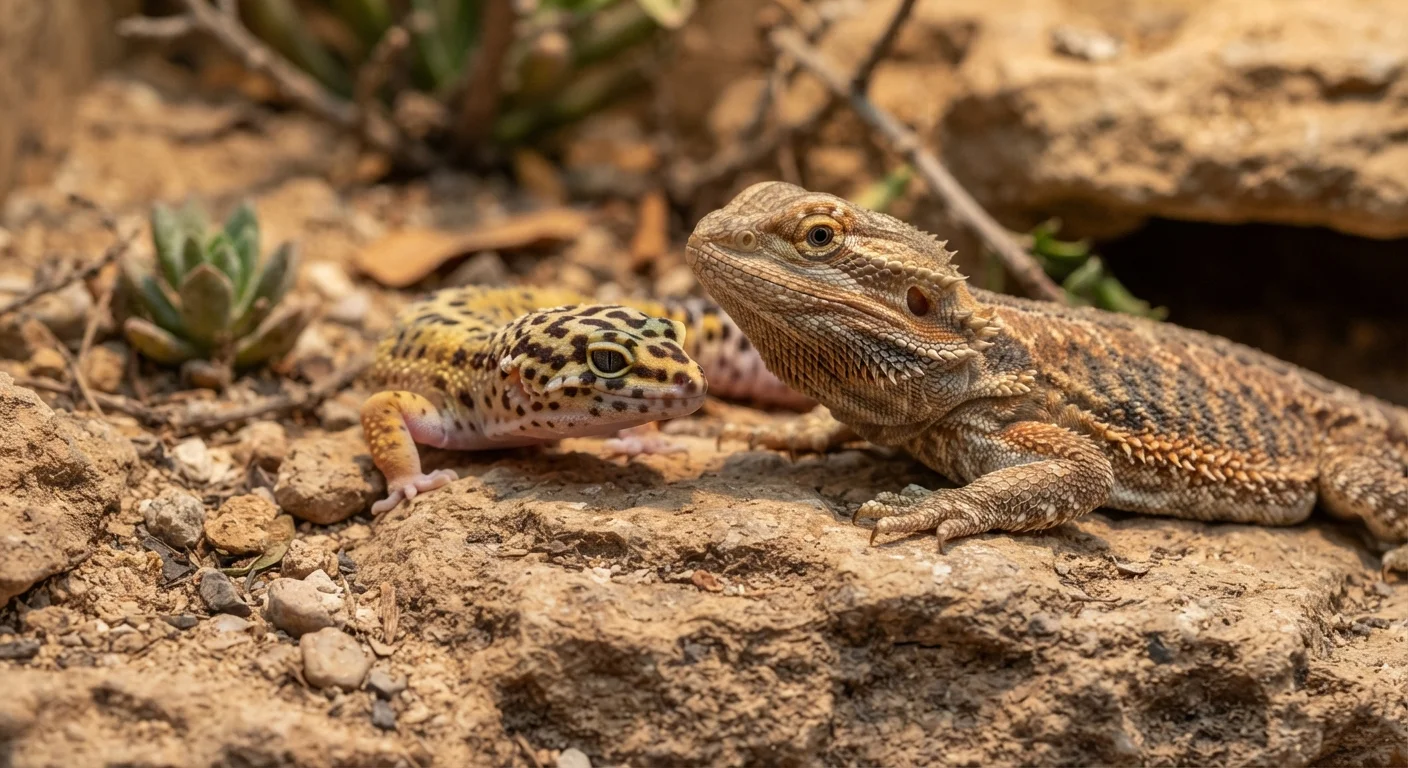
Option A
Leopard Gecko
The compact, low-maintenance starter reptile.
Best for: Owners with limited space, tighter budgets, or less time to dedicate to daily handling and feeding routines.
Option B
Bearded Dragon
The social, interactive reptile companion.
Best for: Owners who want a highly handleable, personality-rich reptile and are prepared for more involved daily care.
Size, Space, and Enclosure Requirements
One of the first practical differences between these two reptiles is how much space they need. Leopard geckos are relatively small, typically reaching 7–10 inches in length as adults. A 20-gallon terrarium is generally considered the minimum for a single adult gecko, making them a realistic option for apartments or smaller living spaces.
Bearded dragons grow considerably larger — adults commonly reach 18–24 inches from snout to tail. A single adult beardie typically requires a 120-gallon enclosure to thrive, which represents a meaningful footprint and a higher upfront cost. The enclosure also needs more accessories: a basking spot, a cooler zone, and proper UVB lighting coverage across the full length of the tank.
| Criterion | Leopard Gecko | Bearded Dragon |
|---|---|---|
| Adult Size | 7–10 inches | 18–24 inches |
| Minimum Enclosure Size | 20 gallons | 120 gallons |
| UVB Lighting Required | Not essential (beneficial) | Yes — essential |
| Diet | Insects only | Insects + leafy greens |
| Feeding Frequency (Adults) | Every 2–3 days | Daily |
| Activity Period | Nocturnal/crepuscular | Diurnal |
| Typical Lifespan | 15–20 years | 10–15 years |
| Handleability | Moderate | High |
Diet and Feeding Complexity
Both species are omnivores or insectivores, but their nutritional needs diverge in important ways.
Leopard geckos are strict insectivores. Their diet consists of live insects — primarily crickets and mealworms — dusted with calcium and vitamin supplements. Adult leopard geckos only need to be fed every two to three days, which suits owners with tighter schedules. They do not eat plant matter.
Bearded dragons require a more varied diet that shifts throughout their life. Juveniles eat primarily live insects for protein, while adults shift toward a diet that is roughly 60–70% leafy greens and vegetables, with insects making up the remainder. This variety is essential for their health and means more preparation time at each feeding. Proper supplementation — including calcium and vitamin D3 — is critical for both species, but especially for bearded dragons given their more complex nutritional profile.
For more context on common misconceptions about reptile nutrition and health, see our guide to reptile health myths.
Gut-Loading Insects Matters for Both Species
The nutritional value of feeder insects depends heavily on what those insects have eaten before being offered to your reptile — a practice called gut-loading. Feeding crickets or other insects a nutritious diet of leafy greens, carrots, or commercial gut-load products for 24–48 hours before offering them to your pet significantly improves their nutritional content. Dusting insects with calcium and vitamin supplements at feeding time is an additional — not a replacement — step.
Lighting, Heating, and Environmental Needs
Reptiles are ectothermic, meaning they regulate body temperature through their environment. Getting the thermal gradient right is essential for both species — but the requirements differ.
Leopard geckos are crepuscular to nocturnal, meaning they are most active at dusk and night. They do not require UVB lighting to survive, though some veterinarians and herpetologists now recommend low-level UVB as a beneficial addition. A simple under-tank heat mat or low-wattage basking bulb is usually sufficient to create the warm side (around 88–92°F) and cool side (around 70–75°F) they need.
Bearded dragons are diurnal — active during the day — and require strong UVB lighting to metabolize calcium properly. Without adequate UVB, bearded dragons can develop metabolic bone disease, a serious and painful condition. Their basking spot should reach 100–110°F, with a cooler zone around 80–85°F. This means higher-quality lighting equipment and more careful monitoring of temperatures throughout the day.
10–20 years
Typical leopard gecko lifespan in captivity
With proper husbandry, leopard geckos frequently live well into their teens, making them a long-term commitment comparable to many small mammals.
~40%
Bearded dragons affected by MBD without UVB
Metabolic bone disease (MBD) linked to inadequate UVB and calcium is one of the most commonly reported health issues in captive bearded dragons seen by exotic veterinarians.
Temperament, Handling, and Suitability for Families
Both reptiles can become comfortable with regular, gentle handling — but their natural temperaments differ noticeably.
Leopard geckos are generally docile and calm, but they are also somewhat shy and more comfortable in their enclosure than out of it. Most leopard geckos will tolerate handling well once acclimated, but they are not typically as interactive or expressive as bearded dragons. Their small size also makes them more fragile, which is worth considering in households with very young children.
Bearded dragons are widely regarded as some of the most handleable reptiles available. Many owners describe their beardies as genuinely enjoying time outside the enclosure. They display a range of visible behaviors — head bobbing, arm waving, beard puffing — that make them expressive and engaging companions. Their sturdier build also makes them somewhat more forgiving of gentle, supervised handling by older children.
Whichever species you choose, always supervise children during reptile handling and wash hands thoroughly before and after contact to minimize any risk of bacterial transmission.
This article is for general informational and educational purposes only. Always consult a qualified exotic animal veterinarian for guidance specific to your pet's health and care needs.
The content on this site is for informational purposes only and is not a substitute for professional advice. Always consult a qualified professional for guidance specific to your situation.