

Why Reptile Myths Are More Than Just Harmless Misunderstandings
Reptiles are among the most misunderstood pets in American households. Because they look and behave so differently from dogs and cats, owners often rely on folklore, outdated advice, or guesswork to guide their care decisions. The problem is that acting on inaccurate beliefs can lead to real health consequences — poor nutrition, chronic stress, untreated illness, and shortened lifespans.
Whether you keep a ball python, a leopard gecko, or a bearded dragon, understanding what's actually true about reptile biology is the foundation of responsible ownership. See our guide to terrarium setup and basic reptile needs for a practical starting point on housing and environment. Below, we tackle the most persistent myths head-on.
Myth
Reptiles are low-maintenance pets that basically take care of themselves.
Fact
Reptiles have highly specific environmental needs — including precise temperature gradients, UVB lighting, and humidity — that require daily monitoring and consistent effort.
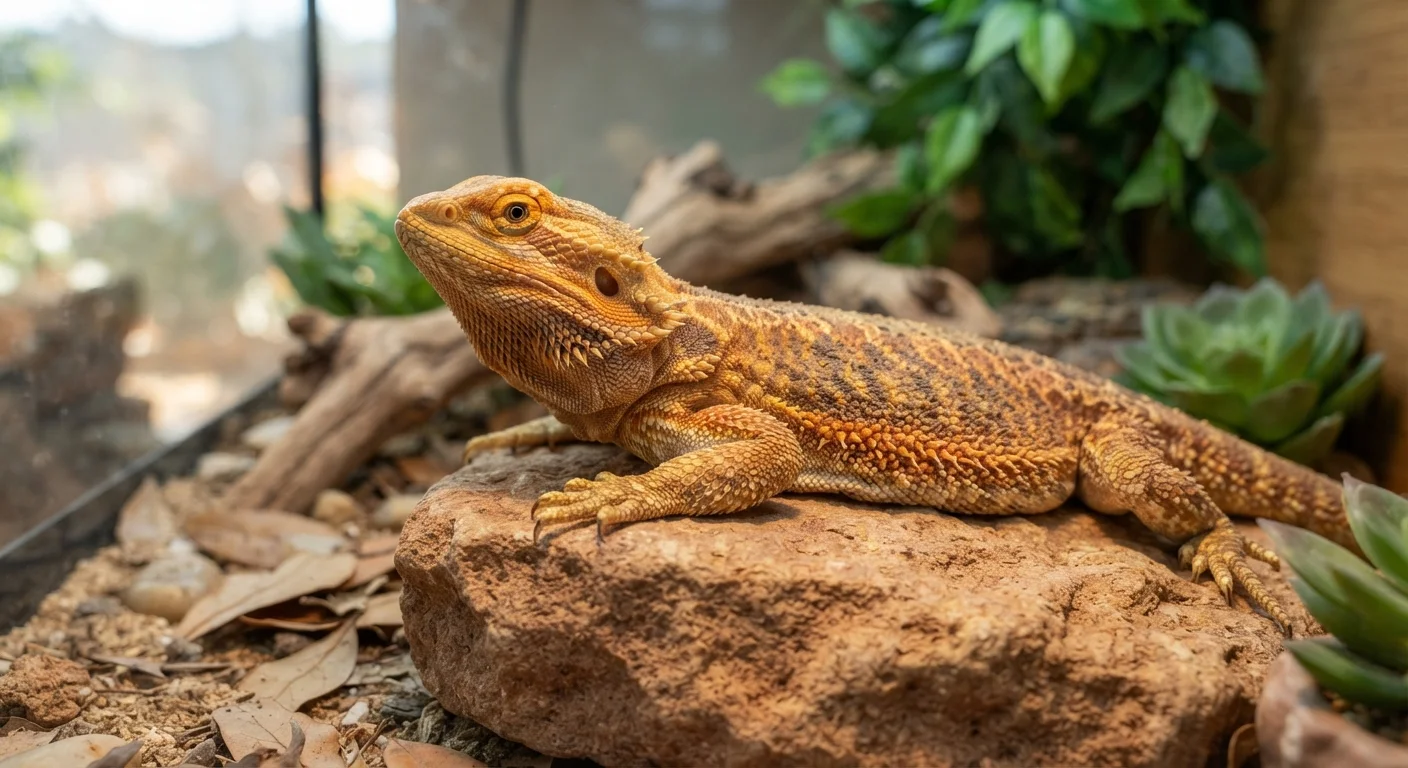
The "easy pet" label attached to reptiles is one of the most damaging myths in the hobby. Unlike a cat that can tolerate a range of room temperatures, a bearded dragon needs a basking spot of around 100–110°F and a cool side closer to 80°F. Leopard geckos need specific humidity levels to shed properly. Without the right lighting, many reptiles cannot metabolize calcium, leading to metabolic bone disease. "Low-maintenance" describes ease of social interaction, not ease of care.
Myth
If a reptile is shedding poorly or in patches, it must be sick.
Fact
Incomplete or patchy shedding (called dysecdysis) is almost always caused by insufficient humidity in the enclosure, not an underlying disease.
Shedding is a normal, recurring process for reptiles. When it goes wrong — skin comes off in pieces, sticks around the eyes or toes, or doesn't come off at all — the most common culprit is low humidity. Retained shed on the toes, in particular, can cut off circulation over time. Before assuming illness, owners should evaluate whether the enclosure's humidity matches the species' requirements. Providing a humid hide box and a shallow warm soak can help resolve mild cases, but retained shed around the eyes warrants a vet visit.
Myth
Reptiles don't feel pain or stress the way mammals do.
Fact
Reptiles have nociceptors (pain receptors) and demonstrate measurable stress responses, including behavioral and physiological changes.
The idea that reptiles are neurologically simple and unfeeling is not supported by current animal science. Research in reptile physiology shows they possess pain-sensing nerve pathways and exhibit behaviors consistent with distress — such as hiding, loss of appetite, color changes, and aggression — when they are ill, injured, or in unsuitable environments. Chronic stress from inappropriate temperatures, inadequate space, or frequent mishandling can suppress immune function and accelerate disease. Treating your reptile's environment and interactions as matters of welfare, not convenience, is a science-backed approach.
Myth
You should handle your reptile frequently right after bringing it home so it gets used to you faster.
Fact
New reptiles need a settling-in period — typically two weeks or more — with minimal handling so they can adjust to their new environment.
Bringing a reptile home is inherently stressful for the animal. It has been transported, placed in a new enclosure, and exposed to new smells, sounds, and sights. Handling during this period adds stress on top of stress and can cause the animal to refuse food, become defensive, or develop health issues. Most experienced keepers recommend waiting until the reptile has eaten at least two or three meals voluntarily before beginning regular handling. Building trust gradually leads to calmer, more interactive animals in the long run.
Myth
All reptiles carry salmonella and are inherently dangerous to keep.
Fact
Salmonella can be present on reptiles, but the risk is manageable through consistent handwashing and basic hygiene — the same precautions used around raw poultry.
It's accurate that many reptiles can carry Salmonella bacteria without showing symptoms. However, "carry" does not mean "always transmit" or "impossible to manage." The CDC's guidance focuses on handwashing after handling reptiles or cleaning their enclosures, keeping reptiles out of kitchens and food-prep areas, and not allowing reptiles to roam near the faces of young children. These are straightforward practices. The risk is real and should not be dismissed, but it is proportionate — not a blanket disqualifier for reptile ownership in otherwise healthy adult households.
Myth
A reptile that stops eating for a week or two is probably fine — they can go long periods without food.
Fact
While some adult reptiles can safely fast for extended periods, a sudden refusal to eat is often a sign of stress, illness, or an environmental problem that warrants investigation.
It's true that reptile metabolism is slower than that of mammals, and some species — like ball pythons — are well-known for occasional fasts lasting weeks, especially around breeding season or a shed cycle. However, a sudden change in appetite is one of the primary warning signs owners should never ignore. If the temperature gradient, humidity, lighting cycle, and prey type are all correct and a reptile still refuses food beyond its typical pattern, a veterinary evaluation is warranted. Early detection of respiratory infections, parasites, or other conditions is far easier to treat than late-stage illness.
Health, Hygiene, and Veterinary Care: Getting the Facts Straight
Beyond biology myths, there are widespread misbeliefs about reptile health care that leave owners underprepared. Knowing the real risks — and the real solutions — makes a significant difference in long-term outcomes for both pet and owner.
~70%
Reptile enclosures with inadequate UVB lighting
Surveys of reptile owners by herpetological societies suggest a significant proportion of enclosures lack appropriate UVB, contributing to metabolic bone disease.
~11%
Of U.S. Salmonella cases linked to reptile contact
The CDC has estimated that roughly 11% of Salmonella infections in the U.S. are associated with reptile or amphibian contact, underscoring the importance of hygiene.
4.5 million
Reptiles kept as pets in the U.S.
The American Pet Products Association has reported millions of reptile pets in U.S. households, reflecting widespread but often under-informed ownership.
The salmonella conversation is one of the most important for new reptile owners to have correctly. While the bacteria can be present on reptile skin and in their environments, routine handwashing before and after handling is the primary safeguard. The CDC recommends that households with children under 5, elderly individuals, pregnant people, or immunocompromised individuals consult a physician before keeping reptiles, since those groups face greater risk. This isn't a reason to avoid reptiles altogether — it's a reason to practice good hygiene consistently.
Veterinary care is another area full of misconceptions. Not all veterinarians are trained in reptile medicine. When your animal shows signs of illness, you'll want an exotic animal specialist. Our article on finding a vet for an exotic pet explains what questions to ask and what credentials to look for. And if you're comparing species before committing to ownership, leopard geckos and bearded dragons have notably different care demands worth understanding in advance.
Reptile Illness Can Be Subtle — Don't Wait
Reptiles are prey animals by instinct and often mask signs of illness until a condition is advanced. Changes in posture, prolonged hiding, open-mouth breathing, wheezing, swollen limbs, or dramatic weight loss are all reasons to contact an exotic animal veterinarian promptly. Waiting to see if the animal "bounces back" can turn a treatable problem into a critical one. Always err on the side of professional evaluation.
This article is for general informational purposes only and does not constitute veterinary advice. Always consult a qualified exotic animal veterinarian for concerns about your reptile's health.
The content on this site is for informational purposes only and is not a substitute for professional advice. Always consult a qualified professional for guidance specific to your situation.