

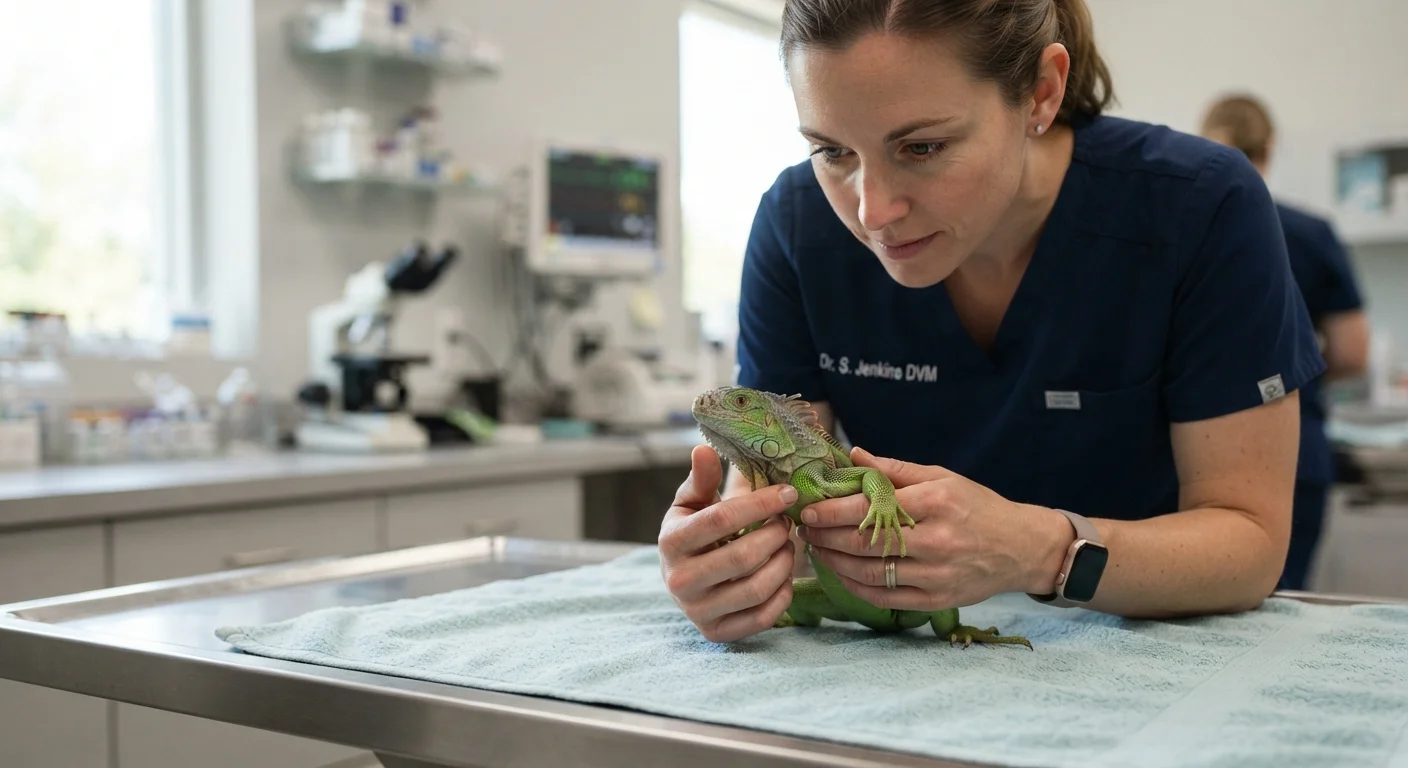
Why General Vets Often Can't Help Exotic Animals
Standard veterinary school training focuses heavily on dogs and cats, with some coverage of horses and livestock. Animals like bearded dragons, cockatoos, ball pythons, and ferrets receive little to no dedicated instruction in most curricula. That gap matters enormously when your gecko stops eating or your rabbit develops GI stasis — a potentially life-threatening condition in herbivores.
Exotic animals also have physiology that differs sharply from common pets. Reptiles are ectotherms whose body temperature depends on their environment, which affects how medications are absorbed and how illness presents. Birds hide signs of illness instinctively, making subtle symptoms easy to miss for an untrained eye. A vet unfamiliar with these differences may misdiagnose, under-treat, or inadvertently harm an exotic patient. See our overview of common reptile health misconceptions for examples of how easily errors can occur.
Emergency Care for Exotic Animals Is Often Limited
After-hours emergency clinics that can treat exotic animals are far less common than those serving dogs and cats. Many 24-hour emergency vets will decline to treat reptiles, birds, or small exotics. Ask your regular exotic vet what they recommend for after-hours emergencies — ideally before you're in the middle of one.
What 'Exotic Vet' Actually Means — and What to Look For
The term 'exotic vet' is not a legally protected title in the United States, so any vet can use it. What actually matters is verifiable training and hands-on experience. When evaluating a practice, there are three things worth checking:
- Board certification: A vet with DABVP credentials in a relevant category has passed rigorous exams and demonstrated substantial clinical experience. This is the gold standard.
- Continuing education: Vets who regularly attend exotic-focused conferences (such as those hosted by ARAV or AEMV) are more likely to be current on treatment protocols.
- Case volume: A vet who sees your type of animal regularly will be far more confident and accurate than one who treats exotic patients only occasionally.
Don't hesitate to ask a prospective vet directly: How many bearded dragons (or rabbits, or parrots) do you see in a typical month? A candid answer tells you a great deal. For context on what thorough vet appointments should cover generally, see what owners often miss at annual vet visits.
Call Ahead Before Booking Any Appointment
When calling a veterinary practice for the first time, describe your pet's species specifically — not just 'a reptile' but 'a ball python' or 'a crested gecko.' This helps the practice confirm whether they have relevant experience and the right equipment. It also gives you an early read on how comfortably and confidently the staff respond.
How to Find an Exotic Vet — Before You Need One Urgently
One of the most important things exotic pet owners can do is identify a qualified vet before an emergency happens. Exotic animals can decline quickly, and scrambling to find a specialist during a crisis adds dangerous delay.
Practical places to start your search include:
- Professional association directories: The ARAV, AEMV, and ABVP all maintain searchable online directories of member or certified vets.
- Local exotic pet communities: Owner groups for reptiles, birds, or small mammals — online or in person — often share firsthand recommendations for trusted vets in a region.
- Humane societies and rescues: Organizations that specialize in exotic animal rescue frequently have established relationships with qualified vets and can point owners in the right direction.
Once you find a candidate, schedule a wellness visit rather than waiting for illness. This lets you assess the vet's communication style, their comfort with your specific animal, and their ability to give you practical husbandry guidance alongside medical care.
Questions Worth Asking at Your First Visit
A first appointment with a new exotic vet is as much about evaluating the practice as it is about your pet's immediate health. Consider asking:
- What is your experience specifically with ?
- Do you have in-house diagnostic equipment appropriate for small or exotic patients?
- What is your protocol for after-hours emergencies?
- Can you provide guidance on diet and habitat, or do you refer to a specialist for that?
- How do you handle procedures like blood draws or imaging for animals this size?
A knowledgeable exotic vet will welcome these questions. If a practice seems dismissive or vague, treat that as a signal to keep looking. For fish owners specifically, finding a vet who sees aquatic animals may require extra research — aquatic medicine is a narrow specialty, but practitioners do exist. Our guide on choosing between goldfish and betta fish touches on the distinct care needs that can inform what to discuss with a vet.
This article is for general informational purposes only and does not constitute veterinary advice. Always consult a qualified exotic animal veterinarian for guidance specific to your pet's health and species.
~7 million
Reptiles kept as pets in U.S. households
According to the American Pet Products Association's National Pet Owners Survey, reptiles are among the most commonly kept exotic pets in the United States.
< 10%
U.S. vets with formal exotic animal training
Veterinary experts widely note that the majority of practicing vets in the U.S. received little to no formal training in exotic species during their degree programs.
2–4x
Faster disease progression in small exotic mammals
Small mammals like rabbits and ferrets have shorter lifespans and faster metabolisms, meaning health conditions can deteriorate much more rapidly than in dogs or cats of comparable size.
Frequently Asked Questions
In veterinary contexts, 'exotic' generally refers to any animal that is not a dog or cat. This includes reptiles, birds, rabbits, ferrets, guinea pigs, chinchillas, hedgehogs, sugar gliders, and pet fish. Some practices also see small farm animals or wildlife-adjacent species.
Some general practice vets do see small mammals like rabbits and guinea pigs, but their training and experience can vary widely. It's worth asking directly how often they see these animals and what continuing education they've completed in exotic or small mammal care.
The Association of Exotic Mammal Veterinarians (AEMV) and the Association of Reptilian and Amphibian Veterinarians (ARAV) both maintain online member directories. The ABVP also has a specialist locator tool. Your local humane society or exotic pet community groups may also have recommendations.
Exotic vet care can cost more than a routine dog or cat visit, partly because fewer vets offer it and specialized equipment is sometimes required. Costs vary significantly by species and location. It's a good idea to ask about pricing upfront when you call to inquire.
Ask how many patients of your species they see per month, whether they have species-specific diagnostic equipment, what their emergency or after-hours protocol is, and whether they can provide husbandry guidance alongside medical care.
Yes — most exotic animals benefit from at least annual wellness exams, and some species (particularly older animals and small mammals with short lifespans) may benefit from more frequent visits. Regular checkups help catch problems early, just as they do for dogs and cats.
The content on this site is for informational purposes only and is not a substitute for professional advice. Always consult a qualified professional for guidance specific to your situation.