

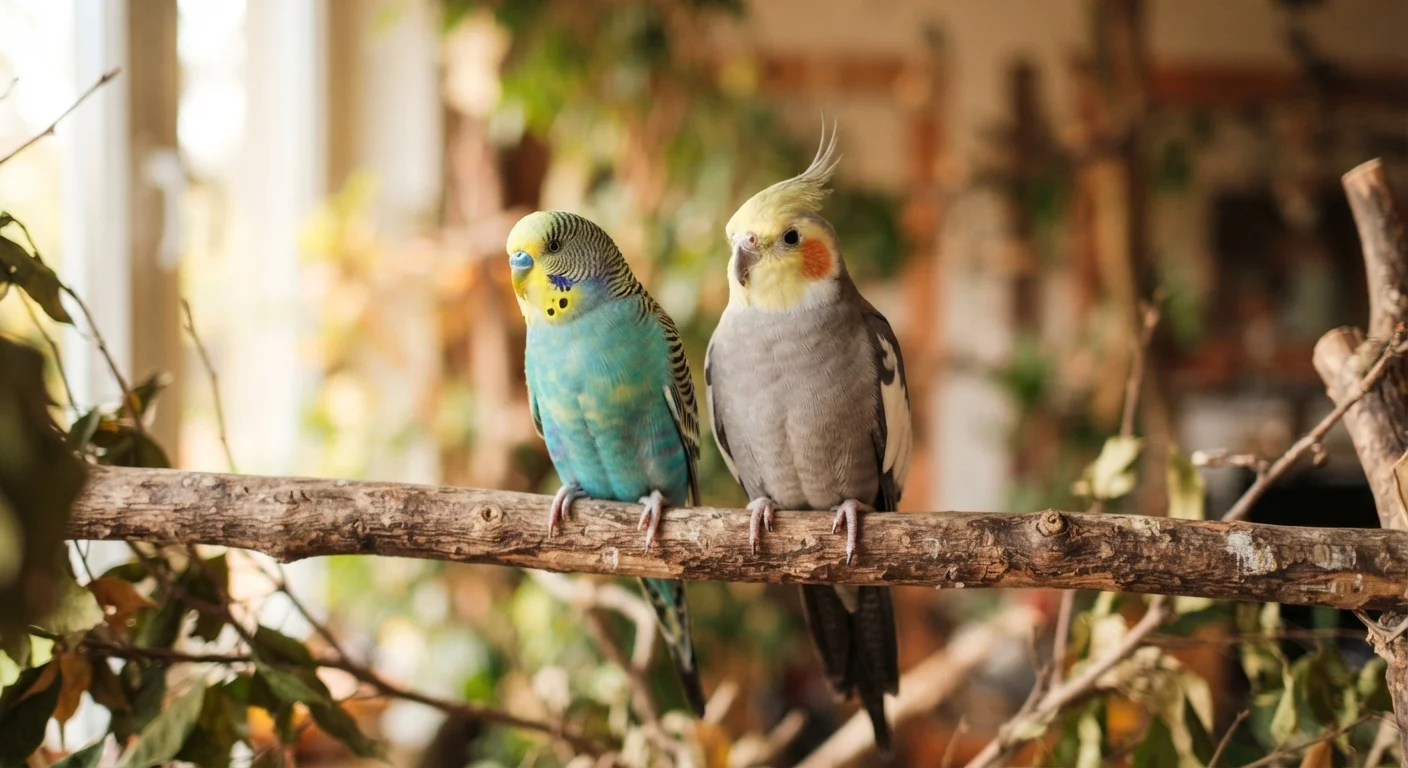
Option A
Parakeet (Budgerigar)
The compact, budget-friendly starter bird.
Best for: First-time bird owners who want an interactive, low-maintenance companion in a smaller living space.
Option B
Cockatiel
The affectionate, expressive mid-size parrot.
Best for: Owners who can invest daily time in bonding and enjoy a bird with a strong personality and musical talent.
Size, Noise, and Personality at a Glance
Choosing between a parakeet and a cockatiel often comes down to how much space, time, and noise tolerance you have. Both birds are members of the parrot family, both are intelligent and social, and both can learn to mimic sounds — but their day-to-day personalities differ in meaningful ways.
Parakeets (commonly called budgies, short for budgerigars) are small birds, typically weighing less than 1.5 ounces and measuring around 7 inches in length. They produce light chirping and chatter that most people find pleasant rather than disruptive. Cockatiels are noticeably larger — around 12 inches and 3–4 ounces — and are famous for their expressive crests and piercing contact calls. When a cockatiel wants attention or feels alarmed, you'll hear it clearly across the room.
| Criterion | Parakeet (Budgerigar) | Cockatiel |
|---|---|---|
| Average size | ~7 inches, under 1.5 oz | ~12 inches, 3–4 oz |
| Typical lifespan | 7–12 years | 15–20 years |
| Noise level | Low to moderate chirping | Moderate to loud; contact calls |
| Affection toward owners | Moderate; warms up gradually | High; seeks physical contact |
| Handles solitude | Better, especially in pairs | Poorly; prone to stress |
| Talking ability | Can learn words and phrases | Excellent whistler; fewer words |
| Daily interaction needed | 30–60 minutes minimum | 1–2 hours recommended |
| Good for beginners | Yes | With preparation |
Personality-wise, cockatiels tend to be more overtly affectionate. Many will seek out head scratches, sit on shoulders, and whistle recognizable melodies. Parakeets are curious and playful but often take longer to warm up to handling, especially without early socialization.
Social Needs and Daily Time Commitment
Both species are highly social animals that should not be left isolated for extended periods. However, they handle solitude differently. Cockatiels are prone to loneliness and can develop stress behaviors — such as feather plucking or persistent screaming — if their social needs go unmet. Ideally, a cockatiel owner can offer at least one to two hours of direct interaction per day.
Parakeets adapt more readily to a companion bird in the same cage. A bonded pair of parakeets can entertain each other, which makes them a more practical option for owners who work full-time or travel occasionally. That said, a solo parakeet still needs daily out-of-cage time and human interaction to stay mentally healthy.
Parakeet Pairs: A Practical Consideration
If you plan to keep two parakeets together, introduce them gradually and ensure the cage is large enough for both birds to move freely without competition for perches or food. A bonded pair will typically be less focused on human interaction, so factor this in if hand-taming is a priority for you. Single parakeets with regular human contact often become more handleable than those kept exclusively with other birds.
Before bringing either bird home, it's worth reading up on the basics. Our guide for first-time bird owners covers diet, housing, enrichment, and what to look for in an avian veterinarian.
Lifespan, Health, and Veterinary Considerations
Lifespan is one of the most important — and often underestimated — factors in choosing a pet bird. Parakeets typically live 7–12 years with proper care, while cockatiels commonly reach 15–20 years. Both represent a meaningful long-term commitment, and prospective owners should plan accordingly.
15–20 years
Cockatiel average lifespan in captivity
According to avian veterinary consensus, well-cared-for cockatiels routinely live into their late teens and occasionally beyond 20 years.
7–12 years
Parakeet average lifespan in captivity
Parakeets (budgerigars) typically live 7–12 years, with diet quality and veterinary care being key factors in longevity.
~700+
Estimated parrot species worldwide
The Parakeet and Cockatiel are both members of the order Psittaciformes, which encompasses over 700 recognized species globally.
Both species require an avian veterinarian, which is a specialist distinct from a general small-animal vet. Routine wellness exams, nail trims, and beak checks are part of responsible ownership for either bird. Common health concerns include respiratory infections, nutritional deficiencies from seed-only diets, and psittacosis — a bacterial infection transmissible to humans. A varied diet of pellets, fresh vegetables, and limited seeds supports better health outcomes than seeds alone.
Cockatiels are also known to be "night frighters" — they can thrash inside their cages when startled in the dark, sometimes injuring themselves. A dim night light near the cage can help reduce this risk. This kind of species-specific knowledge makes ongoing research and veterinary guidance essential for either bird.
Which Bird Fits Your Home?
There's no universally right answer — the better bird is the one that matches your actual lifestyle, not your idealized version of it. If you live in a smaller space, prefer a lower-maintenance routine, or are new to bird ownership, a parakeet offers a gentler entry point. If you're an experienced owner who wants a deeply interactive companion and can commit to daily engagement over potentially two decades, a cockatiel may be deeply rewarding.
It's also worth noting that both birds thrive when their environmental and behavioral needs are respected — not just their physical care needs. Choosing a bird is a lifestyle decision in a way that differs from many other pets, similar to how the indoor vs. outdoor debate for cats requires honest self-assessment rather than simply choosing the most appealing option.
Whichever direction you lean, connecting with an avian vet before or shortly after bringing your bird home gives you a solid foundation for long-term care.
This article is for general informational purposes only and is not a substitute for advice from a qualified avian veterinarian. Always consult a professional for guidance specific to your pet's health and needs.
The content on this site is for informational purposes only and is not a substitute for professional advice. Always consult a qualified professional for guidance specific to your situation.