

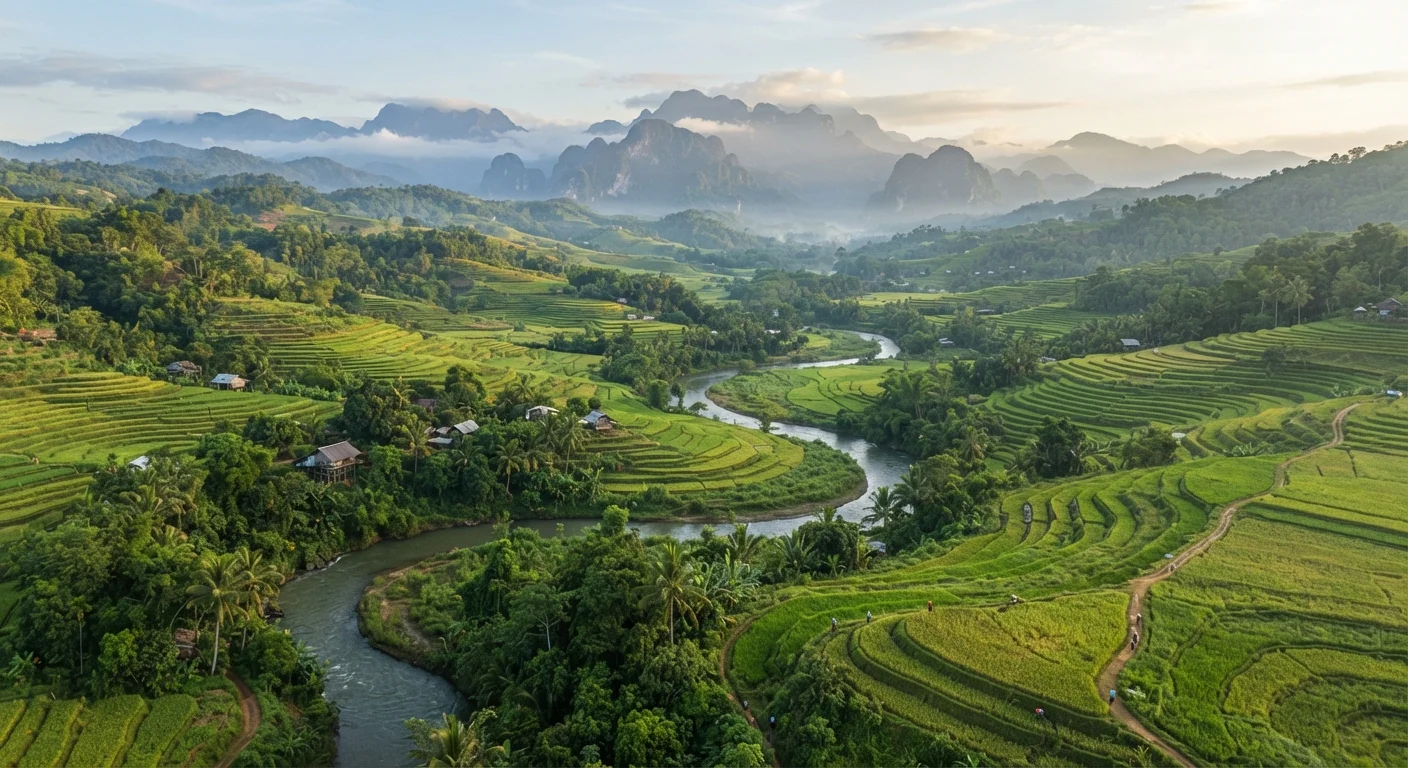
The Distance Delusion: Southeast Asia Isn't One Compact Destination
Pull up a world map and Southeast Asia looks manageable — a cluster of countries nestled together below China. That impression is misleading. Thailand alone stretches roughly 1,000 miles north to south. Flying from Bangkok to Hanoi takes about two hours; crossing Vietnam end to end can take a full day by train. Travelers who plan to hit Thailand, Cambodia, Vietnam, and Bali in two weeks often discover they're spending more time in transit than at their destinations.
This distance delusion is compounded by the assumption that overland travel is always the smart, cheap choice. In some corridors it is — but in others, a budget airline flight saves hours of grueling bus travel. Research actual travel times, not just kilometers on a map, before locking in your route. For a structured approach to mapping out any multi-stop trip, our Trip Planning hub is a useful starting point.
Treating Southeast Asia as a single, uniform destination with consistent rules and conditions.
Why it happens: Marketing materials and travel blogs often bundle the region together, smoothing over the significant differences between countries in language, culture, law, and infrastructure.
Underestimating travel times between cities and countries.
Why it happens: Maps compress distances visually, and travelers assume that because a country looks close on screen, getting there will be quick and easy.
Assuming visa-on-arrival or visa-free access applies universally and indefinitely.
Why it happens: Word-of-mouth and outdated blog posts suggest that entry to Southeast Asia is simple, causing travelers to skip official verification.
Planning an itinerary without accounting for regional weather differences.
Why it happens: Generic "best time to visit" advice treats the region as a whole, masking the fact that neighboring countries can be in opposite seasons simultaneously.
Over-scheduling the trip with too many destinations in too little time.
Why it happens: The excitement of planning leads travelers to want everything — one more city, one more island — without accounting for the exhaustion of constant movement.
Visa Rules, Weather Windows, and the Other Details That Bite
Many Americans assume that because some Southeast Asian countries offer visa-free entry or visa-on-arrival, all of them do — and that the rules are stable. They aren't. Visa policies change, bilateral agreements shift, and the conditions for each country differ by passport, purpose, and length of stay. Always verify entry requirements through official government sources or the destination country's embassy website well before departure. This applies equally to common planning assumptions travelers carry into every trip, not just Southeast Asia.
Visa Rules Can Change Without Much Notice
Several Southeast Asian countries have adjusted visa policies in recent years, including fee changes, new electronic authorization requirements, and duration limits. Do not rely on travel forums or articles older than six months for visa information. Always confirm current requirements through official government or embassy sources before booking non-refundable flights.
Weather is the other underestimated variable. The region doesn't share a single monsoon season — Thailand's east and west coasts have opposing wet seasons, the Philippines experiences typhoons in late summer and fall, and northern Vietnam can be cold and misty from December through February. What's beautiful in one corner of the region in November can be flooded or hazy in another. Cross-reference your travel months against the specific weather patterns of each country on your route, not a generic "best time to visit Southeast Asia" chart.
Budget assumptions deserve scrutiny too. Southeast Asia has a reputation as affordable, which is broadly true — but that framing leads travelers to underestimate real costs. Airport transfers, national park entry fees, scuba diving courses, and visa fees aren't always factored into initial budgets. Our guide on costs most people forget to factor in walks through the full picture so nothing catches you off guard.
11
Countries in Southeast Asia
Southeast Asia comprises eleven sovereign nations, each with distinct entry requirements, currencies, and travel conditions that affect planning.
~3,000 mi
North-to-south span of the region
The geographic spread from Myanmar in the northwest to Timor-Leste in the southeast is comparable to crossing the continental United States.
Finally, itinerary density deserves an honest look. Packing nine cities into three weeks leaves no room for the unplanned moments — the night market you wandered into, the temple a local recommended, the extra day you needed after a bumpy overnight bus. Build in buffer days deliberately. If you're coordinating this kind of trip with others, the dynamics get even more complex; see our guide to group trip planning for strategies that keep everyone on the same page.
The content on this site is for informational purposes only and is not a substitute for professional advice. Always consult a qualified professional for guidance specific to your situation.