

The Expectation Gap Is Real
Most Americans who visit Portugal for the first time report some version of the same experience: they expected a pleasant European city break and got something considerably more layered. That gap between expectation and reality is worth examining honestly, because it shapes how people plan — and often causes them to underplan.
The country tends to get mentally filed alongside smaller, simpler destinations. In reality, Portugal covers Atlantic coastline, rolling vineyard valleys, cork-forest plains, medieval hilltop villages, and two autonomous island archipelagos in the Azores and Madeira. That's a lot of geographic range for a country roughly the size of Indiana.
It's worth checking some of the assumptions you carry into trip planning. Our piece on travel myths that quietly derail good planning covers how preconceived ideas — not just about destinations, but about booking and logistics — can silently steer travelers wrong.
“Travel is fatal to prejudice, bigotry, and narrow-mindedness — many of our people need it sorely on these accounts.”
— Mark Twain, Author, The Innocents Abroad (1869)
What Actually Varies Region to Region
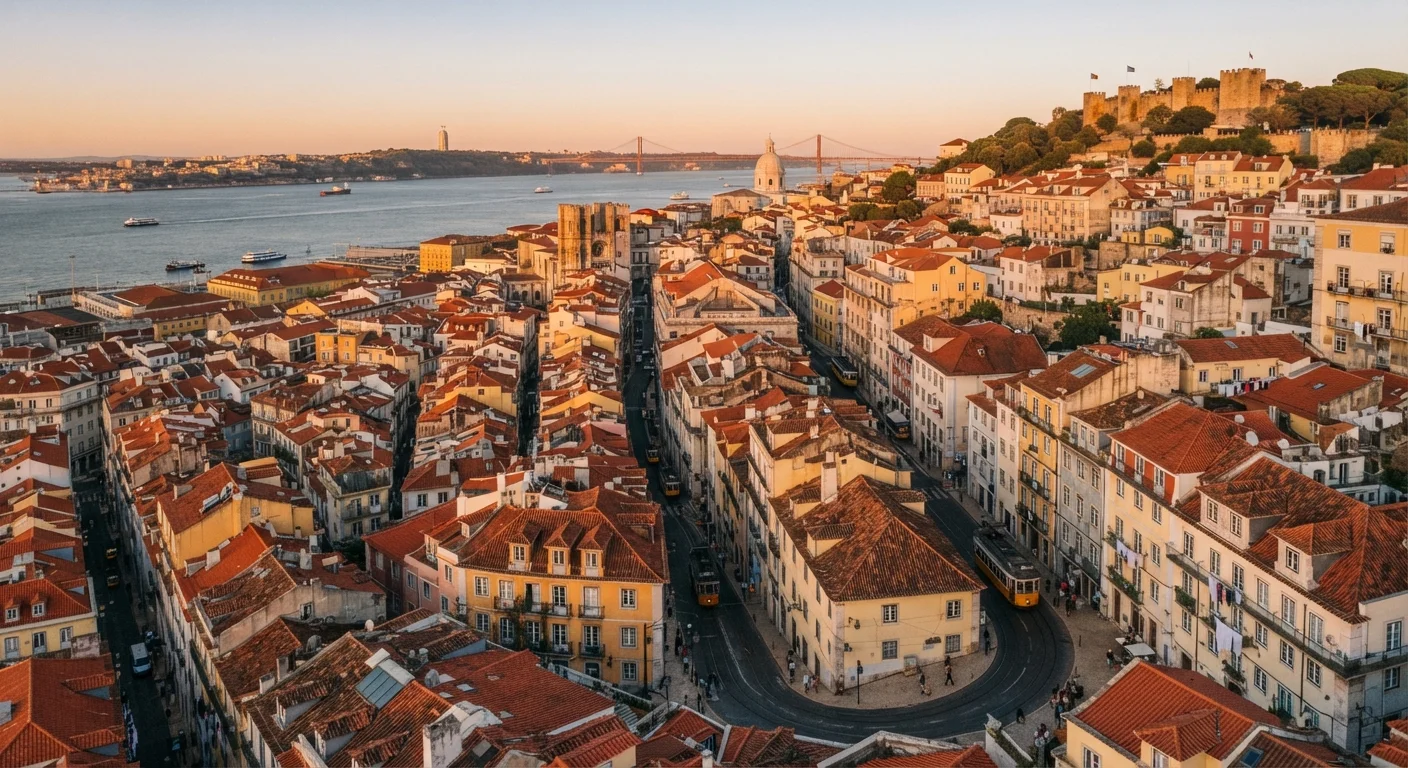
Lisbon and Porto are the two cities most American travelers know by name, and they are genuinely different places — not interchangeable versions of the same experience. Lisbon is hilly, coastal, and carries centuries of empire-era architecture alongside a lively contemporary culture scene. Porto is compact, riverfront-focused, and closely tied to port wine production in the Douro Valley just inland.
Beyond both cities, the Alentejo region to the south offers a slower agricultural pace, with whitewashed villages, cork oak forests, and some of Portugal's most respected wine production. The Algarve coast — the southernmost strip — is popular for its dramatic limestone cliffs and beach culture, though it draws significant crowds in summer. Costs, crowd levels, and the feel of daily life shift noticeably between these regions.
~500 mi
Portugal's Atlantic coastline length
Portugal's mainland coastline stretches roughly 500 miles, encompassing dramatically varied terrain from dune beaches to sheer cliffs.
Top 5
Global Peace Index ranking for Europe
Portugal has consistently ranked among the most peaceful countries globally in the Institute for Economics and Peace's annual index.
2 archipelagos
Autonomous island regions
The Azores and Madeira are autonomous regions of Portugal, each with distinct ecosystems, climates, and cultural identities separate from the mainland.
Understanding the hidden costs most travelers miss matters here too — inter-city transport, ferry crossings to the islands, and resort-area pricing can shift a Portugal budget more than visitors expect.
The History Layer That Catches People Off Guard
Portugal's historical footprint is disproportionate to its current size. In the 15th and 16th centuries, Portuguese explorers mapped coastlines from Brazil to Japan — a fact that still shapes the country's food, architecture, and cultural identity in tangible ways. Azulejo tile panels in train stations, bacalhau (salt cod) dishes with roots in North Atlantic fishing traditions, Manueline architectural details that fold maritime motifs into stone — these aren't decorative choices, they're compressed history.
Moorish influence is equally present, particularly in the south. The Alentejo and Algarve place names, the layout of older towns, and certain culinary traditions all carry traces of the roughly five centuries during which much of the Iberian Peninsula was governed by North African Muslim rulers. Visitors who know a little of this context experience Portugal differently than those who don't.
Research the History Before You Arrive
Even a few hours reading about Portugal's Age of Exploration, Moorish history, and the 1755 Lisbon earthquake — which reshaped the capital's layout — can fundamentally change what you notice and appreciate on the ground. Context makes the tile panels, the architecture, and the food considerably more interesting.
This is part of what makes Portugal rewarding for travelers who enjoy depth alongside scenery — analogous, in some ways, to the experience our team explored in what visitors get wrong about Japan: the destinations that require some prior curiosity tend to return the most.
Honest Trade-Offs Worth Knowing Before You Go
Portugal has become significantly more visited over the past decade, and that has consequences travelers should weigh honestly. Lisbon's most central neighborhoods have experienced notable rises in short-term rental density and tourist-facing pricing. In peak summer months, popular Algarve beaches and Sintra — the fairy-tale palace town outside Lisbon — can feel genuinely crowded.
That said, regional pricing still varies enough that travelers who venture beyond the most-visited circuits often find a different cost picture. Rural accommodation, local restaurants away from main squares, and travel in the shoulder season (spring and autumn) can change the experience materially. Our overview of budget travel trade-offs is useful context for calibrating expectations without over-optimizing on cost at the expense of experience.
The broader travel tips hub covers packing, safety, and budgeting habits that apply well to a Portugal trip regardless of your travel style.
Frequently Asked Questions
Generally, yes. English is widely spoken in cities and tourist areas, the infrastructure is modern, and the country uses the euro. Driving on the right-hand side is the same as in the US, which removes one common adjustment. Always verify current entry requirements with official government sources before traveling.
A week to ten days allows you to cover Lisbon, Porto, and one or two day trips comfortably. Two weeks opens up the Algarve coast, the Douro Valley wine region, and possibly the Azores or Madeira islands. The right duration depends on your pace and interests.
Shoulder seasons — spring and autumn — are widely regarded as excellent times to visit. Crowds thin out, temperatures are mild, and prices in popular areas tend to be lower. Winter works well for city-focused trips, though some coastal businesses operate reduced hours.
Portugal is a Schengen Area member. US citizens should verify current entry allowances and any documentation requirements directly with the US State Department and Portuguese consular services before booking travel.
Portugal consistently ranks among Europe's safer destinations for travelers, including solo visitors. Standard urban precautions apply — be aware of pickpocketing in crowded areas. For a fuller picture of solo travel preparation, see our <a href="/travel-trips/travel-tips/solo-travel-a-first-timers-complete-overview">solo travel overview</a>.
Treating Lisbon as the whole story. Many travelers book a few nights in the capital and leave without touching Porto, the Alentejo plains, or the Atlantic coast — regions with entirely different characters. Portugal rewards curiosity beyond the obvious itinerary.
The content on this site is for informational purposes only and is not a substitute for professional advice. Always consult a qualified professional for guidance specific to your situation.