

What Airlines Are Actually Required to Do
There's a common misconception that airlines owe passengers automatic cash compensation whenever a flight is delayed or cancelled. In the United States, that's not quite right — and understanding the distinction matters before you're standing at a gate wondering what to ask for.
The clearest legal protection is the right to a refund. The U.S. Department of Transportation (DOT) requires airlines to issue full refunds to the original payment method when a flight is cancelled or when a "significant change" occurs — such as a major departure time shift or a routing change the passenger doesn't accept. This applies to non-refundable tickets too. Importantly, you are not required to accept a voucher in lieu of cash, though airlines may offer one first.
Beyond refunds, U.S. rules don't mandate automatic cash payouts for delays the way the EU's Regulation 261/2004 does for flights departing European airports. Instead, the DOT focuses on transparency: airlines must clearly state what they will and won't provide.
U.S. vs. EU Passenger Rights
If any leg of your trip departs from an airport within the European Union, EU passenger protection rules may apply — regardless of your nationality or the airline's home country. These rules can include mandatory cash compensation for qualifying delays. Always verify which regulations apply to each flight segment on international itineraries.
The DOT's Airline Customer Service Dashboard — available at transportation.gov — shows commitments made by major U.S. carriers during cancellations and significant delays. It's a practical reference to bookmark before your next trip.
Controllable vs. Uncontrollable Delays: Why the Cause Matters
Airline policies almost universally distinguish between controllable delays (mechanical issues, crew problems, aircraft swaps) and uncontrollable delays (severe weather, air traffic control restrictions, security incidents). The category your disruption falls into determines what the airline is likely to offer.
For controllable delays, many carriers have committed to providing meal vouchers after delays of a certain length, and hotel accommodations if an overnight stay becomes necessary. For uncontrollable delays, those commitments often shrink considerably — airlines typically rebook passengers on the next available flight but may offer little else.
~20%
U.S. flights delayed annually
According to the Bureau of Transportation Statistics, roughly one in five domestic flights experiences some form of delay in a typical year.
€250–€600
EU compensation range per passenger
EU Regulation 261/2004 mandates fixed cash payouts for qualifying delays on flights departing EU airports, based on flight distance.
24 hours
Minimum delay for some hotel commitments
Several major U.S. airlines have committed to providing hotel accommodations for controllable delays or cancellations that require an overnight stay, per DOT Customer Service Dashboard data.
It's worth asking the gate agent directly what category the delay has been logged under, because that affects your options. Don't assume — confirm.
This is also where common travel myths do real damage. Many travelers assume airlines are responsible for hotel costs during weather delays — that's rarely true without travel insurance or a premium credit card with delay protection built in.
How to Respond Effectively When Things Go Wrong
The travelers who fare best during disruptions move quickly and document everything. Here's a practical framework:
- Act before the crowd does. Call the airline's customer service line while you walk to the gate agent — phone hold queues and gate lines both tend to grow fast.
- Know what to ask for. Request rebooking on the next available flight (including on partner airlines), and ask explicitly whether meal vouchers or hotel accommodations apply to your situation.
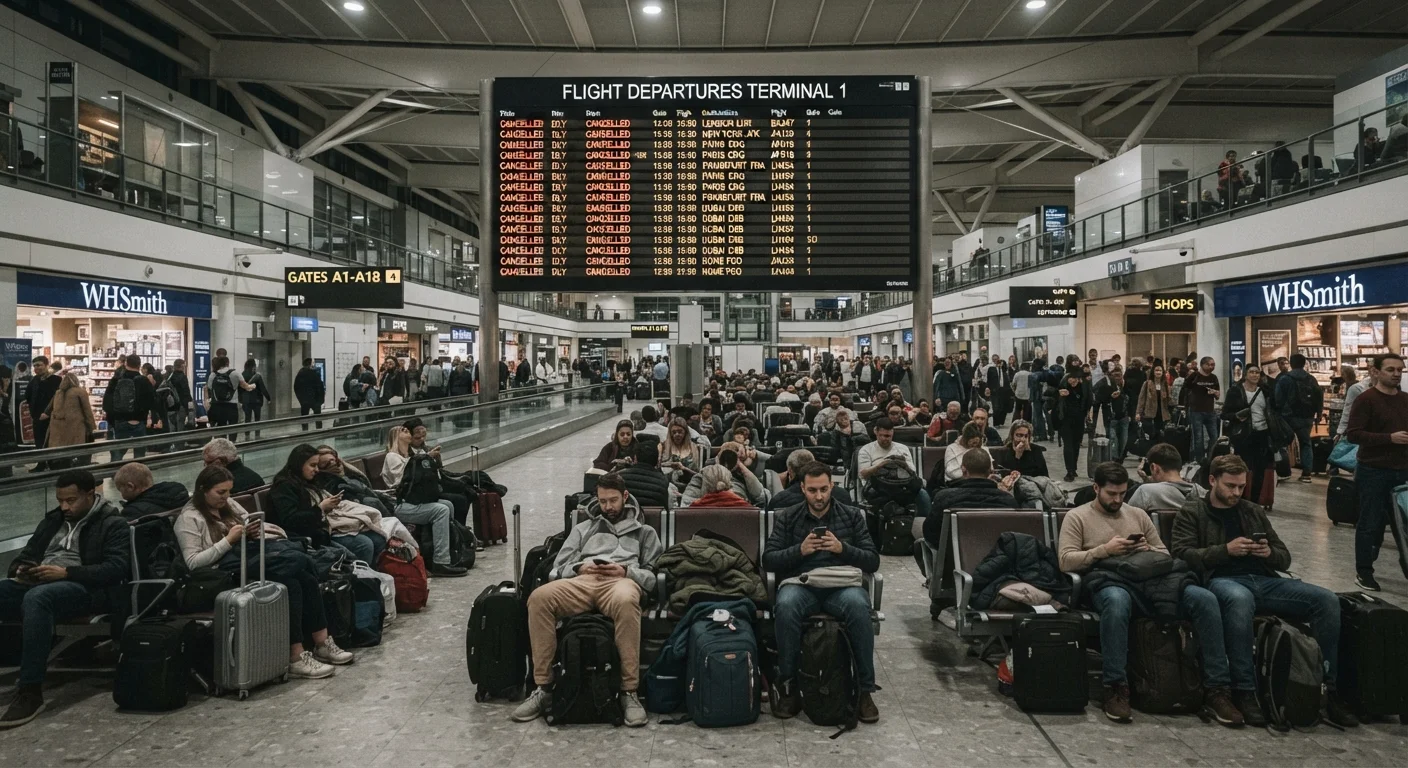
- Document the disruption. Screenshot the departure board, save any delay notification texts or emails, and keep all receipts for meals, transport, or lodging you pay out of pocket.
- Understand your rebooking options. If the airline's next available flight doesn't work for you, ask whether they'll rebook you on a competitor — some carriers will under their service commitments.
If the airline doesn't meet its stated commitments, you can file a complaint directly with the DOT. This creates a formal record and can prompt resolution even after you've returned home.
For expenses the airline won't cover, travel insurance is worth understanding in advance — not as a guarantee, but as a practical buffer. See also our guide to what travel insurance actually covers for a plain-language breakdown of typical policy terms.
Gaps Travelers Often Miss
Even well-prepared travelers tend to overlook a few friction points that compound during disruptions:
Checked baggage during re-routing. If you're rebooked onto a different flight, confirm your checked bags are transferred — don't assume it happens automatically. Delays in re-routing don't always trigger automatic baggage transfers, particularly across airlines. For a fuller look at when checking a bag adds risk, our article on checked luggage vs. carry-on covers the trade-offs clearly.
Connecting flights and downstream costs. A delay that causes you to miss a connection can cascade into hotel stays, missed pre-paid tours, or car rental no-shows. Airlines generally cover only what they caused directly — not the downstream costs you incurred on bookings through other providers. This is one area where hidden travel costs catch people off guard.
International travel. If your itinerary includes flights departing from EU airports, different — often stronger — passenger protections may apply. Verify the rules that apply to each flight segment, not just your departure from the U.S.
Staying calm, asking the right questions, and knowing where the legal floor actually sits puts you in a far stronger position than most fellow travelers when a delay strikes.
Frequently Asked Questions
Yes. Under U.S. DOT rules, airlines must offer a full refund to the original form of payment when they cancel a flight, regardless of the reason. This applies even to non-refundable tickets. You are not obligated to accept a travel voucher instead.
No federal law in the U.S. mandates automatic cash compensation for delayed flights, unlike in the EU. However, some carriers voluntarily offer meal vouchers, hotel stays, or travel credits depending on the length and cause of the delay. Check the airline's customer service commitments before assuming.
A controllable delay is caused by the airline — such as a mechanical issue or crew scheduling problem. An uncontrollable delay results from weather, air traffic control, or other external factors. Airlines typically offer more assistance for controllable delays, though definitions can vary by carrier.
Yes. Trip delay coverage in many travel insurance policies reimburses out-of-pocket expenses like meals, lodging, and transportation when your journey is disrupted beyond a set number of hours. Policy terms vary, so review the conditions before purchasing.
Contact the airline immediately — in person at the gate, by phone, or via the airline's app. Ask about rebooking options, what the airline is providing, and get written or digital confirmation of the delay. Document everything, including departure board screenshots and any receipts.
Yes. The DOT requires major U.S. airlines to publish customer service commitments and display them transparently. The DOT's Airline Customer Service Dashboard lets travelers compare what airlines have promised to provide during disruptions.
The content on this site is for informational purposes only and is not a substitute for professional advice. Always consult a qualified professional for guidance specific to your situation.