

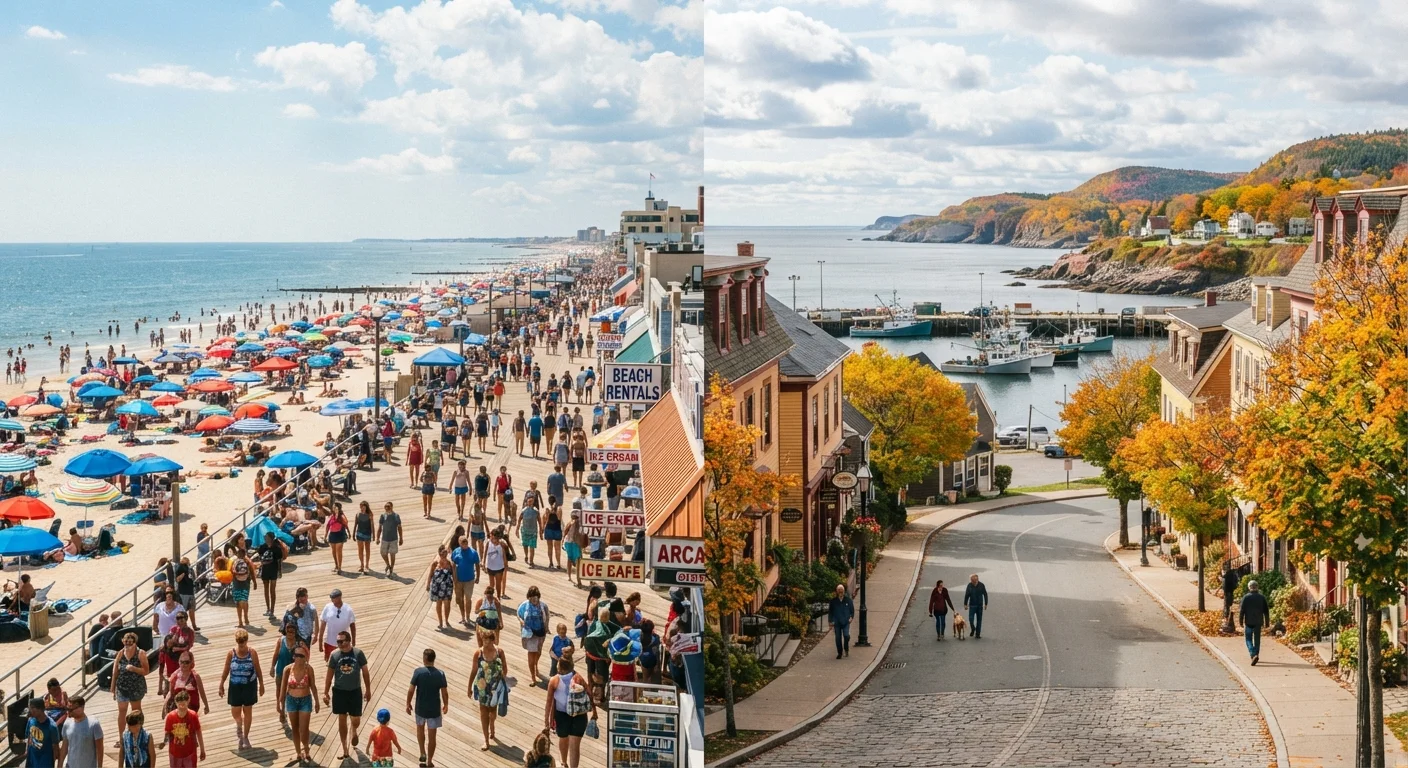
Our Verdict
Peak season delivers predictability and peak experiences at a premium price, while shoulder season rewards flexible, patient travelers with quieter sights and lower costs — but requires more research and risk tolerance. There's no single winner; the better choice depends on what you value most for a specific trip.
| Best for | Recommended |
|---|---|
| Families with school-age children or fixed vacation windows | Peak Season |
| Budget-conscious travelers with flexible schedules | Shoulder Season |
| First-time visitors to iconic, weather-dependent destinations | Peak Season |
| Repeat visitors who want a more local, unhurried experience | Shoulder Season |
Understanding the Two Seasons
Every destination has a rhythm. Peak season is when the most visitors show up — typically aligned with favorable weather, school breaks, or major holidays. Think July in Paris, December in Hawaii, or summer weekends in national parks. Shoulder season falls in the windows just before and just after that rush: spring and fall in many European cities, late April in the Caribbean before hurricane season, or October in the American Southwest.
Neither label is fixed globally. A beach town's peak might be July; a ski resort's peak is January. Knowing your specific destination's rhythm matters far more than applying a universal calendar. Check historical visitor data or local tourism board resources before assuming when shoulder season actually falls. See our travel tips hub for destination-specific planning guidance.
The Real Cost Comparison
Pricing differences between peak and shoulder travel are real, though the gap varies widely by destination and booking window. Flights and hotels typically command a premium during peak demand — sometimes 20–50% more, depending on how constrained supply is. Shoulder season doesn't guarantee rock-bottom fares, but competitive pressure is lower and last-minute availability tends to improve.
| Peak Season | Shoulder Season | |
|---|---|---|
| Typical Pricing | Higher flights & lodging | Moderately lower costs |
| Crowd Levels | High — especially at major sites | Noticeably fewer visitors |
| Weather Reliability | Generally most predictable | More variable by destination |
| Service & Availability | Full schedules, all venues open | Some reduced hours or closures |
| Advance Booking Pressure | Book months ahead required | More last-minute flexibility |
| Local Atmosphere | Tourism-oriented, lively | Often more relaxed, local feel |
Beyond sticker prices, consider the hidden costs on each side. Peak season may mean paying for experiences you barely enjoy due to long wait times — museum queues, fully booked restaurant reservations, or sold-out tours. Shoulder season savings can evaporate if unexpected weather forces itinerary changes or if you need travel insurance for more volatile forecasts. Our guide to budget travel trade-offs explores how apparent savings sometimes come with overlooked costs.
Crowds, Availability, and the Experience Factor
This is where shoulder season often shines most clearly. Standing in front of a famous landmark without crowds pressing in, or getting a same-day reservation at a well-regarded local restaurant — these aren't trivial perks. At high-traffic sites like major national parks or popular European squares, summer crowds can genuinely diminish the experience for many travelers.
That said, peak season has a real availability advantage. Tours run on full schedules, seasonal businesses are open, ferry services run more frequently, and staffing levels are higher. In shoulder season, some attractions operate on reduced hours or close entirely. Island resorts may have fewer dining options open; smaller museums may shift to weekend-only hours. Always verify current operating schedules directly with the venue or local tourism authority before finalizing plans.
Research Operating Schedules Directly
Shoulder season hours for tours, ferries, and smaller attractions aren't always updated online in real time. Contact venues directly or check local tourism authority websites — not just third-party aggregators — to confirm what's actually open during your travel window. Building an extra day of buffer into your itinerary can absorb the occasional closure without derailing your trip.
Weather: The Honest Picture
Peak season is usually peak season for a reason — the weather tends to cooperate. July in the Mediterranean, February in Patagonia, December in the Caribbean: these windows exist because conditions are most reliably pleasant. That reliability has real value, especially for outdoor-heavy itineraries or once-in-a-lifetime trips.
Shoulder season weather is more variable, not necessarily bad. October in New England can be spectacular; late April in Southeast Asia offers warm days before the monsoon arrives. The key is understanding what variable means for your specific destination. Some shoulder-season risks are minor (a few more overcast days); others are significant (the early edge of hurricane season, unpredictable mountain snowfall, or rainy-season downpours that can affect access to certain areas). Destinations like Iceland present a vivid case study — see our Iceland seasonal breakdown for how dramatically conditions differ across the year.
How to Decide What's Right for Your Trip
Start with your non-negotiables. If school-year calendars, a partner's work schedule, or a specific event anchor your dates, peak vs. shoulder may not be a real choice — and that's fine. Work with the timing you have and plan accordingly.
If you do have flexibility, ask these questions: How weather-sensitive is your itinerary? How much does crowd density affect your enjoyment? Are there specific tours, restaurants, or access requirements that depend on full-season operations? What's your financial cushion for unexpected changes?
Shoulder season rewards travelers who do homework — confirming operating hours, checking weather patterns over multiple recent years, and building flexibility into their plans. It's worth the research for many travelers. Peak season rewards those who plan far ahead: booking flights and accommodations early, reserving timed-entry tickets for popular sites, and treating the crowds as part of a shared experience rather than an obstacle. Your flight strategy can also shift meaningfully between seasons, since routing options and prices respond to demand patterns.
The content on this site is for informational purposes only and is not a substitute for professional advice. Always consult a qualified professional for guidance specific to your situation.