

Summary
18 items · 10–20 minutes
Why Prep Work Makes or Breaks a Meal
Even experienced cooks run into trouble when they skip the setup phase. You're halfway through sautéing onions when you realize you forgot to thaw the chicken. The sauce is reducing fast, but you haven't minced the garlic yet. These moments of scramble don't just create stress — they affect the quality of the food on your plate.
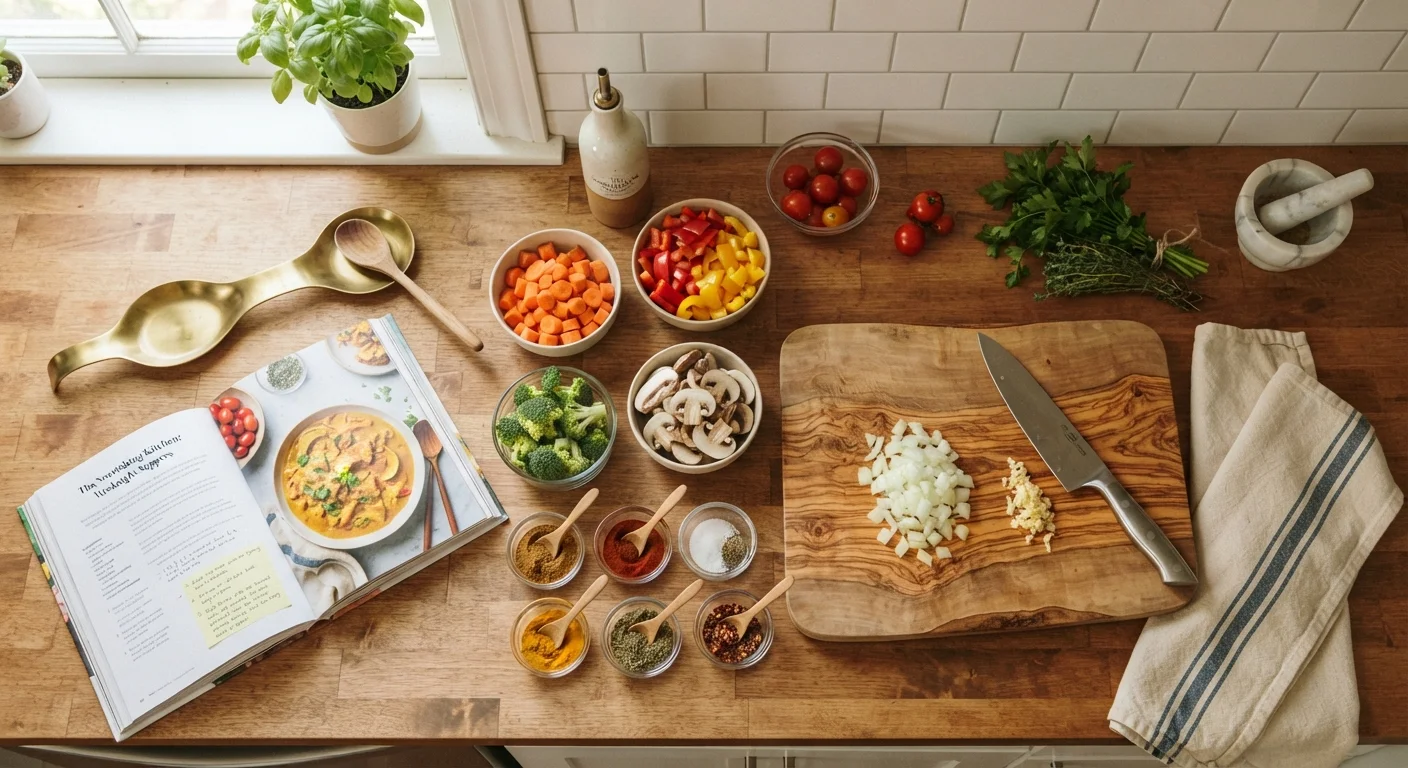
The solution isn't cooking faster. It's cooking smarter before you ever turn on a burner. If you're new to cooking at home, building a pre-cook routine is one of the highest-leverage habits you can develop. It's what professional kitchens call mise en place — a French term meaning "everything in its place."
This checklist walks you through every step to take before the first ingredient hits the pan, organized by category so you can work through it quickly and consistently.
Cutting board
Provides a stable, sanitary surface for chopping and prepping all ingredients.
Chef's knife
The primary tool for cutting vegetables, proteins, and aromatics during prep.
Measuring cups and spoons
Ensures accurate portioning of dry and liquid ingredients before cooking begins.
Small prep bowls or ramekins
Hold pre-measured spices and ingredients so they're ready to add at the right moment.
Kitchen timer
Tracks cooking times for multiple components when steps overlap.
Instant-read thermometer
Verifies safe internal temperatures for proteins, removing guesswork from doneness.
Waste bowl
Keeps the prep area clear by collecting scraps and trimmings in one place.
Your Complete Pre-Cooking Checklist
Work through these groups in order. The whole process typically takes 10 to 20 minutes depending on the complexity of the dish — time that pays back in a calmer, more controlled cooking experience.
Read and Understand the Recipe
Inventory Your Ingredients
Prep Your Ingredients
Prepare Your Equipment and Workspace
Final Check Before You Begin
Don't Skip the Full Recipe Read-Through
Skimming a recipe and starting immediately is the most common cause of mid-cook mistakes. Steps that seem minor — like salting meat an hour ahead, or bringing butter to room temperature — can't be undone once you've already begun. Give yourself the full picture before the first burner turns on.
Building This Into Your Cooking Routine
The first few times you work through this list, it may feel like extra effort. That's normal. Within a few sessions, most of these checks become automatic — part of how you naturally approach a recipe rather than a separate task.
One especially useful habit: do your read-through the night before or earlier in the day. That's when you'll catch that a marinade needs four hours, or that a dish requires an ingredient you don't have. Catching those gaps early keeps dinner on schedule.
For more involved meals, weekend batch cooking can extend this prep mindset across the whole week — prepping once for multiple meals rather than starting from scratch each night. And if your recipe involves meat, remember that resting time after cooking is just as important as what you do before; understanding how resting meat works rounds out the full picture.
Good prep isn't about perfection. It's about reducing the number of decisions and physical tasks you have to handle simultaneously while the heat is on. The more you do before, the more attention you can give to what's actually cooking.
Food Safety Starts Before You Cook
Cross-contamination between raw proteins and ready-to-eat foods is a leading cause of foodborne illness. Use separate cutting boards for raw meat and produce, wash hands after handling raw proteins, and keep raw and prepped ingredients stored separately in the refrigerator. These habits take seconds and make a meaningful difference in keeping your kitchen safe.
The content on this site is for informational purposes only and is not a substitute for professional advice. Always consult a qualified professional for guidance specific to your situation.