

Our Verdict
Weekend batch cooking genuinely reduces weeknight stress and can support more consistent eating habits at home — but it rarely performs the miracles its advocates promise. The real benefit isn't having every meal pre-made; it's reducing the number of decisions and steps between you and dinner on a Tuesday night. Done selectively and realistically, it's a worthwhile habit for most home cooks.
Ideal for home cooks who eat dinner at home most nights, have at least two to three hours free on weekends, and struggle more with weeknight time pressure than with cooking skill itself.
What Batch Cooking Actually Involves
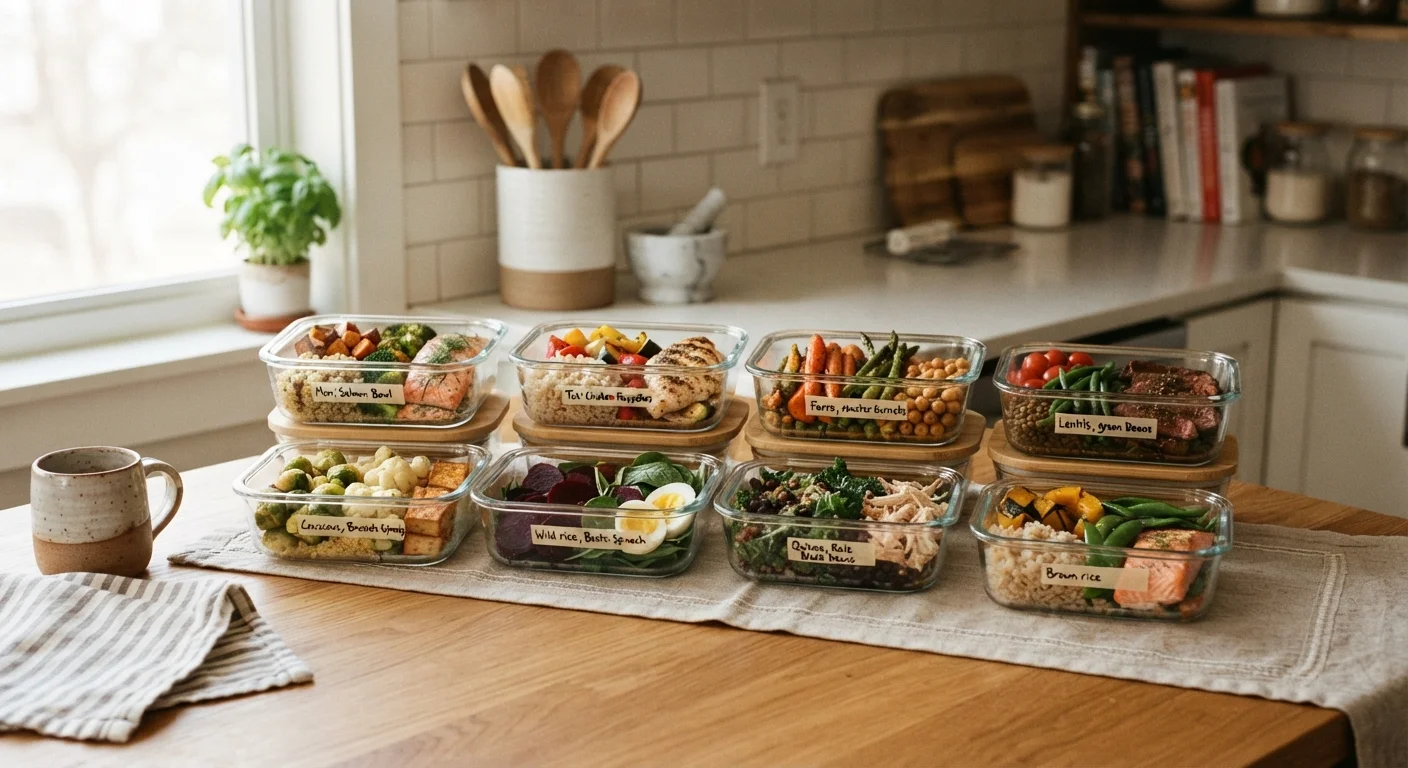
Batch cooking — sometimes called meal prepping — means dedicating a block of time, usually on a Saturday or Sunday, to cook components or full meals that you'll eat across the week. The approach ranges from fully assembled dinners stacked in the fridge to a looser strategy of prepped ingredients: washed greens, cooked grains, marinated proteins, and roasted vegetables that can be mixed and matched.
The looser, component-based method tends to work better for most households. Fully cooked meals can feel repetitive by Wednesday, and some dishes — pasta, stir-fries, fish — simply don't reheat well. Starting with foundational elements gives you more flexibility. A pot of cooked farro, a sheet pan of roasted sweet potatoes, and a batch of seasoned ground turkey can become grain bowls, tacos, or a quick soup depending on your mood. For technique ideas that complement this approach, see how sheet pan meals work and what slow cookers do well.
The Real Advantages
Cuts weeknight cooking time significantly
With grains, proteins, and vegetables already cooked, assembling a weeknight dinner often takes under 15 minutes rather than 45 or more.
Reduces daily decision fatigue
Knowing dinner options are already waiting removes one significant stressor from evenings when energy is low and hunger is high.
Supports more consistent eating at home
Having ready ingredients lowers the temptation to default to takeout, which can support both dietary consistency and household budgets over time.
Encourages intentional grocery shopping
Planning a prep session naturally prompts more purposeful buying, which can reduce impulse purchases and cut down on food waste across the week.
Teaches efficient kitchen multitasking
Running multiple components simultaneously — roasting vegetables while grains simmer — builds practical cooking efficiency that carries into everyday meals.
The most consistent benefit home cooks report is reduced decision fatigue on weeknights. When the ingredients are already cooked and waiting, the barrier between a stressful evening and a decent meal drops significantly. That matters because fatigue and hunger together push most people toward takeout or skipping cooking entirely.
Batch cooking also pairs naturally with a more intentional grocery routine. When you plan what you'll prep on Sunday, you buy with purpose and waste less. For a fuller framework on that habit, weekly grocery and meal planning habits offers a practical checklist.
The Honest Disadvantages
Weekend time cost is substantial
A thorough prep session, including shopping, cooking, and cleanup, can easily consume two to four hours — a meaningful chunk of limited weekend time.
Food fatigue sets in by mid-week
Eating the same prepped meals repeatedly can feel monotonous by Thursday, often undoing the convenience benefit by pushing people toward other options anyway.
Not all dishes reheat well
Pasta, fish, fried foods, and many salads degrade noticeably in texture and flavor after refrigeration, limiting which meals are actually good candidates for batch prep.
Requires adequate fridge and container storage
Storing a week's worth of prepped food demands a well-organized refrigerator and enough airtight containers, which not every household has readily available.
Financial savings are often modest
Unless batch cooking directly replaces frequent restaurant or delivery spending, the grocery cost difference between prepping in bulk and cooking nightly is often minimal.
Food safety window limits flexibility
Most cooked proteins and grains should be eaten within three to four days, which means careful rotation planning is needed to avoid waste or safety concerns.
It's worth being realistic about the limits. Many first-time batch cookers overestimate how much they'll want to eat a refrigerated meal by Thursday. Food fatigue is real, and it can push you back toward ordering food anyway — just with a fridge full of containers you feel guilty about.
The time cost is also non-trivial. A thorough prep session takes two to four hours including cleanup, which is a meaningful chunk of a weekend day. If weekends are already short on free time, batch cooking can add stress rather than relieve it. For cooks who prefer flexibility over structure, a flexible meal planning approach may be a better fit. Alternatively, keeping quick proteins like eggs on hand — see eggs for dinner ideas — can cover nights when the prep runs out.
What It Realistically Saves — and What It Doesn't
3–4 hrs
Typical weekend prep session with cleanup
Time estimates from home cook surveys and culinary educators consistently place a full meal prep session in this range, not counting advance grocery shopping.
3–4 days
Safe fridge storage for cooked proteins and grains
The USDA's FoodKeeper guidance indicates cooked meat, poultry, and cooked grains are generally safe when refrigerated and consumed within this window.
20–40 min
Potential time saved per weeknight dinner
The savings depend on your baseline — cooks currently making meals from scratch each night see the largest gains from prepped components.
The time savings on weeknights are real but context-dependent. If your current baseline is cooking from scratch every night, batch cooking can trim 20 to 40 minutes per dinner. If you already rely on simple 20-minute meals, the margin narrows considerably.
Financial savings are often overstated. Batch cooking doesn't automatically reduce your grocery bill — that depends on what you buy and how much you waste. The biggest cost benefit comes from replacing restaurant or delivery meals, not from cooking bulk versus small quantities. For households already eating mostly at home, the financial impact is modest. For those currently spending heavily on takeout, the savings can be significant.
Food safety is also worth mentioning: cooked proteins and grains stored in the refrigerator are generally safe for three to four days. Planning your week so the most perishable items are eaten first — and freezing anything beyond that window — helps avoid waste and keeps food safe. When in doubt, foundational cooking basics can help you build the skills to make smarter prep decisions.
Making It Work Without Overcommitting
The most sustainable batch cooking routines are usually modest ones. Rather than trying to cook every meal for the week, focus on two or three high-leverage tasks: a cooked grain, one roasted vegetable, and one protein. Those three elements, combined with pantry staples, can anchor multiple dinners without demanding a full Sunday in the kitchen.
Before your prep session, a pre-cooking prep checklist helps you organize ingredients and avoid mid-session scrambles. And if you find yourself mid-week with odds and ends rather than a full meal, building a meal from what's in your fridge is a practical fallback skill worth developing alongside any batch cooking habit.
A Note on Food Safety and Storage
Cooked food stored in the refrigerator should generally be consumed within three to four days, according to USDA guidance. For prep that extends beyond that window, freeze portions immediately rather than letting them sit. Use airtight containers and label them with the date so nothing gets forgotten at the back of the fridge. When in doubt about whether something is still safe to eat, err on the side of discarding it.
The content on this site is for informational purposes only and is not a substitute for professional advice. Always consult a qualified professional for guidance specific to your situation.