

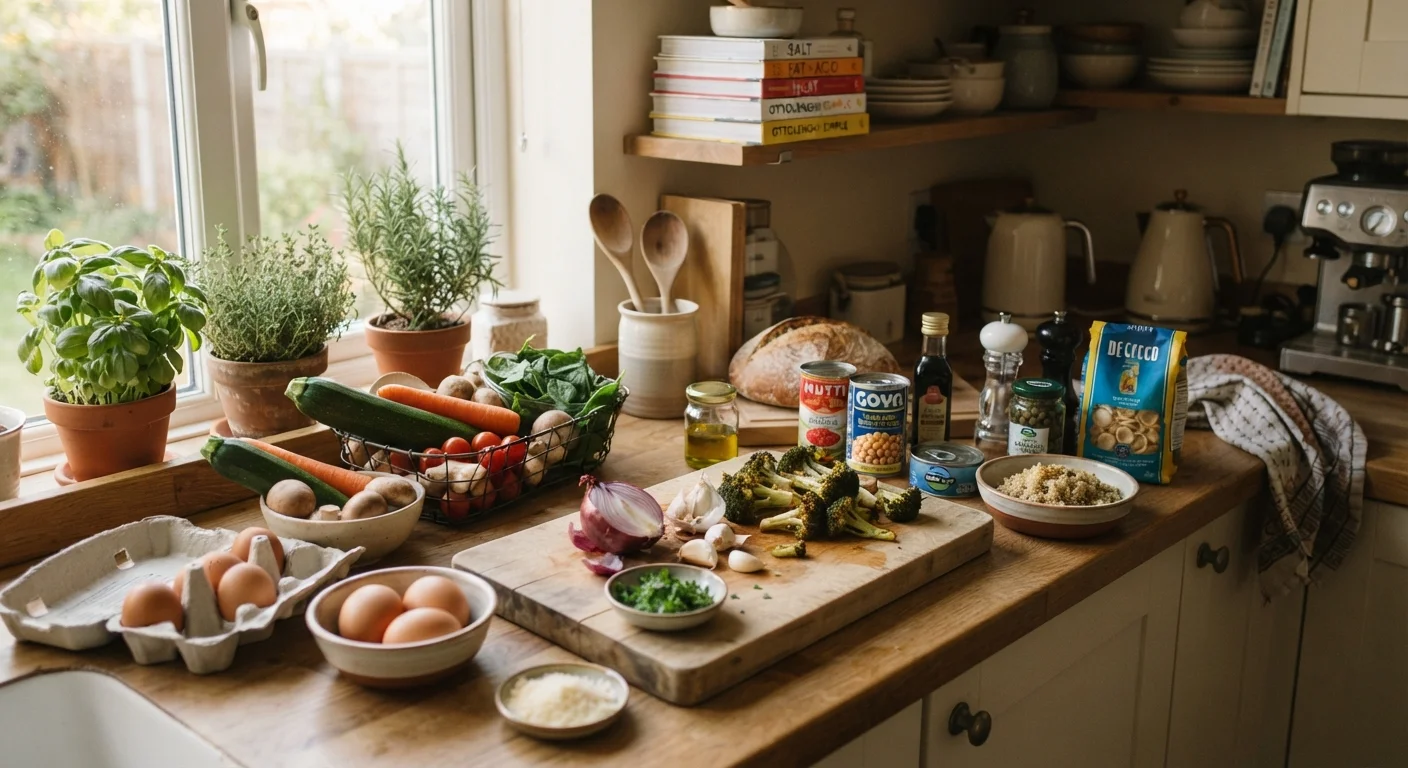
Why a Framework Beats a Recipe on Busy Nights
Recipes require specific ingredients at specific quantities. Your fridge rarely cooperates. What actually gets dinner on the table most nights isn't the ability to follow instructions precisely — it's knowing how a meal is structured so you can fill in the blanks with what you have.
Think of any satisfying dinner as three moving parts: a base (grains, pasta, bread, or potatoes), a protein (eggs, beans, meat, tofu, or cheese), and vegetables (fresh, frozen, or even canned). Once you recognize those categories, you stop looking for a recipe and start solving a simpler puzzle. This approach also pairs well with the habits described in our flexible meal planning guide — structure without the rigidity.
What you will need
Stock These Pantry Staples and You're Never Truly Stuck
The difference between a random pile of ingredients and an actual meal is usually something from your pantry. A well-stocked shelf gives you flavor bridges and textural contrast without a grocery run. Focus on keeping a rotation of the following available:
- Acids: vinegar (red wine or apple cider), lemon juice, canned tomatoes
- Fats and oils: olive oil, neutral cooking oil, butter
- Umami boosters: soy sauce, fish sauce, Worcestershire, miso paste
- Aromatics: garlic, onion, shallots — fresh or dried
- Canned proteins and legumes: chickpeas, white beans, lentils, tuna
- Grains and starches: rice, pasta, oats, bread
For more on building consistent habits around pantry stocking, the weekly grocery and meal planning habits overview is a useful companion read.
Large skillet or sauté pan
Handles sautéing, scrambles, frittatas, and quick braises — the most versatile pan for improvised meals.
Sheet pan
Enables roasting proteins and vegetables together with minimal cleanup.
Chef's knife and cutting board
Used to prep whatever vegetables and proteins you're working with.
Wooden spoon or silicone spatula
Needed for stirring, deglazing, and moving ingredients around the pan.
How to Put It Together: Step by Step
The steps below walk you through the decision-making process that experienced home cooks run through instinctively. Follow it a few times and it becomes second nature.
Take stock of what you actually have
Open the fridge, freezer, and a couple of pantry shelves. Physically pull out anything that needs to be used soon — wilting greens, half a block of tofu, that single zucchini. Sort what you see into the three categories: base, protein, vegetables. You don't need all three to be abundant; you just need something in each.
Pick a cooking method based on your ingredients
Your ingredients should guide the method, not the other way around. Tender greens and eggs point toward a skillet meal. Sturdier root vegetables and a piece of chicken point toward roasting. Broth, canned tomatoes, and beans point toward a quick braise or soup. Choosing the method first removes most of the guesswork.
Build flavor before adding everything
Start with aromatics — onion, garlic, or shallot — in your fat of choice over medium heat. Cook until softened and fragrant, usually 2–4 minutes. This step creates the flavor base that makes improvised food taste intentional rather than thrown together. Add heartier vegetables next, then more delicate ones later.
Add your protein and cook it through
Add your protein to the pan or sheet pan. If using eggs, add them near the end. If using canned beans or pre-cooked grains, they just need to heat through. Raw meat and poultry need to reach safe internal temperatures — use a food thermometer to confirm doneness rather than guessing by color alone.
Season in layers, then taste and adjust
Add salt at multiple points — not just at the end. Once everything is cooked, taste before finishing. A splash of acid (lemon juice, vinegar, or a spoonful of canned tomato) brightens flavors that feel flat. A drizzle of good olive oil, a spoonful of miso stirred in, or a pinch of chili flakes can completely change a dish's character. Taste, adjust, and trust your palate.
Leftover Cooked Grains Are a Weeknight Superpower
If you have cooked rice, farro, quinoa, or pasta already in the fridge, your meal is halfway done. Cold cooked grains are actually better for fried rice and grain bowls than freshly cooked ones — the drier texture helps them absorb sauces and crisp up properly. Consider cooking a larger batch on weekends. Our batch cooking overview covers whether that trade-off is worth it for your routine.
Common Ingredient Combinations That Reliably Work
If you're still drawing a blank after taking stock of your fridge, these pairings consistently produce satisfying results with minimal effort:
- Eggs + any vegetable + cheese: A frittata, scramble, or shakshuka. Our guide to eggs for dinner covers eight reliable directions.
- Cooked grains + vegetables + soy sauce + egg: Fried rice works with almost any grain and any vegetable combination.
- Beans + canned tomatoes + aromatics: A simple braise or stew that works over rice, toast, or pasta.
- Any protein + sheet pan vegetables + olive oil: Roast at 400–425°F until caramelized. The sheet pan dinner method explains why it works so consistently.
These formats are part of the broader cooking basics skill set worth developing over time.
Use-By Dates and Food Safety Still Apply
Improvising with what you have doesn't mean ignoring food safety. Check use-by and best-by dates, and when in doubt about whether something is still good, err on the side of discarding it. Cooked leftovers stored in the fridge are generally safe for three to four days, per USDA guidance. When stretching ingredients, make sure proteins reach safe internal cooking temperatures.
The content on this site is for informational purposes only and is not a substitute for professional advice. Always consult a qualified professional for guidance specific to your situation.