

Why Eggs Deserve a Bigger Role at Your Dinner Table
For many American households, eggs are breakfast food — full stop. That mental habit leaves one of the kitchen's most useful proteins sitting idle for two-thirds of the day. Eggs cook faster than almost any other protein, keep well in the refrigerator, and adapt to nearly every flavor profile you can imagine. They're also genuinely forgiving: overcooked a little? Still dinner. Ran short on one ingredient? Swap something in. That flexibility is worth building on.
What holds home cooks back is less about skill than about familiarity. Most people have a handful of egg techniques they trust and stop there. The eight formats below are meant to expand that range without requiring new equipment or advanced technique. Each one works as a complete dinner on its own, and most are done in under 30 minutes. If you're already thinking about how to build meals from what's already on hand, our weeknight fridge-raid guide pairs directly with this approach.
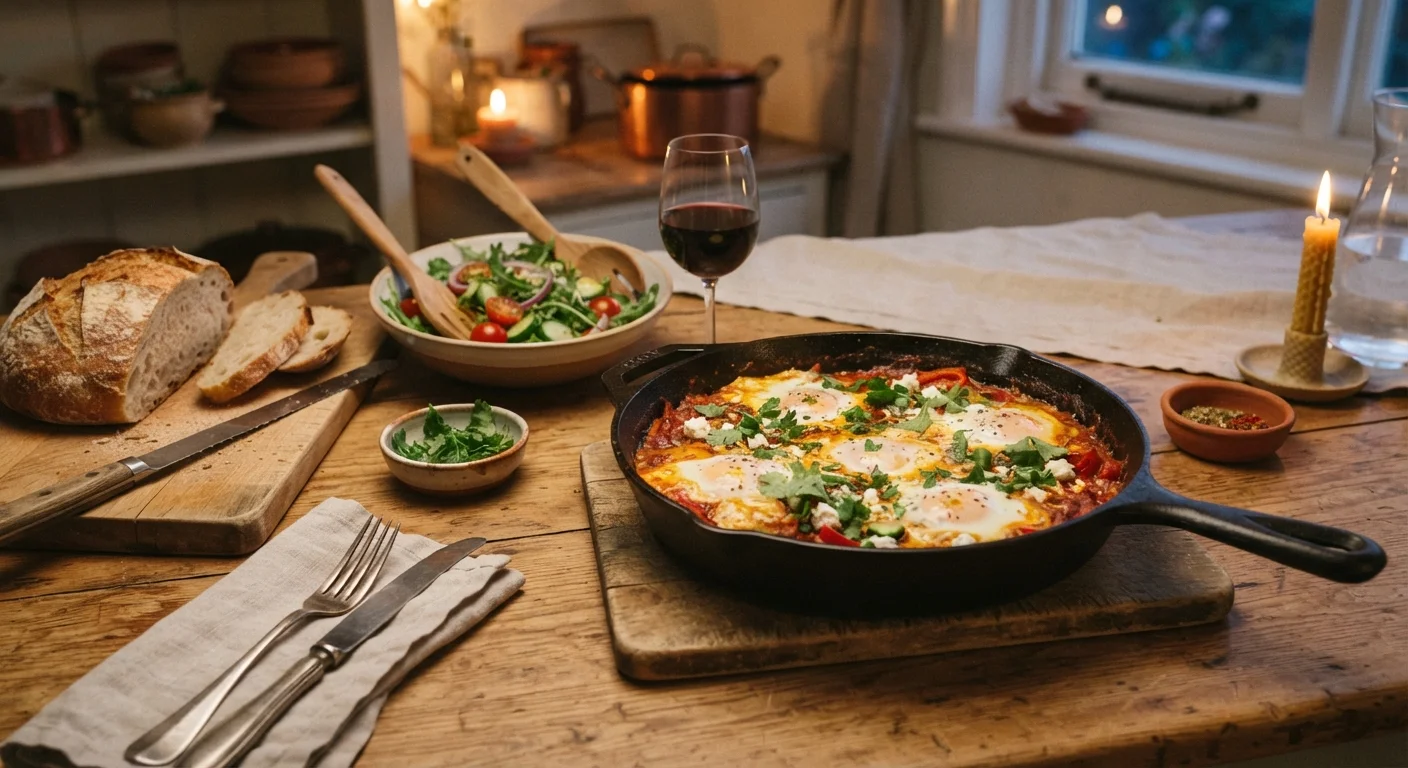
Shakshuka
Shakshuka is a North African and Middle Eastern dish of eggs poached directly in a spiced tomato and pepper sauce. It's made in a single skillet, uses pantry staples — canned tomatoes, garlic, cumin, paprika — and comes together in about 25 minutes. Serve it with crusty bread to scoop up the sauce and you have a complete, satisfying meal. The sauce itself is highly adaptable: add chickpeas for more protein, stir in harissa for heat, or top with crumbled cheese.
One skillet, canned tomatoes, and 25 minutes yield a deeply flavorful, restaurant-quality dinner.
Frittata
A frittata is essentially an open-faced omelette that starts on the stovetop and finishes in the oven. It handles virtually any combination of leftover vegetables, cooked grains, cheese, or cured meats. Beat eggs with a splash of milk, stir in your fillings, cook until the edges set in an oven-safe skillet, then broil for two to three minutes until the top is golden. It slices like a pie and holds at room temperature, which also makes it useful for batch-cooking situations — see our batch cooking guide for how that fits into a weekly routine.
A frittata turns almost any leftover vegetable or grain into a structured, sliceable dinner.
Egg Fried Rice
Day-old cooked rice is the key ingredient here — fresh rice is too moist and turns mushy. Push your cold rice around a lightly oiled, very hot pan, create a well in the center, scramble two or three eggs directly in that space, then fold everything together with soy sauce, sesame oil, and whatever vegetables or proteins you have. Frozen peas, scallions, and a dash of rice vinegar round it out. The whole process takes under 15 minutes once your pan is hot.
Day-old rice and a hot pan are all you need to turn eggs into a 15-minute complete dinner.
Baked Eggs in Tomato Sauce
Similar in spirit to shakshuka but simpler in spicing, baked eggs in tomato sauce skip the stovetop simmering step. Spread marinara or crushed tomatoes in a baking dish, nestle raw eggs into wells, season, and bake at 375°F until the whites are just set and the yolks are still slightly runny — roughly 12 to 15 minutes. Add a handful of spinach, some olives, or white beans before baking to build it out. Excellent with toasted bread or served over polenta.
Baked eggs in marinara require almost no active cooking — the oven does the work for you.
Egg Drop Soup
Egg drop soup is faster than almost any dinner you can make: bring a quart of chicken or vegetable broth to a gentle simmer, season with soy sauce and white pepper, then slowly drizzle in two beaten eggs while stirring in a wide circular motion. The eggs cook instantly into silky ribbons. Add cornstarch slurry if you want a slightly thicker body, and finish with sliced scallions and a few drops of sesame oil. Serve with steamed rice for a light but warming dinner.
Egg drop soup comes together in under 10 minutes and requires almost nothing from your pantry.
Savory Dutch Baby
Most people know Dutch babies as sweet, puffy oven pancakes — but the same batter works beautifully in a savory direction. Blend three eggs, half a cup of flour, half a cup of milk, salt, and pepper. Pour into a hot, buttered cast-iron skillet and bake at 425°F for about 20 minutes until dramatically puffed and golden. Pull it from the oven and top it with arugula, parmesan, a fried egg, or roasted vegetables. It deflates quickly, so serve immediately — the texture is custardy inside and crispy at the edges.
A savory Dutch baby is dramatic, fast, and endlessly toppable — a real weeknight showpiece.
Huevos Rancheros
This Mexican breakfast-turned-dinner puts fried eggs on warm corn tortillas with a ranchero salsa — a cooked sauce of tomatoes, chiles, onion, and garlic. Top with refried or whole black beans, a spoonful of sour cream, and sliced avocado if you have it. The salsa can be made ahead and refrigerated for several days, which makes weeknight assembly very fast. It's a hearty, colorful plate that requires no special technique beyond frying eggs and warming tortillas.
Make the ranchero salsa ahead of time and huevos rancheros becomes a five-minute assembly dinner.
Spanish-Style Tortilla Española
The tortilla española is a thick potato-and-egg omelette cooked low and slow in olive oil. Thinly sliced potatoes (and optionally onion) are gently cooked in oil until very tender, drained, then combined with beaten eggs and returned to the pan. The result is a dense, creamy cake that's served in wedges at room temperature. It keeps well in the refrigerator and tastes even better the next day — making it a genuinely useful make-ahead dinner option alongside other low-fuss weeknight formats.
Tortilla española improves overnight — one of the few egg dishes that genuinely rewards being made ahead.
Making Egg Dinners Work Night After Night
The common thread across all eight formats is pantry reliability. Eggs do most of the heavy lifting, which means the supporting ingredients — vegetables, grains, canned legumes, condiments — can shift based on whatever you have available. A well-stocked pantry makes this easier; our pantry staples reference guide outlines the basics that experienced home cooks keep on hand. From a nutritional standpoint, pairing eggs with vegetables and a starchy component (rice, bread, beans) moves your plate toward balance without requiring a strict formula — the core idea behind building a balanced plate.
Start With One New Format Per Week
Rather than trying several new egg dinners at once, pick one format from this list and cook it twice in the same week. The second time is always faster and more confident than the first. After a month, you'll have four new reliable dinners that feel like second nature.
If eggs for dinner starts to feel routine, that's a feature, not a flaw. Routine meals reduce decision fatigue, which is one underrated reason weeknight cooking breaks down. The goal is a small repertoire of reliable formats you can execute on autopilot — and eggs, as you'll find, are one of the more dependable anchors for exactly that.
The content on this site is for informational purposes only and is not a substitute for professional advice. Always consult a qualified professional for guidance specific to your situation.