

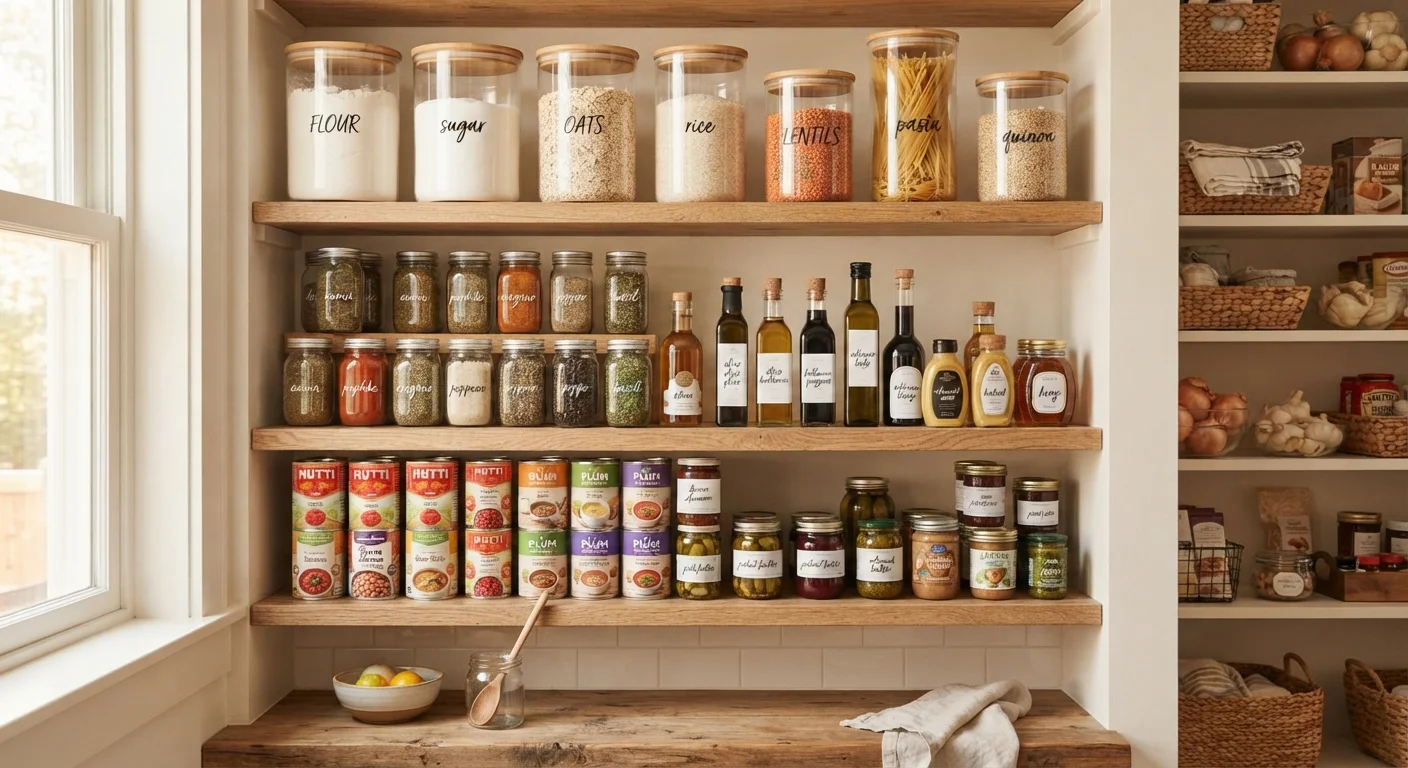
Why Pantry Staples Matter More Than Any Single Recipe
Experienced home cooks don't panic when 5 p.m. rolls around with no plan. Their secret isn't culinary genius — it's a reliable pantry. When your shelves hold the right dry goods, canned items, and condiments, a satisfying meal is almost always within reach, even on the most underprepared evenings.
A well-considered pantry also reduces how often you need to shop, cuts food waste, and keeps you from reaching for expensive convenience food. If you're just finding your footing in the kitchen, stocking these staples is one of the highest-leverage moves you can make. For seasoned cooks, it's a useful checklist to audit a few times a year.
| Most versatile grain | Long-grain white rice |
| Fastest-cooking dried legume | Red lentils (20–25 minutes, no soaking) |
| Canned tomatoes vs. fresh | Canned often preferred for cooked sauces; fresh for raw applications (Standard culinary guidance) |
| Shelf life of dried pasta | Typically 1–2 years when stored airtight (USDA FoodKeeper guidelines) |
| Essential acid types to keep | At least one vinegar + one fermented liquid (soy sauce or fish sauce) |
| Minimum spice cabinet | Salt, pepper, cumin, paprika, garlic powder, red pepper flakes |
Dry Goods: The Backbone of the Pantry
Grains, legumes, and pasta form the caloric and textural backbone of most everyday meals. Keep at least two or three of these on hand at all times:
- Long-grain white rice and/or brown rice — White rice cooks quickly and pairs with nearly anything. Brown rice adds fiber and a nuttier flavor but takes longer.
- Pasta (multiple shapes) — A short shape like penne and a long shape like spaghetti cover most sauce scenarios.
- Dried lentils — Red lentils dissolve into soups and stews; green or brown lentils hold their shape for salads and sides. No soaking required.
- Canned or dried beans — Chickpeas, black beans, and cannellini are the most versatile. Canned beans are ready in minutes; dried are more economical.
- Rolled oats — Useful well beyond breakfast; they thicken soups and work in a range of baked goods.
- All-purpose flour — A small bag handles roux-based sauces, simple batters, and light baking.
Pair these grains with whatever protein and vegetables you have on hand — the sheet pan dinner method is a natural complement to this approach.
Canned and Jarred Goods: Shelf-Stable Flavor and Protein
Canned and jarred items punch well above their weight in the pantry. They require no refrigeration, last for months or years, and often taste better than out-of-season fresh alternatives.
- Canned whole or crushed tomatoes — The base for pasta sauces, braises, soups, and shakshuka. Whole tomatoes tend to have better flavor than pre-diced.
- Canned tuna or salmon — Fast protein for salads, pasta, and grain bowls.
- Coconut milk — Full-fat coconut milk adds body and richness to curries, soups, and rice dishes.
- Chicken or vegetable broth — Use in place of water when cooking grains, making sauces, or building soups.
- Olives and capers — Small quantities add briny complexity to pasta, salads, and roasted dishes.
Umami
Often described as the fifth basic taste alongside sweet, sour, salty, and bitter, umami is a savory, satisfying depth of flavor. It's found naturally in ingredients like soy sauce, tomatoes, mushrooms, and aged cheeses.
Roux
A cooked mixture of equal parts fat and flour used to thicken sauces, gravies, and soups. It forms the base of many classic preparations such as béchamel and gumbo.
Brine
A saltwater solution — sometimes with vinegar or sugar added — used to preserve or flavor foods. Capers, olives, and many pickled vegetables are packed in brine.
Tamari
A Japanese soy sauce typically brewed with little or no wheat, making it a common gluten-free alternative to standard soy sauce. It has a slightly richer, less sharp flavor.
Don't overlook eggs as a pantry-adjacent protein — while they require refrigeration, they round out a pantry-driven meal faster than almost anything else.
Oils, Acids, Condiments, and Spices
Fat, acid, and seasoning are what transform pantry staples from sustenance into something you actually want to eat. These are the finishing layers every well-stocked kitchen needs.
Fats and Oils
- Neutral oil (such as canola or vegetable oil) — For high-heat cooking like sautéing and frying.
- Extra-virgin olive oil — For finishing dishes, dressings, and lower-heat cooking.
Acids
- Red wine vinegar and apple cider vinegar — A splash brightens any dish that tastes flat.
- Soy sauce or tamari — Adds umami and saltiness; tamari is typically gluten-free.
Core Spices
A manageable spice collection beats a disorganized cabinet full of rarely used tins. Prioritize: kosher salt, black pepper, smoked paprika, cumin, red pepper flakes, garlic powder, dried oregano, and cinnamon. For guidance on when dried herbs outperform fresh ones — and vice versa — see Fresh Herbs vs. Dried Herbs.
Condiments Worth Keeping
- Dijon mustard — Emulsifies dressings and adds depth to sauces.
- Hot sauce — A few drops sharpens almost any savory dish.
- Fish sauce — A small bottle lasts a long time and adds remarkable savory depth to soups and stir-fries.
For a deeper look at building smart shopping habits around a stocked pantry, the practical grocery store walkthrough is a helpful companion read.
The content on this site is for informational purposes only and is not a substitute for professional advice. Always consult a qualified professional for guidance specific to your situation.