

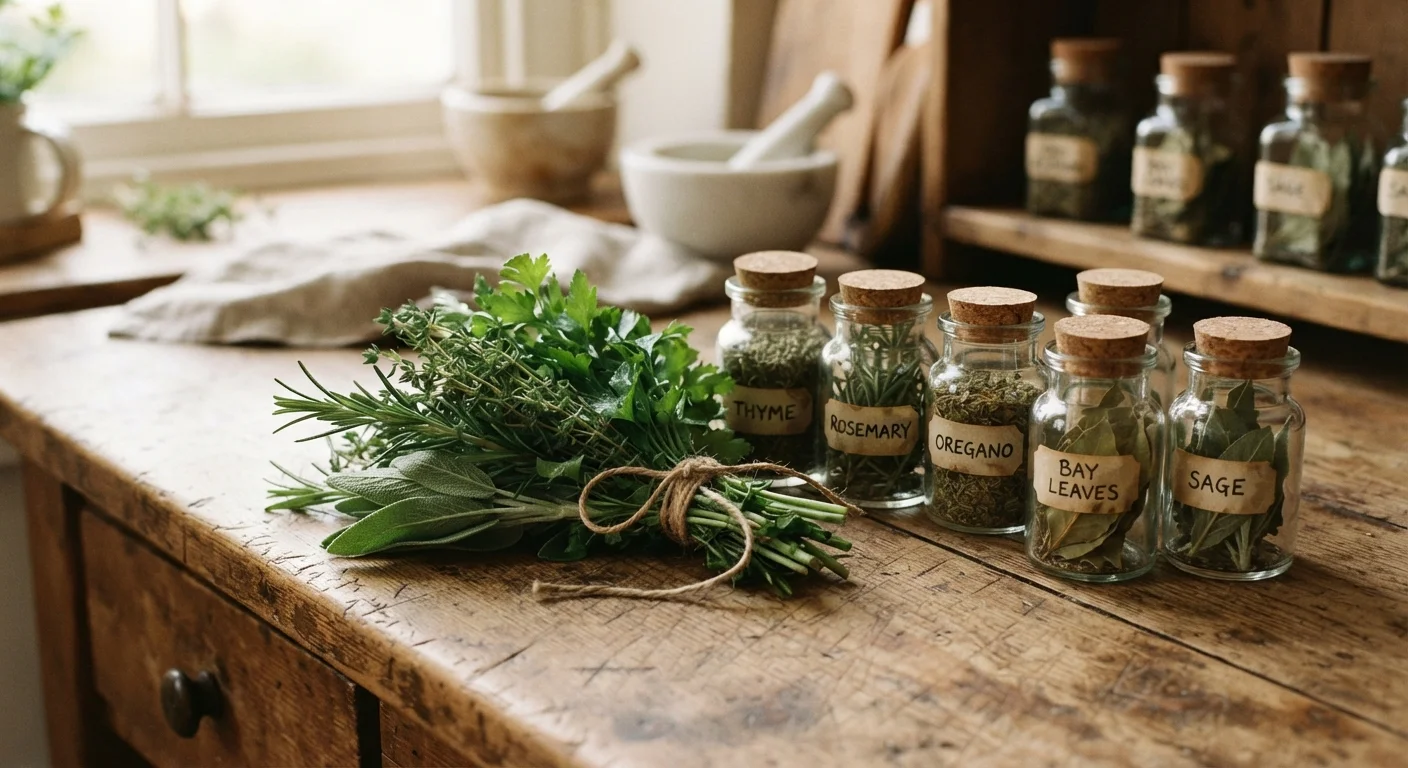
Option A
Fresh Herbs
The bright, aromatic finishing touch.
Best for: Dishes where delicate flavor and visual appeal matter most, like salads, salsas, and last-minute garnishes.
Option B
Dried Herbs
The pantry workhorse with staying power.
Best for: Long-cooked dishes, marinades, and everyday cooking where convenience and concentrated flavor are priorities.
Why the Fresh vs. Dried Question Actually Matters
It's easy to treat fresh and dried herbs as interchangeable — a substitute when one isn't available — but they behave quite differently in cooking. Using dried basil where fresh is called for, or tossing fresh thyme into a slow braise expecting the same result, can leave a dish tasting flat, harsh, or muddled. Understanding the actual differences helps you make deliberate choices rather than guessing.
The core distinction comes down to volatile aromatic oils. Fresh herbs carry these oils in abundance, which is exactly why they smell so vivid when you bruise a leaf. Heat destroys most of those compounds quickly, which means prolonged cooking diminishes fresh herbs to almost nothing. Dried herbs have already lost a portion of their moisture and some delicate aromatics through the drying process, but what remains is more concentrated and more heat-stable. That's why the same herb can perform very differently depending on its form and when you add it. As the cooking myths worth letting go points out, a lot of kitchen frustration comes from applying rules without understanding the underlying reason — and herb selection is a perfect example.
| Criterion | Fresh Herbs | Dried Herbs |
|---|---|---|
| Flavor intensity | Bright and aromatic, fades with heat | Concentrated, more heat-stable |
| Best timing in a dish | End of cooking or raw | Early or mid-cooking |
| Shelf life | Days to 1–2 weeks | 6 months to 1 year |
| Best applications | Garnishes, raw prep, finishing | Braises, stews, rubs, marinades |
| Substitution ratio | 3 parts fresh = 1 part dried | 1 part dried = 3 parts fresh |
| Standout herbs in this form | Basil, cilantro, chives, dill | Oregano, bay leaf, thyme, rosemary |
| Cost and availability | Seasonal, perishable, higher cost | Year-round, shelf-stable, economical |
When Fresh Herbs Are the Right Call
Fresh herbs earn their place in dishes where their flavor is experienced directly, without the buffer of prolonged heat. Think of cilantro stirred into a finished taco, chives scattered over a baked potato, or torn basil layered into a Caprese. In these contexts, the herb is the flavor — it isn't background support, it's the point.
Raw preparations like chimichurri, pesto, gremolata, and herb-forward salad dressings all require fresh herbs. The texture, brightness, and green color simply cannot be replicated with dried. Fresh herbs are also valuable added in the final minute of cooking a sauce or stew — not for depth, but for a top note of freshness that lifts the whole dish.
A few herbs are almost never worth using in dried form: fresh parsley, cilantro, chives, and dill lose so much character when dried that many cooks consider the dried versions nearly pointless for most applications. If a recipe calls for these, fresh is almost always the better path.
1:3
Dried-to-fresh substitution ratio
One teaspoon of dried herbs is a widely accepted equivalent to one tablespoon of fresh, though potency varies by herb type.
~75%
Moisture lost during herb drying
Drying removes most of an herb's water content, concentrating its remaining flavor compounds into a smaller volume.
6–12 months
Typical useful life of dried herbs
Dried herbs stored in a cool, dark, airtight container generally retain meaningful flavor for six months to one year.
When Dried Herbs Are the Better Choice
Dried herbs shine wherever time and heat are part of the equation. A tomato sauce that simmers for an hour, a pot of chili, a braised chicken — these are exactly where dried herbs pay off. The heat and moisture in the dish rehydrate the herbs and draw out flavor compounds over time, integrating them deeply into the dish rather than sitting on top.
Certain herbs actually perform better dried. Oregano, for instance, is used dried in most Italian-American cooking traditions for good reason: drying intensifies its earthy, slightly bitter character in a way that suits long-cooked sauces. Thyme and rosemary also hold up well. Bay leaves are almost exclusively used dried; fresh bay is available but has a noticeably different, more medicinal flavor profile that isn't always preferable.
Dried herbs also make sense for dry rubs, spice blends, and marinades where you want the herb to adhere to a surface or disperse evenly through a mixture. Fresh herbs would release moisture and clump rather than coating evenly. If you're building out a reliable pantry, as covered in the home cook's pantry staples guide, a well-curated set of dried herbs is one of the highest-value investments you can make.
Substitution Ratios and Storage Basics
When you need to swap one form for the other, the standard guideline is to use one teaspoon of dried herb for every tablespoon of fresh — a 1:3 ratio. This accounts for the concentration difference. That said, delicate dried herbs like basil may need slightly more, while potent ones like rosemary may need slightly less. Taste as you go and adjust.
Storage matters considerably for dried herbs. Heat, light, and moisture are their enemies. A cool, dark cabinet away from the stove is far better than a decorative rack mounted near the range. Properly stored dried herbs typically hold acceptable flavor for six months to a year; after that, they don't become harmful, but they do become dull. Rub a pinch between your fingers — if there's no real aroma, they've lost most of their value.
Fresh herbs stored correctly can last longer than most people expect. Hardy herbs like rosemary, thyme, and sage do well wrapped loosely in a slightly damp paper towel and refrigerated. Tender herbs like parsley and cilantro can be treated like cut flowers — trimmed at the base and stored upright in a glass of water in the refrigerator, covered loosely with a bag. This can extend their life by a week or more.
Growing Your Own Herbs: A Practical Middle Ground
A small pot of basil, parsley, or chives on a windowsill gives you access to fresh herbs without the waste of buying a full bunch when you only need a tablespoon. Most tender herbs grow easily in containers with adequate light and modest watering. If you're curious about getting started, the garden myths new growers should skip is a useful starting point for separating good growing advice from common misconceptions.
The content on this site is for informational purposes only and is not a substitute for professional advice. Always consult a qualified professional for guidance specific to your situation.