

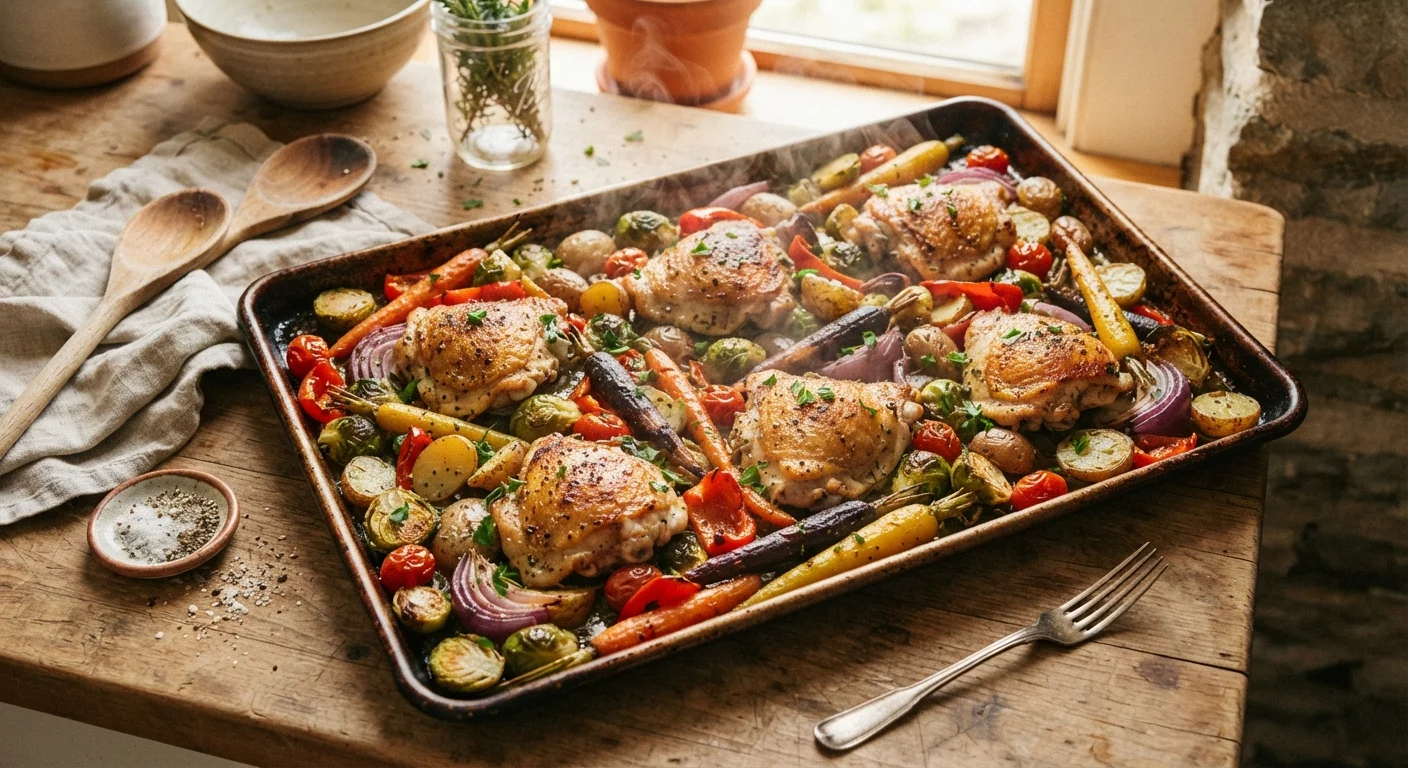
Why Sheet Pan Cooking Works
The appeal of sheet pan dinners isn't just convenience — it's the way the oven's dry, circulating heat transforms ordinary ingredients. Unlike stovetop cooking, which requires constant monitoring, roasting is largely hands-off once the pan goes in. That freedom matters on busy weeknights.
The science is straightforward. At 400°F and above, the surface of food loses moisture quickly, which allows browning reactions to occur. Proteins develop a savory crust, vegetables caramelize at their edges, and everything concentrates in flavor in a way that steaming or boiling simply cannot replicate.
Sheet pan cooking also encourages improvisation. Once you understand the basic method, you can apply it to almost any combination of ingredients you already have. For more on adapting what's on hand into a full meal, see how to build a weeknight meal from whatever's in your fridge.
400–425°F
Ideal oven range for roasting
This temperature window is widely recommended by culinary educators for achieving browning and caramelization without drying food out.
~30 min
Typical total cook time for most meals
Many sheet pan dinners with boneless proteins and medium-cut vegetables are table-ready in 25–35 minutes of oven time.
1
Pans to wash when done
When lined with foil or parchment, the pan often requires little more than a quick rinse, significantly reducing post-dinner cleanup.
The Key Techniques That Make It Work
A few non-negotiable principles separate a well-roasted sheet pan dinner from a mushy, unevenly cooked one.
Don't crowd the pan
This is the single most important rule. Food needs space around each piece so that steam can escape. When ingredients are packed too tightly, they create their own humid microclimate and stew rather than roast. A good rule of thumb: every piece should have at least a half-inch of clearance around it. When in doubt, use two pans.
Cut for consistent size
Uniform pieces cook at the same rate. If your broccoli florets are wildly different sizes, some will char while others stay raw. Spend an extra minute with the knife making things roughly even — it pays off at the table.
Stagger ingredients by cook time
Dense vegetables like potatoes and carrots take longer than tender ones like zucchini or green beans. Chicken thighs need more time than shrimp. Start longer-cooking items first and add faster ones partway through — typically with 10 to 15 minutes left. This is the technique that most separates a good sheet pan dinner from a compromised one.
Use enough fat
Oil isn't optional. It coats food, conducts heat, promotes browning, and prevents sticking. Toss vegetables and protein with enough oil that they're lightly but evenly coated — roughly one to two tablespoons per pound of food is a reasonable starting point.
Pat Proteins Dry Before Roasting
Surface moisture is the enemy of browning. Before placing chicken, fish, or shrimp on the pan, pat it dry with paper towels. This small step makes a noticeable difference in how well the exterior browns and crisps during roasting.
What to Put on the Pan
Almost any protein and most vegetables are fair game for sheet pan cooking. The combinations are nearly endless, which is part of the method's staying power.
Proteins that roast well
- Chicken pieces (thighs and drumsticks especially) — bone-in cuts stay moist and cook forgivingly
- Salmon and firm fish fillets — quick-cooking, need to go on the pan later than dense vegetables
- Sausage — pre-cooked varieties just need to heat through; raw sausage browns nicely
- Shrimp — cook in as little as 8 minutes, so add them near the end
- Chickpeas — roast until crispy and become a satisfying meatless protein anchor
Vegetables that roast reliably
- Broccoli, cauliflower, Brussels sprouts — high heat brings out nutty, caramelized edges
- Bell peppers, zucchini, cherry tomatoes — soften and sweeten quickly
- Potatoes, sweet potatoes, beets — dense and starchy, need the most time
- Green beans, asparagus — tender and fast; add toward the end
Seasoning doesn't need to be complex. Salt, pepper, oil, and one or two pantry spices go a long way. If your pantry staples need a refresh, a well-stocked pantry guide can help you build a reliable base.
Fitting Sheet Pan Dinners Into Your Week
The format scales easily. You can cook for two on a single pan or double everything across two pans for four people. Leftovers reheat well in the oven or a skillet, and roasted vegetables fold easily into grain bowls, wraps, or eggs the next day.
If you're interested in planning further ahead, sheet pan meals can also serve as a building block for light weekend prep — though it's worth understanding the realistic trade-offs. Batch cooking has genuine benefits and real limits; knowing both helps you decide how much prep actually makes sense for your household.
Sheet pan cooking also pairs naturally with building a balanced plate, since the format naturally accommodates a protein, one or two vegetables, and an optional starch all in one go. You don't need a strict plan — just an understanding of how the method works and what goes well together.
For nights when a sheet pan doesn't fit what you're craving, stovetop methods offer their own advantages. Understanding the difference between roasting and sautéing, pan-frying, and stir-frying gives you more tools to work with regardless of what's for dinner.
Frequently Asked Questions
Most sheet pan dinners cook well at 400–425°F. This range is hot enough to brown proteins and caramelize vegetables without drying them out. Delicate fish is an exception and often cooks better at a slightly lower temperature around 375°F.
Soggy vegetables are almost always caused by overcrowding the pan. When food is packed too tightly, moisture released during cooking has nowhere to go and the food steams instead of roasts. Use two pans if needed and make sure pieces aren't touching.
Frozen vegetables can work, but they release significantly more water as they thaw in the oven. For best results, spread them in a single layer with extra space, and expect a longer cook time. Fresh vegetables will generally give you better browning and texture.
Bone-in, skin-on chicken pieces retain moisture far better than boneless skinless cuts during roasting. If using boneless breasts or thighs, coat them well in oil, avoid overcooking, and use an instant-read thermometer to pull them at 165°F.
For most proteins, flipping once halfway through promotes even browning. Vegetables benefit from a toss or flip at the midpoint too. Thin or delicate items — like fish fillets or asparagus — can often cook through without being turned.
Aluminum foil or parchment paper both work well. Foil is better for high-heat roasting because parchment can scorch above 425°F. For items that need extra crispness on the bottom — like potatoes — a lightly oiled bare pan often performs better than any liner.
The content on this site is for informational purposes only and is not a substitute for professional advice. Always consult a qualified professional for guidance specific to your situation.