

Summary
22 items · 20–35 minutes
Why a Store Walkthrough Approach Works
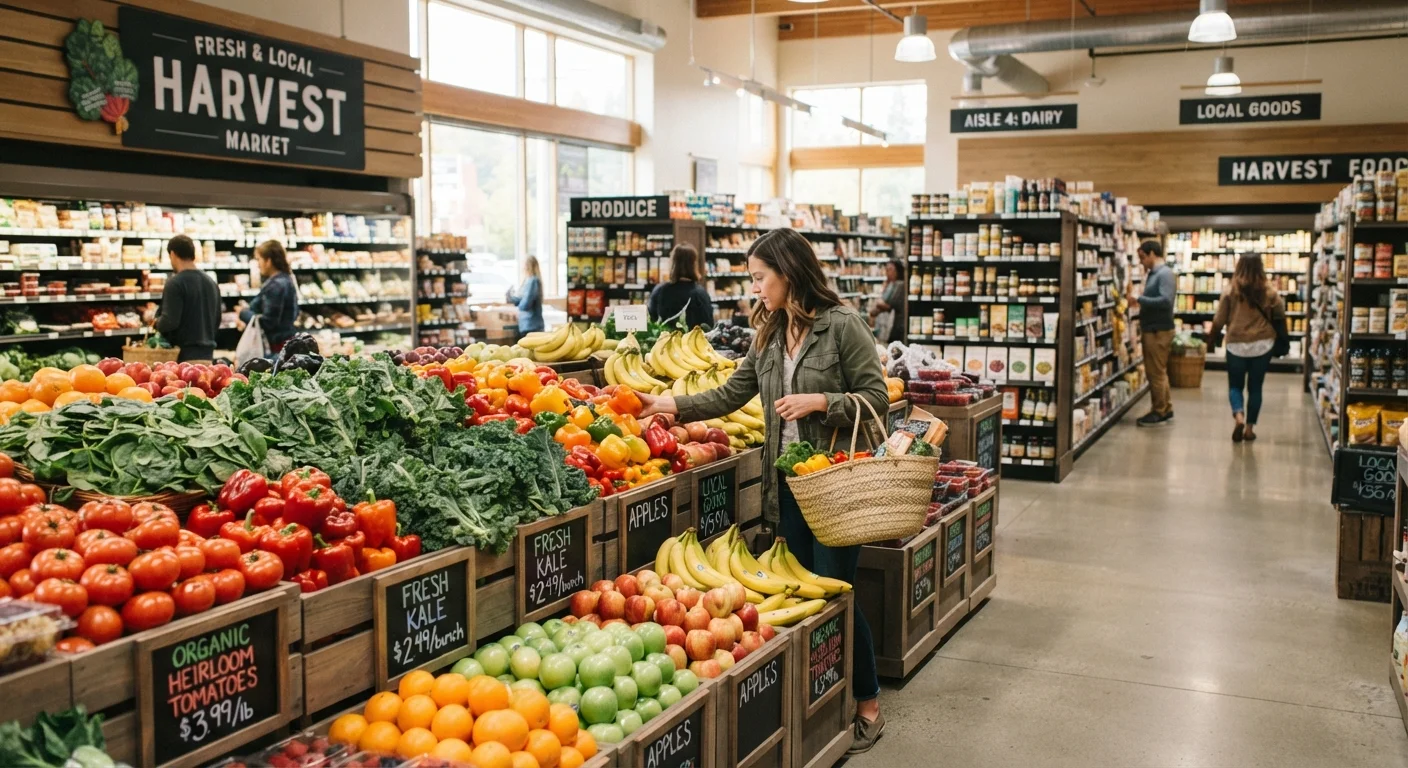
Most grocery stores follow a predictable layout: fresh departments around the perimeter, packaged and processed goods in the interior aisles. Understanding that structure lets you apply nutrition awareness systematically rather than aisle by aisle on instinct.
This checklist walks you through the store in a logical sequence — from produce and proteins to grains, dairy, and the center aisles — giving you concrete actions at each stop. It works alongside your existing habits; you don't need to change everything you buy. If you'd like a broader framework for how these purchases translate to meals, see our guide to building a balanced plate.
Before You Leave Home
Produce Section
Protein Sources
Grains and Bread Aisle
Dairy and Alternatives
Center Aisles and Packaged Goods
Tools That Make This Easier
You don't need specialized apps or equipment, but a few simple resources make nutrition-aware shopping more consistent and less mentally taxing.
Shopping list app or notepad
Keeps your list organized by store section so you move through efficiently and skip unnecessary aisles.
USDA FoodData Central (online database)
A free, government-maintained database for verifying nutrition data on specific foods when label information isn't enough.
Reusable bags with a flat bottom
Keeps fragile produce and bread on top during transport, reducing the chance that softer items are damaged before you cook them.
Reading glasses or phone camera (for small label text)
Nutrition Facts panels use small fonts — having a way to read them clearly in-store prevents guessing.
Label Reading: Your In-Aisle Reference
The center aisles are where label reading matters most. Two documents govern packaged food labeling in the US: the Nutrition Facts panel and the ingredient list. They answer different questions — the panel tells you quantities; the ingredient list tells you what's actually in the product and in what relative proportion.
Always check serving size first on the Nutrition Facts panel. A bag of chips listing 150 calories per serving means nothing until you know one serving is seven chips. From there, sodium, added sugars, and fiber are the three values most worth scanning for everyday purchases.
Front-of-Package Claims Can Be Misleading
Terms like "natural," "light," "multigrain," and "made with real fruit" are marketing descriptions with inconsistent regulatory definitions. They are not reliable nutrition signals. Always turn the package over and consult the Nutrition Facts panel and ingredient list before drawing conclusions about a product's nutritional value.
For a deeper walkthrough of how ingredient lists are structured and which terms signal what, see our article on reading an ingredient list without getting lost. If you follow or are curious about plant-forward eating, plant-based eating and nutritional completeness covers which nutrients deserve extra attention when animal products are limited.
Finally, pairing this store walkthrough with consistent weekly planning habits pays off quickly — our weekly grocery and meal planning habits checklist covers exactly that.
The content on this site is for informational purposes only and is not a substitute for professional advice. Always consult a qualified professional for guidance specific to your situation.