

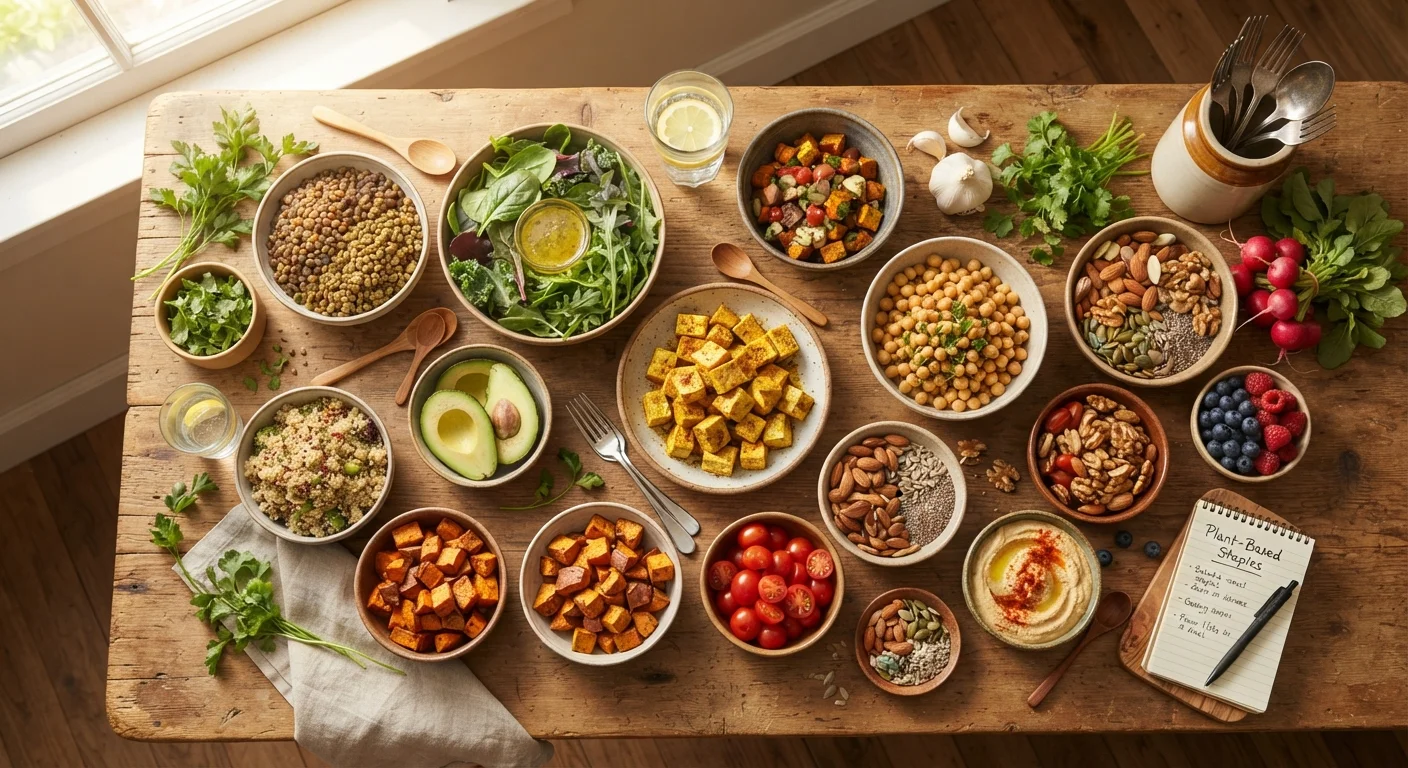
Why Nutritional Completeness Matters on a Plant-Based Diet
Plant-based eating — whether fully vegan, vegetarian, or simply more plant-forward — is associated with a range of health benefits when done thoughtfully. The key phrase is done thoughtfully. Eliminating or significantly reducing animal products removes the foods that supply certain nutrients in their most bioavailable forms, meaning the body can absorb and use them easily. That doesn't make plant-based eating nutritionally inferior, but it does mean a few nutrients require deliberate attention rather than passive intake.
The good news: most nutritional gaps on plant-based diets are predictable and manageable. Knowing which nutrients to watch — and where to find them — is the foundation of eating well on any plant-forward pattern. For a broader look at how dietary patterns compare, see how plant-based eating compares to other research-backed diet patterns.
~92%
Americans not meeting vegetable intake recommendations
According to the Dietary Guidelines for Americans, the vast majority of U.S. adults fall short of recommended vegetable and legume consumption regardless of diet type.
~6%
U.S. adults identifying as vegetarian or vegan
Gallup polling has consistently found that a small but stable share of Americans follow a vegetarian or vegan diet, while a larger group eats primarily plant-forward.
The Nutrients That Deserve the Most Attention
Several specific nutrients are harder to obtain in adequate amounts from plant foods alone. Understanding each one helps you make informed choices at the grocery store and in the kitchen.
Supplement with vitamin B12 or consistently choose fortified foods
Vitamin B12 is produced by microorganisms and is found almost exclusively in animal-derived foods. Plant foods do not provide reliable amounts, making deficiency a genuine risk over time for those avoiding animal products. A deficiency can affect nerve function and red blood cell production.
Eat iron-rich plant foods alongside vitamin C sources
Plant foods contain non-heme iron, which the body absorbs less efficiently than the heme iron in meat. Pairing iron-rich plants with vitamin C at the same meal meaningfully improves absorption. Cast-iron cookware can also add small amounts of iron to food.
Include a variety of plant protein sources across the day
Most individual plant proteins are low in one or more essential amino acids, but eating a variety of sources — legumes, whole grains, nuts, seeds, soy — across the day covers the full spectrum. You don't need to combine them perfectly at every single meal.
Prioritize calcium from non-dairy plant sources or fortified alternatives
Without dairy, calcium intake can fall short if not actively replaced. Several plant foods contain meaningful calcium, though some — like spinach — also contain oxalates that reduce how much the body absorbs. Fortified plant milks can reliably fill the gap.
Include sources of omega-3 fatty acids and consider an algae-based supplement
Plant foods provide ALA (alpha-linolenic acid), found in flaxseeds, chia seeds, and walnuts, but the conversion to the longer-chain EPA and DHA that the body uses more directly is inefficient. Algae-based omega-3 supplements provide EPA and DHA directly from the same source fish get them from.
For a broader reference on what these vitamins and minerals do in the body, the micronutrients reference guide is a useful starting point.
Practical Habits That Support Nutritional Completeness
Understanding which nutrients to watch is only part of the equation. The other part is building practical habits that make it easy to hit your targets consistently, without turning every meal into a math problem.
When you're shopping for fortified foods or unfamiliar plant proteins, knowing how to read a label makes a real difference. See our guide to reading ingredient lists for help decoding what's actually in packaged foods.
On the protein front, plant sources are more than capable of meeting daily needs — but some persistent myths make people second-guess themselves. Our article on common protein myths addresses the evidence directly. And because plant-based diets naturally tend to be high in fiber, it's worth understanding how that works in your favor — the fiber overview explains more.
This article provides general nutrition information and education only. It is not a substitute for personalized medical or dietary advice. If you have specific health conditions or concerns, consult a registered dietitian or qualified healthcare provider before making significant changes to your diet.
The content on this site is for informational purposes only and is not a substitute for professional advice. Always consult a qualified professional for guidance specific to your situation.