

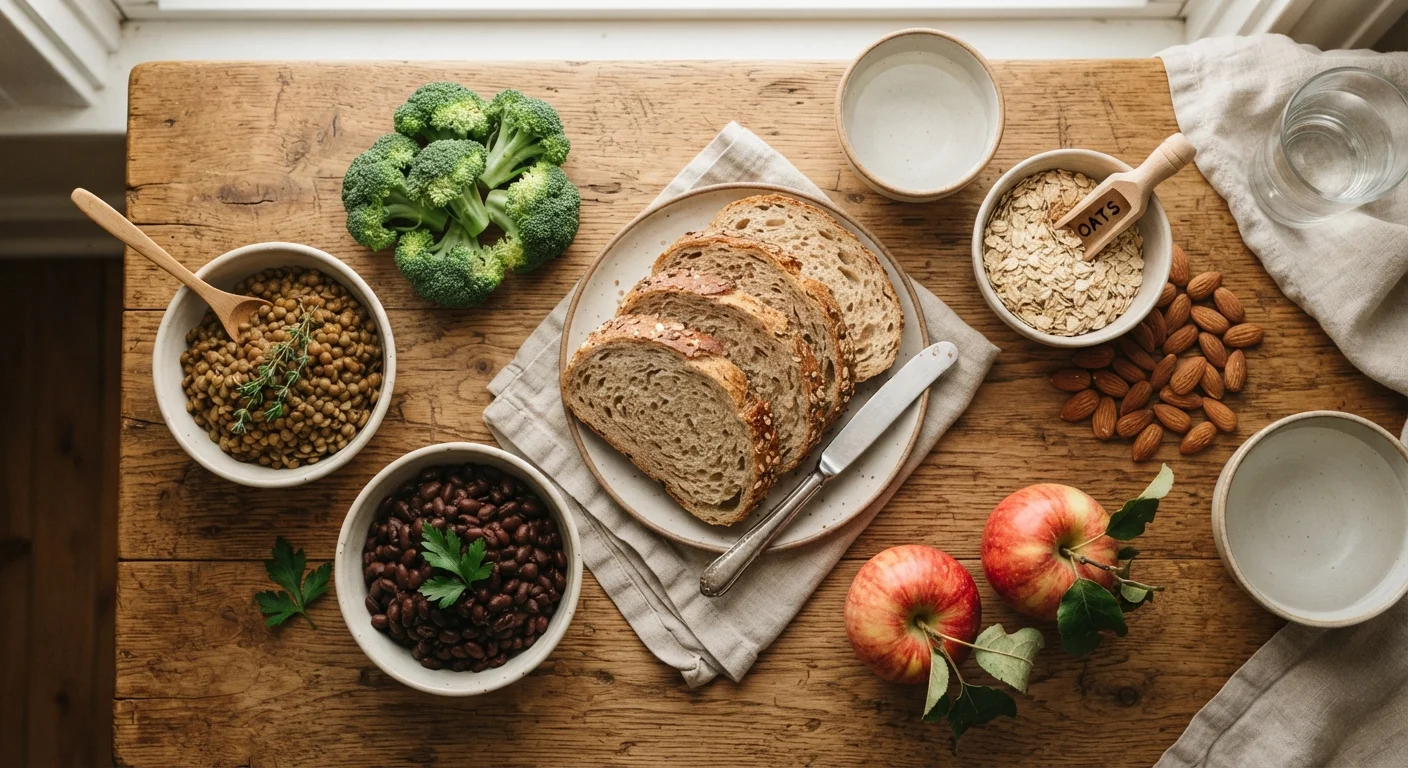
Why the Fiber Gap Matters
Dietary fiber is one of the most well-studied nutrients in nutrition science, and one of the most consistently under-consumed. Research from the National Health and Nutrition Examination Survey has estimated that fewer than 10 percent of U.S. adults meet daily fiber recommendations. That shortfall isn't trivial — fiber plays a role in digestive health, cardiovascular function, blood sugar regulation, and the composition of the gut microbiome.
< 10%
U.S. adults meeting daily fiber recommendations
Estimates from national dietary surveys consistently place fiber among the most under-consumed nutrients in the American diet.
10–15g
Average daily fiber intake for U.S. adults
This is well below the general guidance of 25g for women and 38g for men, representing a gap of roughly 10–25 grams daily for most people.
8g
Fiber in a half-cup of cooked lentils
Legumes are among the most concentrated single-serving sources of dietary fiber available in everyday grocery stores.
The fiber gap exists largely because the modern American diet leans heavily on refined grains, processed snacks, and animal proteins — foods that contribute little to no fiber. Meanwhile, the plant foods that are the primary source of fiber — beans, whole grains, vegetables, and fruit — tend to take a smaller share of the plate.
For a deeper look at how to spot fiber content on packaged foods, the Nutrition Facts label guide explains how to interpret the daily value percentage and serving size context that makes those numbers meaningful.
What Fiber Actually Does in Your Body
Fiber's benefits stem from what it doesn't do — it resists digestion. That resistance is the mechanism behind most of its health effects.
- Soluble fiber forms a gel in the digestive tract that slows the absorption of glucose, helping to moderate blood sugar spikes after meals. It also binds to cholesterol particles in a way that supports their removal from the body, which is why oat-based foods have been associated with heart health in clinical research.
- Insoluble fiber adds bulk to stool and accelerates its transit through the colon, supporting regularity and reducing the time that waste remains in contact with the intestinal lining.
- Prebiotic function: Many fiber types act as fuel for beneficial bacteria in the large intestine. These bacteria ferment fiber into short-chain fatty acids, compounds that help maintain a healthy gut lining and may have broader immune and inflammatory effects.
Start With What You Already Eat
You don't need new recipes to increase fiber — you need fiber-rich versions of familiar foods. Switching to whole grain pasta, keeping apple skin on, and adding beans to soups and salads you already make are low-effort changes that compound meaningfully over time. Small, consistent substitutions tend to stick better than dramatic dietary overhauls.
Understanding fiber is a natural complement to exploring vitamins and minerals — fiber-rich whole foods are also among the best sources of key micronutrients.
Where to Find Fiber in Everyday Foods
Fiber is exclusive to plant foods. Animal products — meat, dairy, eggs, fish — contain none. That makes food choices the central lever for increasing intake.
One of the most efficient ways to meaningfully increase fiber is to build more meals around legumes. A half-cup of cooked lentils delivers roughly 8 grams of fiber. A cup of cooked black beans provides around 15 grams — more than half the daily target for many adults in a single serving.
Whole grains also contribute substantially. Oats, barley, and whole wheat products contain notably more fiber than their refined counterparts, where the bran and germ have been stripped away. Choosing whole grain bread over white bread or brown rice over white rice are straightforward swaps that add up over time.
For those exploring plant-forward eating more broadly, plant-based eating and nutritional completeness is worth reading — fiber tends to be one nutrient that plant-focused diets handle well.
If increasing vegetable intake feels like a large dietary shift, practical strategies for eating more vegetables offers approaches that fit around everyday American eating habits rather than requiring a complete overhaul.
Building Fiber In Gradually — and Comfortably
The most common barrier to increasing fiber isn't access or preference — it's digestive discomfort that comes from adding too much too fast. When gut bacteria encounter a sudden influx of fermentable material, the result can be bloating and gas. That response is normal, but it's avoidable with a paced approach.
A practical method is to add one new fiber-rich food per week rather than overhauling your entire plate at once. Swap refined grains for whole grain versions of foods you already eat. Add a side of beans to meals two or three times a week before making them a daily staple. Keep fruit with its skin when that's palatable — the skin is often where a significant portion of fiber concentrates.
Hydration matters too. Soluble fiber absorbs water to form its gel-like consistency; without adequate fluid intake, it can slow digestion rather than support it. Most nutrition professionals suggest increasing water intake alongside fiber-rich foods as a standard practice.
For broader context on how nutrition fits into daily eating patterns, the Nutrition & Diet hub covers practical eating guidance across a range of everyday topics.
This article is for general informational and educational purposes only and is not a substitute for advice from a qualified healthcare or nutrition professional. Speak with your doctor or a registered dietitian before making significant dietary changes, especially if you have an existing digestive condition.
Frequently Asked Questions
Current U.S. dietary guidelines suggest roughly 25 grams per day for adult women and 38 grams per day for adult men, based on calorie intake. Needs can shift slightly with age. Most Americans consume closer to 10–15 grams daily, which falls well short of these targets.
Legumes (lentils, chickpeas, black beans), oats, whole grain bread and pasta, broccoli, peas, apples with skin, and pears are all reliable, widely available sources. Canned and frozen options count just as much as fresh, making them practical for everyday cooking.
Drastically increasing fiber intake too quickly can cause gas, bloating, and cramping. The key is to add fiber-rich foods gradually over a few weeks and to drink plenty of water, which helps soluble fiber do its job and keeps things moving smoothly.
High-fiber foods tend to be more filling and take longer to digest, which can help people feel satisfied after smaller portions. While fiber alone is not a weight-loss solution, it is a consistent feature of eating patterns associated with healthy body weight.
Fiber supplements can help close a gap but don't replicate the full benefit of whole foods, which deliver vitamins, minerals, and phytonutrients alongside fiber. Supplements are generally considered a secondary option; getting fiber from food first is preferred by most nutrition professionals.
The content on this site is for informational purposes only and is not a substitute for professional advice. Always consult a qualified professional for guidance specific to your situation.