

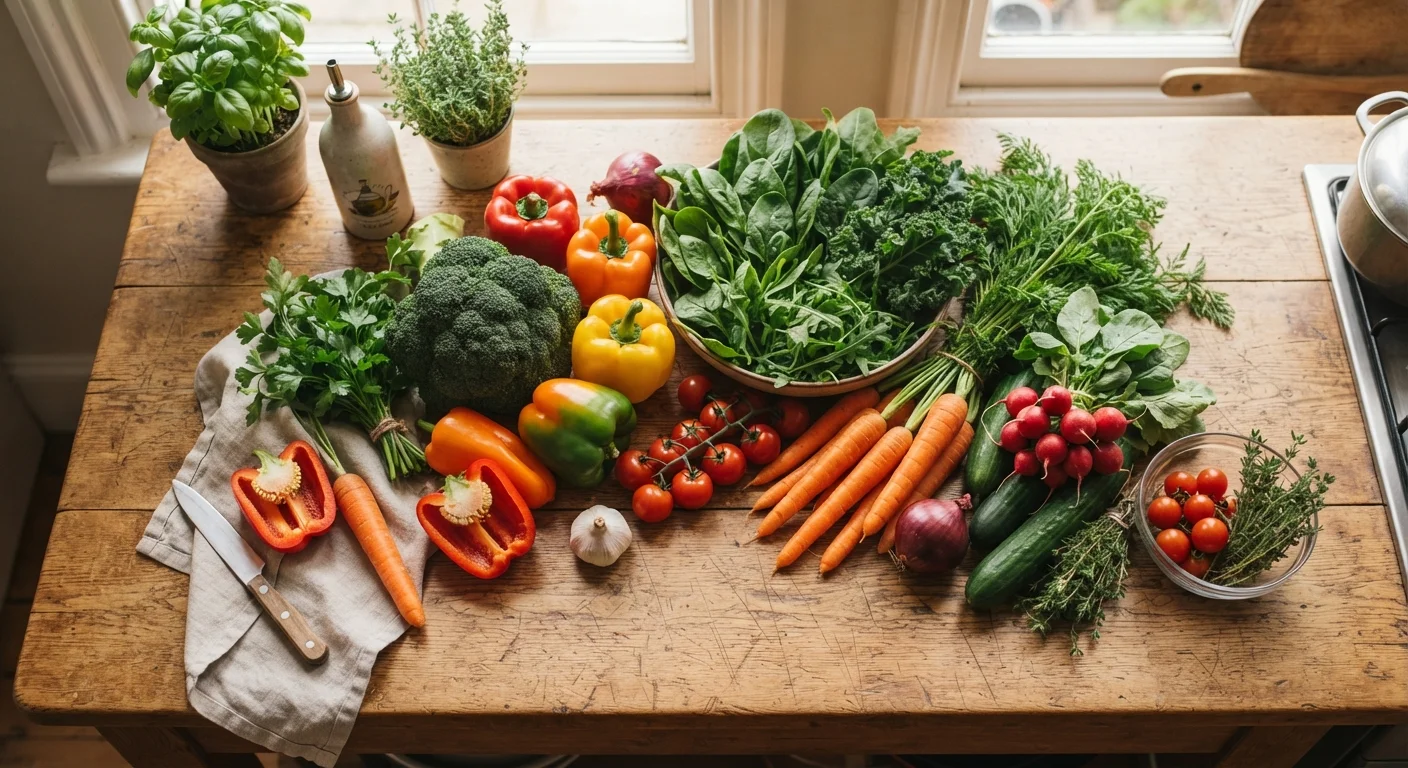
Why Most Americans Fall Short on Vegetables
According to the U.S. Dietary Guidelines, adults should aim for roughly 2 to 3 cups of vegetables per day depending on age, sex, and activity level. Yet national survey data consistently show that the majority of American adults consume significantly less than this. The gap isn't usually about knowledge — most people know vegetables are good for them. The gap is about friction: vegetables can feel time-consuming to prepare, quick to spoil, and hard to fit into familiar meal patterns.
Understanding this friction is the starting point. The strategies below don't require a new diet philosophy or a complete pantry overhaul — they work by lowering the barriers that exist in everyday American kitchens. For a broader foundation on balanced eating principles, see Building a Balanced Plate.
Proven Practices for Getting More Vegetables Every Day
These evidence-informed approaches are designed to fit into real routines rather than replace them.
Add vegetables to dishes you already cook rather than building new meals from scratch.
Behavioral research consistently shows that habit stacking — attaching a new behavior to an existing one — is more sustainable than creating entirely new routines. Modifying familiar meals avoids the decision fatigue that derails dietary changes.
Keep frozen vegetables stocked as a nutritional equivalent to fresh.
Frozen vegetables are typically harvested at peak ripeness and flash-frozen, which preserves most water-soluble vitamins. They reduce spoilage concerns and cost less per serving than many fresh options, removing two of the most common barriers to consistent use.
Batch-roast a variety of vegetables once or twice per week.
Preparation time is one of the primary obstacles to eating more vegetables. Cooking a large quantity in advance means vegetables are ready to use throughout the week with zero additional effort at mealtime.
Make vegetables the most visually prominent item on your plate before adding other foods.
Research in behavioral nutrition suggests that the order and proportion in which foods are plated influences how much of each item you ultimately consume. Starting with vegetables and filling half the plate before adding proteins or grains shifts the ratio without requiring calorie counting.
Rely on condiments, sauces, and seasonings to make vegetables consistently enjoyable.
Palatability is a genuine driver of eating behavior. Vegetables that taste good in your specific context are vegetables you'll actually eat. Using flavors you already enjoy removes the 'health food' friction that makes vegetables feel like an obligation.
Start With Quick Wins You Can Try This Week
Knowing the strategies is one thing — acting on them is another. The following actions are low-effort, immediately implementable, and can create noticeable momentum without disrupting your existing routine.
For a structured approach to keeping these habits going, weekly meal planning habits can help you build a reliable system around them.
Making Vegetables Work in Everyday Cooking
One of the most effective long-term strategies is integrating vegetables into meals you already make, rather than building new meals around them. Pasta sauces, soups, scrambled eggs, and grain bowls are all natural homes for extra vegetables. The weeknight fridge-based cooking approach is a practical framework for doing this without a recipe.
“People don't eat nutrients, they eat food. If we want people to eat more vegetables, we have to make vegetables taste good and be convenient — that's where behavioral change actually happens.”
— Walter Willett, Professor of Epidemiology and Nutrition, Harvard T.H. Chan School of Public Health
Shopping habits also matter. Understanding where to find nutrient-dense options across the store — including the frozen aisle — can simplify the process considerably. The grocery store nutrition walkthrough offers an aisle-by-aisle breakdown worth bookmarking. And if you're exploring more plant-forward eating more broadly, a comparison of Mediterranean, DASH, and plant-based diets shows how different evidence-based frameworks handle vegetable intake.
This article is for general informational and educational purposes only and is not a substitute for professional medical or nutritional advice. Consult a qualified healthcare provider or registered dietitian for guidance specific to your health needs.
The content on this site is for informational purposes only and is not a substitute for professional advice. Always consult a qualified professional for guidance specific to your situation.