

Start here
What Are Micronutrients and Why Do They Matter?
Next
Fat-Soluble Vitamins: A, D, E, and K
Then
Water-Soluble Vitamins: C and the B Vitamins
Continue
Essential Minerals: Calcium, Iron, Magnesium, and More
Apply it
Getting Enough Through Food
What Are Micronutrients and Why Do They Matter?
When most people think about nutrition, they focus on macronutrients — carbohydrates, protein, and fat. But the vitamins and minerals your body depends on every day are equally important, even though you need them in much smaller quantities. These are micronutrients, and without enough of them, normal body functions begin to falter.
Unlike macronutrients, micronutrients provide no calories. Instead, they act as essential tools your body uses to extract energy from food, build and repair tissue, support immune function, and regulate countless chemical reactions. Your body cannot manufacture most of them on its own, which means they must come from what you eat.
If you want to understand how micronutrients fit alongside the bigger picture of what you eat, our guide to macronutrients explains the roles of carbs, protein, and fat in plain terms.
Micronutrient
A vitamin or mineral that the body needs in small amounts to function properly. Unlike macronutrients, micronutrients provide no calories but are essential for health.
Fat-soluble vitamin
A vitamin (A, D, E, or K) that dissolves in fat and can be stored in body tissue. Because they accumulate, very high intake over time can cause problems.
Water-soluble vitamin
A vitamin (C or any of the B vitamins) that dissolves in water and is not stored in significant amounts. Excess is generally excreted in urine, so regular intake through food is important.
Deficiency
A state in which the body has too little of a particular vitamin or mineral to carry out normal functions. Deficiencies can develop gradually and are typically identified through dietary assessment or blood tests.
Antioxidant
A compound that helps protect cells from damage caused by unstable molecules called free radicals. Several vitamins and minerals — including vitamins C and E and selenium — act as antioxidants.
Bioavailability
How much of a nutrient your body can actually absorb and use from food. Cooking method, food combinations, and individual health factors can all affect bioavailability.
Fortified food
A food that has had one or more nutrients added to it during processing — for example, vitamin D added to milk, or folic acid added to breakfast cereal.
Recommended Dietary Allowance (RDA)
The average daily intake level of a nutrient estimated to meet the needs of most healthy people in a given age and sex group, as established by nutrition authorities.
Fat-Soluble Vitamins: A, D, E, and K
Vitamins A, D, E, and K dissolve in fat, not water. Because they can be stored in the liver and fatty tissues, you don't need to consume them every single day — but that storage capacity also means excess intake can build up to problematic levels over time.
- Vitamin A supports vision (especially in low light), immune defense, and cell growth. It comes in two forms: preformed vitamin A in animal foods like liver and dairy, and provitamin A carotenoids (such as beta-carotene) in orange and leafy green vegetables.
- Vitamin D helps the body absorb calcium and supports bone density and immune function. The skin produces it when exposed to sunlight, but many Americans have limited sun exposure. Dietary sources include fatty fish, fortified milk, and egg yolks.
- Vitamin E functions as an antioxidant, protecting cells from oxidative damage. Nuts, seeds, and vegetable oils are among the richest sources.
- Vitamin K is essential for blood clotting and plays a role in bone metabolism. Leafy greens like kale, spinach, and broccoli are excellent sources.
Water-Soluble Vitamins: C and the B Vitamins
The eight B vitamins and vitamin C dissolve in water. Because your body excretes what it doesn't use, these vitamins need to be replenished more consistently through food. Cooking method matters here — prolonged boiling can leach water-soluble vitamins out of vegetables.
- Vitamin C supports the immune system, aids in collagen production for skin and connective tissue, and helps absorb iron from plant sources. Citrus fruits, bell peppers, strawberries, and broccoli are reliable sources.
- B vitamins work as a group to help convert food into usable energy, support nervous system function, and assist in red blood cell production. Key B vitamins include:
- B1 (thiamine) — whole grains, legumes, pork
- B2 (riboflavin) — dairy products, eggs, almonds
- B3 (niacin) — poultry, fish, peanuts
- B6 — poultry, fish, potatoes, bananas
- B9 (folate) — leafy greens, legumes, fortified grains; especially important during pregnancy
- B12 — found almost exclusively in animal products; a significant consideration for plant-based eaters
If you follow or are considering a plant-forward diet, our article on plant-based eating and nutritional completeness addresses which nutrients deserve particular attention.
Boost Iron Absorption With Vitamin C
Plant-based iron (non-heme iron) is absorbed less efficiently than iron from meat. Pairing iron-rich plant foods — like lentils, spinach, or tofu — with a vitamin C source such as bell peppers, tomatoes, or citrus significantly improves how much iron your body actually absorbs. This simple combination makes a noticeable difference for anyone who eats little or no meat.
Essential Minerals: Calcium, Iron, Magnesium, and More
Minerals are inorganic elements your body uses for structural purposes — like building bones and teeth — and for regulating fluid balance, nerve signaling, and muscle contractions. Here are the ones most adults should be aware of:
- Calcium is the most abundant mineral in the body and is critical for bone and teeth strength, muscle function, and nerve transmission. Dairy products are high-concentration sources, but fortified plant milks, tofu made with calcium sulfate, and leafy greens also contribute.
- Iron carries oxygen in the blood via hemoglobin. It comes in two forms: heme iron (from meat, poultry, and seafood, which is more readily absorbed) and non-heme iron (from legumes, tofu, and fortified cereals). Pairing non-heme iron sources with vitamin C improves absorption.
- Magnesium participates in over 300 enzymatic reactions and supports muscle and nerve function, blood sugar regulation, and blood pressure. Dark leafy greens, nuts, seeds, and whole grains are good sources.
- Potassium helps maintain healthy blood pressure and supports fluid balance. Bananas are well-known sources, but white potatoes, beans, and avocado are also rich in potassium.
- Zinc supports immune function, wound healing, and the senses of taste and smell. Shellfish, red meat, legumes, and pumpkin seeds are notable sources.
- Selenium acts as an antioxidant and supports thyroid function. Brazil nuts are exceptionally high in selenium — just one or two per day can meet daily needs.
More Is Not Always Better With Supplements
Fat-soluble vitamins accumulate in body tissue and can reach harmful levels if taken in excess through supplements. Vitamin A toxicity, for example, can cause liver damage and other serious effects. Before adding high-dose supplements to your routine, speak with a healthcare provider who can evaluate whether supplementation is appropriate for you.
Getting Enough Through Food
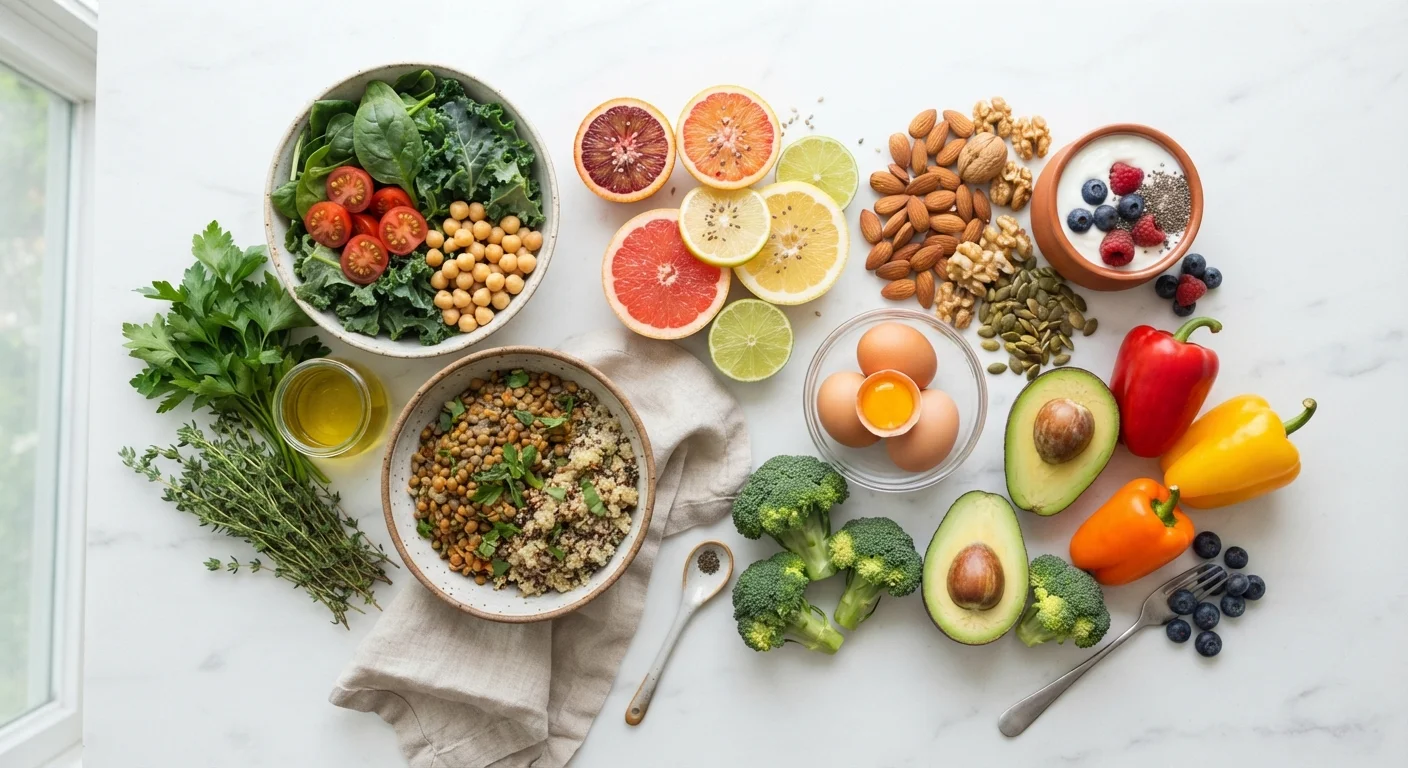
The most practical strategy for meeting micronutrient needs is dietary variety. No single food covers everything, but a diet that regularly includes vegetables (especially leafy greens), fruits, whole grains, legumes, and a source of quality protein gives you a strong foundation.
A few patterns that help:
- Eat a range of colors. Different pigments in fruits and vegetables often signal different vitamins and antioxidants. A plate that includes red, orange, green, and purple foods is a useful rough guide to variety.
- Don't neglect legumes. Beans and lentils supply iron, magnesium, folate, and zinc, often overlooked in American diets. They're also an excellent source of dietary fiber — our fiber guide explains why that matters too.
- Choose whole over refined grains. Whole grains retain the bran and germ where B vitamins, magnesium, and zinc are concentrated.
If you have specific health conditions, follow a restrictive diet, are pregnant, or are an older adult, your micronutrient needs may differ from the general population. In those cases, a registered dietitian or physician can provide guidance tailored to your situation.
This article is for general informational and educational purposes only and is not a substitute for personalized medical or dietary advice. Consult a qualified healthcare professional with questions about your specific nutritional needs.
Frequently Asked Questions
Vitamins are organic compounds made by plants or animals; minerals are inorganic elements that come from soil and water. Both are essential micronutrients, but they differ in structure and how the body processes them. For example, vitamins can be broken down by heat or acid, while minerals are more stable.
Most healthy adults can meet their micronutrient needs through a varied, balanced diet. However, a few nutrients — notably vitamin D and vitamin B12 for those eating entirely plant-based — are harder to get from food alone. A healthcare provider can evaluate whether supplementation makes sense for your situation.
Deficiencies vary widely depending on the nutrient. Iron deficiency can cause fatigue; vitamin D deficiency is linked to bone weakness; a lack of vitamin C can impair wound healing. Many deficiencies develop gradually and are confirmed through blood tests. Consult a healthcare professional if you have concerns.
Many common supplements are safe at recommended doses, but fat-soluble vitamins (A, D, E, K) can accumulate to harmful levels if over-supplemented. Always consult a qualified healthcare provider before starting a supplement routine, particularly at high doses.
Research consistently identifies vitamin D, calcium, potassium, and dietary fiber as nutrients commonly under-consumed by U.S. adults. Iron is also a common shortfall for women of reproductive age. Eating a wider variety of vegetables, legumes, and dairy or fortified alternatives can help close those gaps.
Some water-soluble vitamins — especially vitamin C and folate — can degrade with prolonged heat or water exposure. Steaming, microwaving, or brief sautéing tends to preserve more nutrients than boiling. Fat-soluble vitamins are generally more heat-stable.
The content on this site is for informational purposes only and is not a substitute for professional advice. Always consult a qualified professional for guidance specific to your situation.