

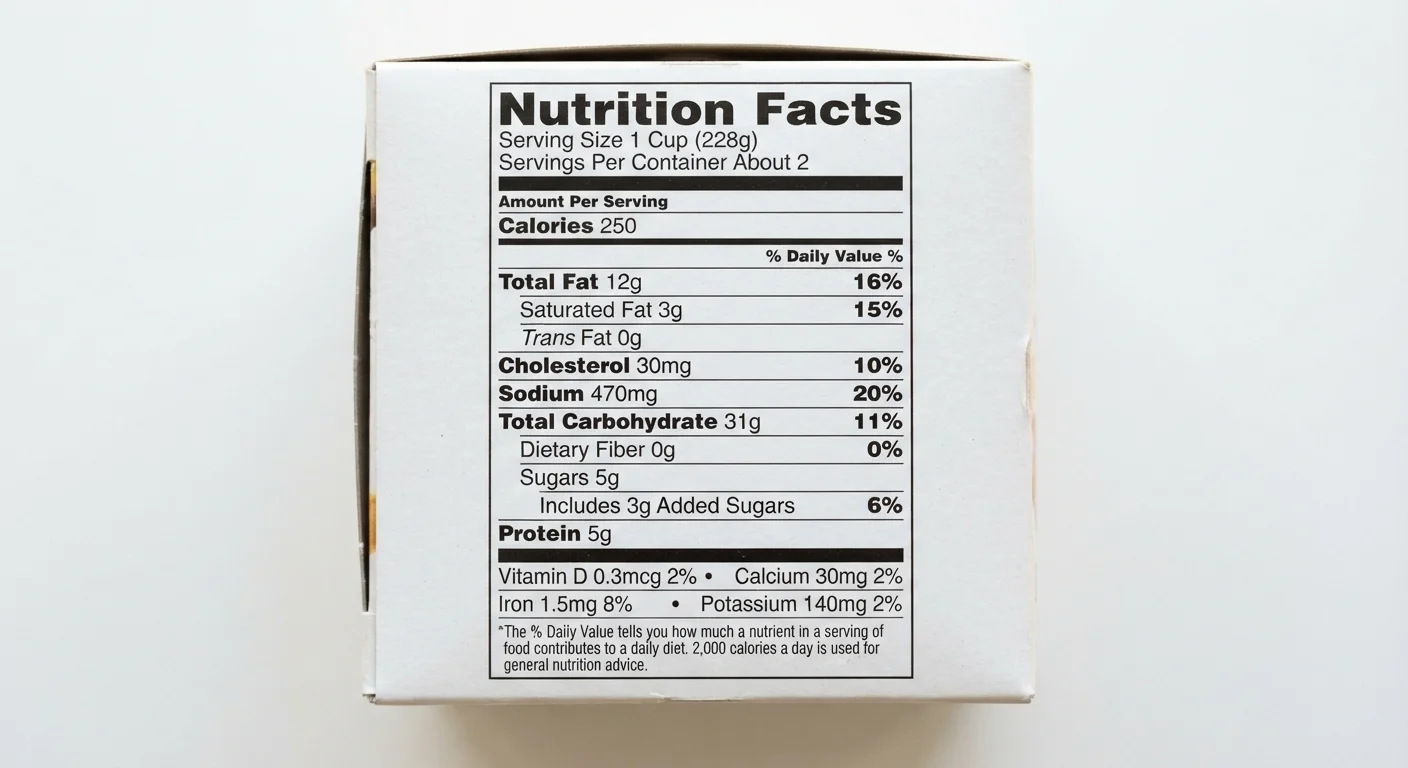
Why the Nutrition Facts Label Exists — and What It's Actually Designed to Do
The Nutrition Facts label is a federally mandated disclosure tool regulated by the U.S. Food and Drug Administration (FDA). Its purpose is straightforward: give consumers standardized, comparable information about what's in a packaged food before they eat it. The format was updated most recently in 2020 to reflect newer nutrition science, including the addition of a separate line for added sugars and updated serving size rules meant to better reflect how Americans actually eat.
The label is not a judgment about whether a food is "good" or "bad." It's a data panel. Understanding how to read it turns a confusing wall of numbers into a practical tool — one you can use quickly at the grocery store without a nutrition degree. For a complementary perspective on what's printed elsewhere on the package, see our guide on what organic, natural, and non-GMO labels actually mean.
How to Read Each Section of the Label
Follow these steps each time you pick up a packaged food. Working through the label in order — top to bottom — keeps the numbers in the right context.
Check Servings Per Container First
Before reading any other number, find the servings per container line at the very top of the label. If a container holds 2.5 servings and you eat the whole thing, every number on the label must be multiplied by 2.5. This single step prevents the most common label-reading mistake.
Note the Serving Size
The serving size is the reference unit for every number that follows — calories, grams of fat, milligrams of sodium. It's listed in both a common household measure (e.g., "1 cup") and a gram or milliliter equivalent. All comparisons between products are only meaningful when the serving sizes match.
Read the Calories Line
Calories represent the total energy provided by one serving. This figure combines energy from all three macronutrients — protein, carbohydrates, and fat. On its own, a calorie count has limited meaning without considering the nutritional quality of those calories, but it's a useful reference point when comparing similar products.
Scan the Nutrients to Limit
The upper section of the label lists nutrients most Americans consume in excess: saturated fat, trans fat, and sodium. These are associated with cardiovascular and other health risks when regularly over-consumed, according to major health institutions. Trans fat should be as close to zero as possible per serving.
Find Total Sugars and Added Sugars
Total sugars encompasses all sugars in the food — natural and added. Directly below it, added sugars shows only what was introduced during processing or manufacturing. The Dietary Guidelines for Americans recommend keeping added sugar to less than 10% of total daily calories. The % Daily Value on the added sugars line reflects this benchmark.
Use % Daily Value as Your Quick Guide
The % Daily Value (%DV) column on the right side of the label tells you how much of a nutrient one serving provides relative to a standard 2,000-calorie daily diet. A general rule recognized by the FDA: 5% DV or less is considered low; 20% DV or more is considered high. Use this to quickly flag foods that are very high in sodium or saturated fat, or encouragingly high in fiber or vitamins.
Check the Nutrients to Get Enough Of
At the bottom of the label you'll find dietary fiber, vitamin D, calcium, iron, and potassium — nutrients many Americans underconsume. Aim for higher % Daily Values here. Dietary fiber, in particular, supports digestive health and is consistently under-eaten across the U.S. population. See our detailed look at why Americans don't get enough fiber for more context.
Once you're comfortable with the basic structure, the label becomes a fast reference rather than a chore. For a deeper look at one of the label's most important nutrients, our article on fiber and why most Americans fall short provides useful context.
Compare Products on the Same Serving Size
When comparing two products — say, two breakfast cereals — make sure you're looking at the same serving size for both. Nutritional differences can look dramatic simply because one label uses a 30g serving and another uses 55g. Adjusting to a common weight makes comparisons accurate and fair.
Common Misreads and What They Cost You
Even attentive shoppers regularly misread the label in a few predictable ways.
- Treating the package as one serving. A single bottle of juice or a small bag of chips often contains two or more servings. Eating the whole thing means doubling — or more — every number on the label.
- Confusing total sugars with added sugars. Total sugars includes naturally occurring sugars (from fruit or dairy, for example). Added sugars are what manufacturers put in during processing. The added sugar line is the more actionable figure for most people monitoring their intake.
- Ignoring % Daily Value for fats. The label lists total fat, saturated fat, and trans fat separately. These behave differently in the body — a distinction worth understanding. See our plain-language guide on saturated, unsaturated, and trans fats for details.
- Overlooking the micronutrient section. Vitamin D, calcium, iron, and potassium appear at the bottom of the label. Many Americans fall short on these — tracking their % Daily Values across your regular foods can reveal gaps. Our micronutrient reference guide explains what each one does.
The Label Has Limits — Context Matters
The Nutrition Facts label reflects the nutrient content of a food in isolation. It doesn't account for how that food fits into your overall diet, your health history, or your individual nutritional needs. If you're managing a chronic condition, food allergy, or specific dietary goal, use the label as one input — not a sole decision-maker — and consult a registered dietitian for personalized guidance.
This article is for informational purposes only and does not constitute medical or dietary advice. Consult a registered dietitian or qualified healthcare professional for guidance tailored to your individual health needs.
The content on this site is for informational purposes only and is not a substitute for professional advice. Always consult a qualified professional for guidance specific to your situation.