

Summary
18 items · 10–20 minutes
Why Pre-Cooking Prep Actually Matters
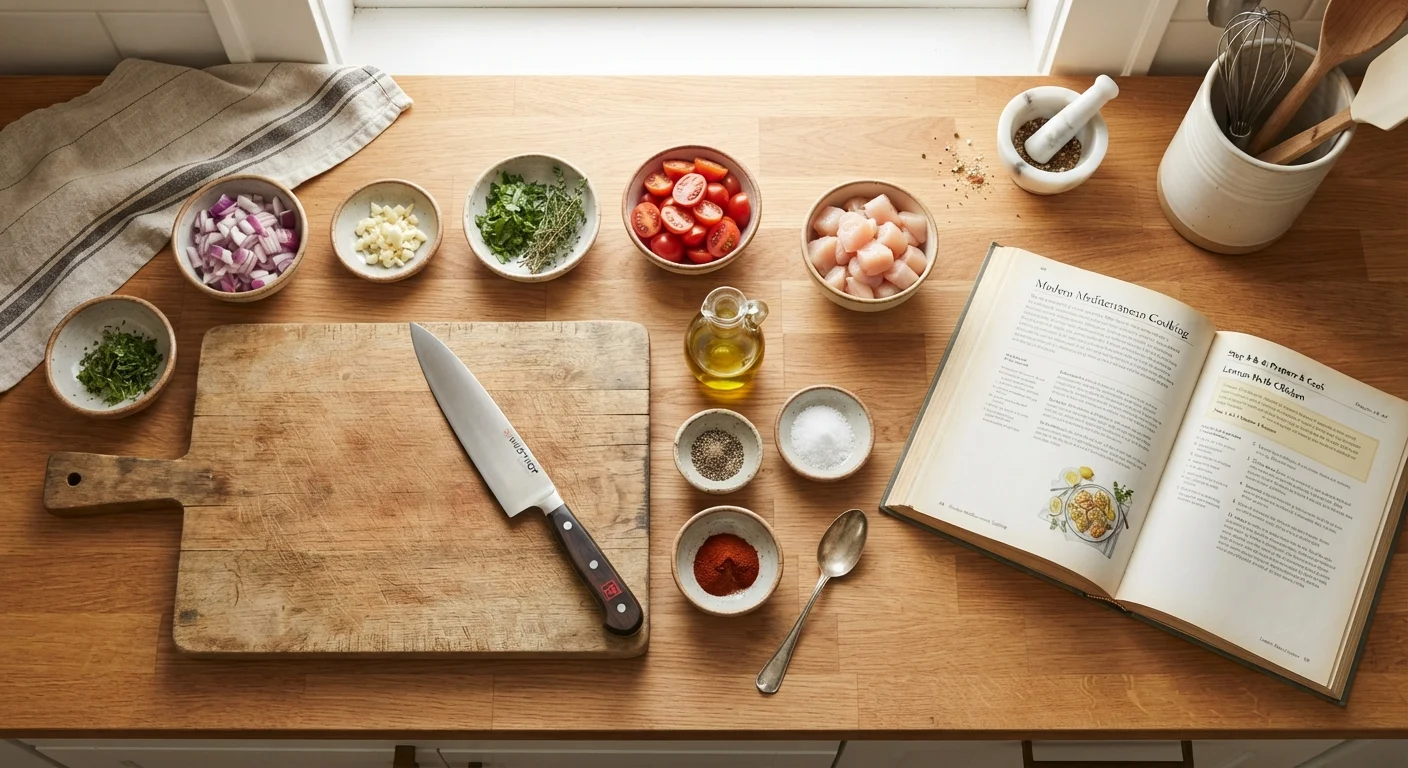
Most cooking mistakes don't happen at the stove — they happen in the ten minutes before you turn on the burner. A missing ingredient, a dull knife, or a pan that's too small can derail an otherwise simple recipe. The French culinary term mise en place ("everything in its place") describes a discipline that professional kitchens run on, and it translates directly to a calmer, more successful experience at home.
Whether you're a complete beginner or someone who has been cooking for years, running through a short checklist before you start saves time, reduces waste, and keeps dinner on track. If you're still building confidence in the kitchen, our guide on getting comfortable in the kitchen when you're starting from zero is a good foundation to read alongside this one.
Use the checklist below every time you cook — not just for elaborate meals, but for weeknight dinners too. The habit builds quickly and pays off every single time.
Cutting board
Provides a stable, hygienic surface for all chopping and ingredient prep.
Chef's knife
The primary tool for chopping, slicing, and dicing most ingredients efficiently.
Measuring cups and spoons
Ensures accurate quantities for both dry and liquid ingredients before cooking begins.
Small prep bowls or ramekins
Hold pre-measured and prepped ingredients so everything is ready to add at the right moment.
Kitchen scale
Provides more precise measurements for baking or recipes that list ingredients by weight.
Instant-read thermometer
Verifies safe internal temperatures for meat, poultry, and fish during cooking.
The Pre-Cooking Checklist
Work through these steps before your first burner goes on. Each group targets a common source of mid-cook chaos.
Recipe Review
Ingredients
Equipment & Workspace
Safety & Organization
Don't Skip Thawing Time for Raw Proteins
Thawing meat, poultry, or fish at room temperature on the counter is a food safety risk. The USDA recommends thawing in the refrigerator, in cold water (changed every 30 minutes), or in the microwave if you plan to cook immediately. Build thaw time into your planning — it can take 24 hours or more for a large cut in the refrigerator.
Building the Habit Over Time
Running through a checklist before cooking may feel slow at first, but most cooks find it quickly becomes second nature — and genuinely shortens total time in the kitchen. The goal isn't rigid rule-following; it's developing awareness of what you need before you need it.
Good prep also pays off when you're cooking at volume. If you plan to cook larger batches on weekends, see our breakdown of batch cooking on weekends and what it realistically saves you for a realistic look at the trade-offs. And if your knife work slows down your prep, sharpening those skills will compound the benefits of every session — our guide to knife skills every home cook should actually know walks through the core techniques.
Start with the "must" items on this checklist and layer in the rest as you grow more comfortable. Consistent prep is one of the simplest ways to make home cooking feel less like a chore and more like something you actually look forward to.
The content on this site is for informational purposes only and is not a substitute for professional advice. Always consult a qualified professional for guidance specific to your situation.