

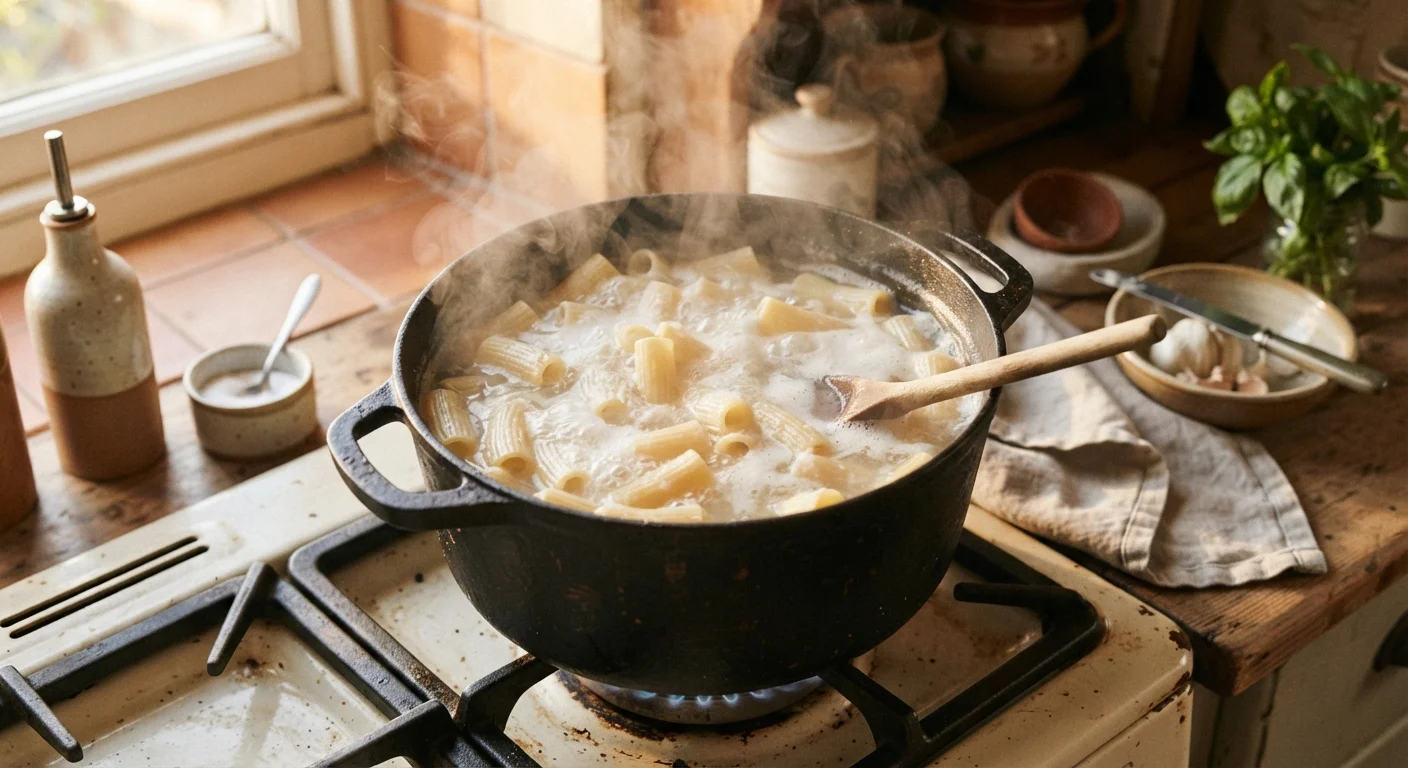
What Makes Pasta Water Actually Useful
When pasta cooks, it releases starch into the surrounding water. By the time your pasta is al dente, that water has transformed into a lightly cloudy, mineral-rich liquid packed with dissolved starch — essentially a mild natural thickener. This is what separates a great pasta sauce from a watery, slippery one.
Starch molecules act as emulsifiers, meaning they help fat and water bind together rather than separate. When you stir a splash of pasta water into a pan sauce, the starch stabilizes the mixture, creating a glossy, clingy consistency that coats each noodle evenly. This is the technique behind many classic Italian pasta dishes, and it costs nothing — it's literally what you'd otherwise pour down the drain.
For a deeper look at how everyday kitchen ingredients do more than one job, salt's role in cooking is another concept worth revisiting.
Myth
Pasta water is just salty water — it's not doing anything special for my sauce.
Fact
Pasta water contains dissolved starch that acts as an emulsifier, helping fat and liquid bind into a smooth, cohesive sauce.
The starch released during cooking is the key distinction. Plain salted water won't do what pasta water does because it lacks this dissolved starch. A tablespoon or two stirred into a pan sauce creates a silkier texture and helps the sauce cling to pasta instead of pooling at the bottom of the bowl.
Myth
Rinsing pasta after cooking removes excess starch and prevents it from sticking together.
Fact
Rinsing washes off the surface starch your sauce needs to adhere — and the best way to prevent sticking is simply to sauce the pasta immediately.
Surface starch is exactly what helps sauce grab onto noodles. When you rinse, you're undoing that. If pasta is sticking in the colander, the fix is timing, not rinsing — drain it just before it reaches your target doneness and finish cooking it in the sauce with a bit of reserved pasta water.
Myth
Adding oil to the pasta cooking water keeps noodles from clumping.
Fact
Oil floats on water and coats the pasta after cooking, which actually prevents sauce from sticking to the noodles.
Oil and water don't mix, so the oil in your pot isn't doing anything useful while pasta cooks. What it does do is coat noodles when you drain them — leaving a slippery surface that sauce slides right off. Stirring pasta occasionally during the first minute of cooking is a much more effective way to prevent clumping.
Myth
You need a lot of pasta water to make a difference — a tablespoon or two won't do anything.
Fact
Small amounts of starchy pasta water — even just two to three tablespoons — can noticeably change a sauce's texture and consistency.
The starch concentration in pasta water is high enough that a small amount goes a long way. Add it gradually, stir vigorously, and let the heat do the work. A modest splash in a hot pan with butter, olive oil, or a tomato-based sauce can transform a broken or watery mixture into something cohesive in under a minute.
Myth
Salting pasta water is just about taste — the amount doesn't really matter.
Fact
The quantity of salt in pasta water affects how the pasta is seasoned from the inside during cooking, not just at the surface.
Pasta absorbs water as it cooks, and if that water is under-seasoned, the pasta itself will taste bland regardless of how flavorful your sauce is. A well-salted pot — typically around a teaspoon of salt per quart of water, though preferences vary — seasons the pasta throughout, not just on the outside. This is one of the few moments in cooking where salt added early makes a structural difference in the final dish.
How to Use Pasta Water Correctly
The single most common mistake is forgetting to save the water before draining. Once pasta hits the colander and the water is gone, there's no recovering it. Get into the habit of scooping out at least half a cup with a ladle or heatproof measuring cup before you drain — more if you're making a large batch or a sauce-heavy dish.
When incorporating it into a sauce, add it a few tablespoons at a time. The starchy liquid is still very hot, so it will continue to thicken as it sits. Too much at once makes the sauce thin and soupy; too little and your sauce won't emulsify properly. Toss the pasta directly in the pan with the sauce and a bit of the reserved water, and let everything cook together for 30 to 60 seconds over medium heat. You'll see the sauce tighten and turn glossy.
Don't Forget Before You Drain
The most reliable way to save pasta water is to set a reminder before you even start boiling — put a ladle or measuring cup right next to the pot. Once the pasta is drained, that water is gone for good. No amount of plain water or broth added afterward will replicate the starch content of actual pasta cooking liquid.
This same principle of building layers of flavor and texture is at the heart of cooking intuitively with fat, acid, and aromatics — skills that apply well beyond pasta night.
Clearing Up the Biggest Pasta Myths
Home cooks absorb a lot of kitchen lore that sounds logical but doesn't hold up under scrutiny. Pasta is a surprisingly common source of these myths — and following bad advice leads to worse results even when you've done everything else right. For a broader look at kitchen misconceptions, common cooking myths worth letting go covers several others that regularly trip people up.
The content on this site is for informational purposes only and is not a substitute for professional advice. Always consult a qualified professional for guidance specific to your situation.