

Our Verdict
Open shelving is a genuinely appealing design choice that can make a kitchen feel larger and more personal — but it works best for households that keep a tidy kitchen naturally and don't mind wiping shelves weekly. The gap between how open shelves look in a styled photo and how they look after a week of real cooking is significant. Going all-in by removing every upper cabinet is a big, often irreversible commitment.
Open shelving is best suited to homeowners who cook lightly, already maintain an organized kitchen, and want a design-forward look they're prepared to maintain consistently.
Why Open Shelving Is Having a Moment
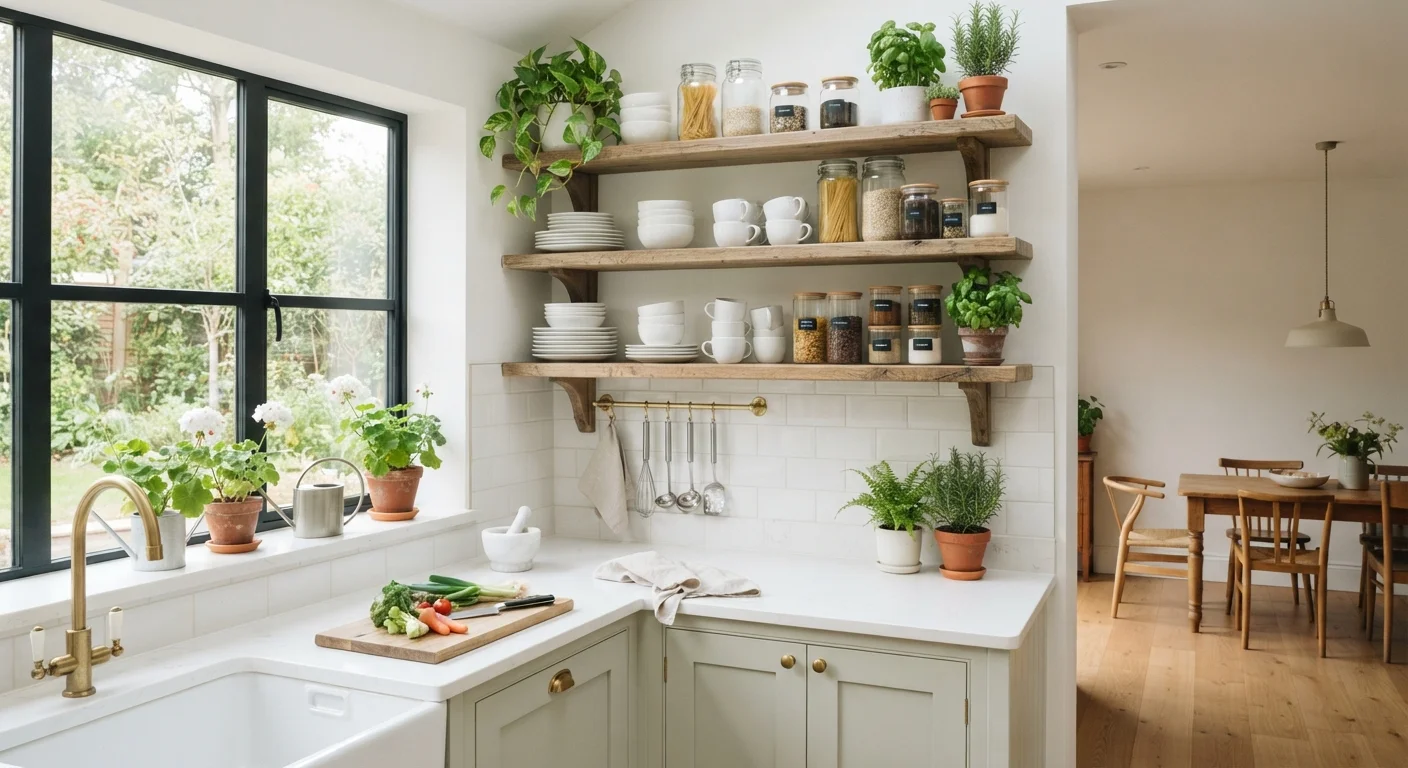
Open shelving in the kitchen has moved from a niche design preference to a mainstream renovation choice, and it's easy to see why. Styled photography shows bowls stacked in neat towers, herb plants lined up along a window, and a sense of breathing room that closed cabinetry simply can't replicate. The look signals confidence — a kitchen that has nothing to hide.
But what gets edited out of those images is the context of daily life: a household that cooks real meals, has mismatched mugs, stores medications or pantry staples, and doesn't have time for a full reset before every photo opportunity. The decision to remove upper cabinets deserves a more grounded evaluation than most design guides provide.
If you're also thinking about refreshing the cabinets you do keep, it's worth reading what a cabinet refresh actually involves before committing to any structural changes.
The Real Advantages of Open Shelves
There are legitimate benefits to open shelving that go beyond aesthetics.
Creates a more open, airy kitchen feel
Removing upper cabinet boxes eliminates visual bulk and can make a smaller kitchen feel notably less closed-in, particularly when paired with lighter wall colors.
Makes frequently used items immediately accessible
Dishes, glasses, and everyday cookware are visible and within arm's reach, reducing the time spent searching through stacked cabinets during meal prep.
Encourages intentional, curated organization
Because everything is on display, open shelving naturally motivates homeowners to keep only what they use and to organize it thoughtfully.
Can feel more personalized and design-forward
Open shelves allow for a mix of functional items and small decorative touches — plants, ceramics, or collected glassware — that closed cabinets simply conceal.
Generally lower upfront cost than full cabinetry
Floating shelves typically cost less to purchase and install than a run of upper cabinets, which can matter when working within a renovation budget.
Accessibility is a practical win many homeowners underestimate. When dishes and glasses are visible and within reach, meal prep and cleanup genuinely move faster — no rummaging through stacked pots or guessing which cabinet holds the colander. For households that cook frequently and keep a streamlined set of cookware, this daily ease is real. The same logic applies to kitchen tools that genuinely earn their place — items you reach for constantly benefit from open, immediate access.
The Trade-Offs Most Guides Gloss Over
Design guides tend to linger on the visual upside and treat maintenance as a footnote. Here's what deserves more weight.
Grease and dust accumulate on everything
Cooking releases aerosolized oils and steam that settle on open shelves and every item on them. In an active kitchen, this requires thorough weekly cleaning — not a quick swipe.
Demands constant, visible tidiness
Unlike closed cabinets, open shelves put everyday disorder on permanent display. A few mismatched mugs or a stack of takeout containers immediately affects the look of the whole kitchen.
Significantly reduces enclosed storage capacity
Most kitchens rely on upper cabinets for a substantial share of their storage. Removing them means finding other places for pantry items, small appliances, and the miscellaneous items every household accumulates.
Items collect dust if not used regularly
Serving platters, seasonal dishes, or specialty tools that sit unused for weeks will need cleaning before each use, adding a small but real friction to entertaining.
May complicate resale depending on the market
Buyer preferences vary widely by region and household type; some buyers will love the look, while others will see a storage deficit and factor in the cost of adding cabinets back.
Removal is often harder to reverse than anticipated
Once cabinets come down, walls frequently need patching, painting, and sometimes electrical work, making a return to enclosed storage a meaningful additional expense.
The dust-and-grease issue deserves special attention. Even in kitchens with good ventilation, aerosolized cooking oils and steam settle on horizontal surfaces. Open shelves near a range accumulate a sticky film that traps dust — and every item on the shelf needs wiping, not just the shelf itself. This is a weekly task in an active kitchen, not a seasonal one.
~60%
Of upper cabinet storage lost when fully removed
Kitchen planners commonly estimate that upper cabinets provide the majority of a kitchen's enclosed storage; removing them entirely forces significant reorganization of pantry and appliance storage.
Weekly
Recommended cleaning frequency near cooking zones
Home organization professionals generally recommend wiping open shelves and their contents at least once a week in kitchens that see regular stovetop cooking.
The Hybrid Approach Worth Considering
Most professional kitchen designers and experienced remodelers suggest that an all-or-nothing approach to open shelving is rarely necessary. A hybrid layout — open shelves in one or two strategic zones, closed cabinetry elsewhere — captures the visual benefits while preserving the storage flexibility most households need.
Common hybrid configurations include open shelves flanking a window or hood, with enclosed cabinets above less-visible runs. This lets you display intentional items (a set of matching dishes, frequently used spices) while keeping everyday clutter behind closed doors.
Test Before You Commit
If you're drawn to open shelving but uncertain about the upkeep, consider a low-commitment trial first. Remove the doors from one or two upper cabinet sections and live with it for a month or two. You'll quickly discover whether your household's habits and storage needs are compatible with the look — before any walls are touched.
Before removing any cabinets, consider whether the decision is reversible. Patching drywall, rerunning electrical, and matching existing finishes all add cost and complexity if you change your mind. Many homeowners find it worthwhile to live with temporary open shelving — installed without removing existing cabinets — for a few months before committing to a permanent change.
The content on this site is for informational purposes only and is not a substitute for professional advice. Always consult a qualified professional for guidance specific to your situation.