

Why Maintenance on These Devices Actually Matters
Smoke and carbon monoxide (CO) detectors are among the few home safety devices that sit dormant for years, then need to perform flawlessly in a genuine emergency. That makes routine upkeep easy to ignore — and costly to skip. A detector with a dead battery or a sensor past its service life offers no protection at all, even though it still hangs on the ceiling.
Think of this alongside the broader principle that small, consistent upkeep prevents far larger consequences. As covered in What Deferred Maintenance Really Costs Homeowners Over Time, neglecting simple tasks can create compounding risks that are expensive to fix. With life-safety devices, the stakes are even higher than a repair bill.
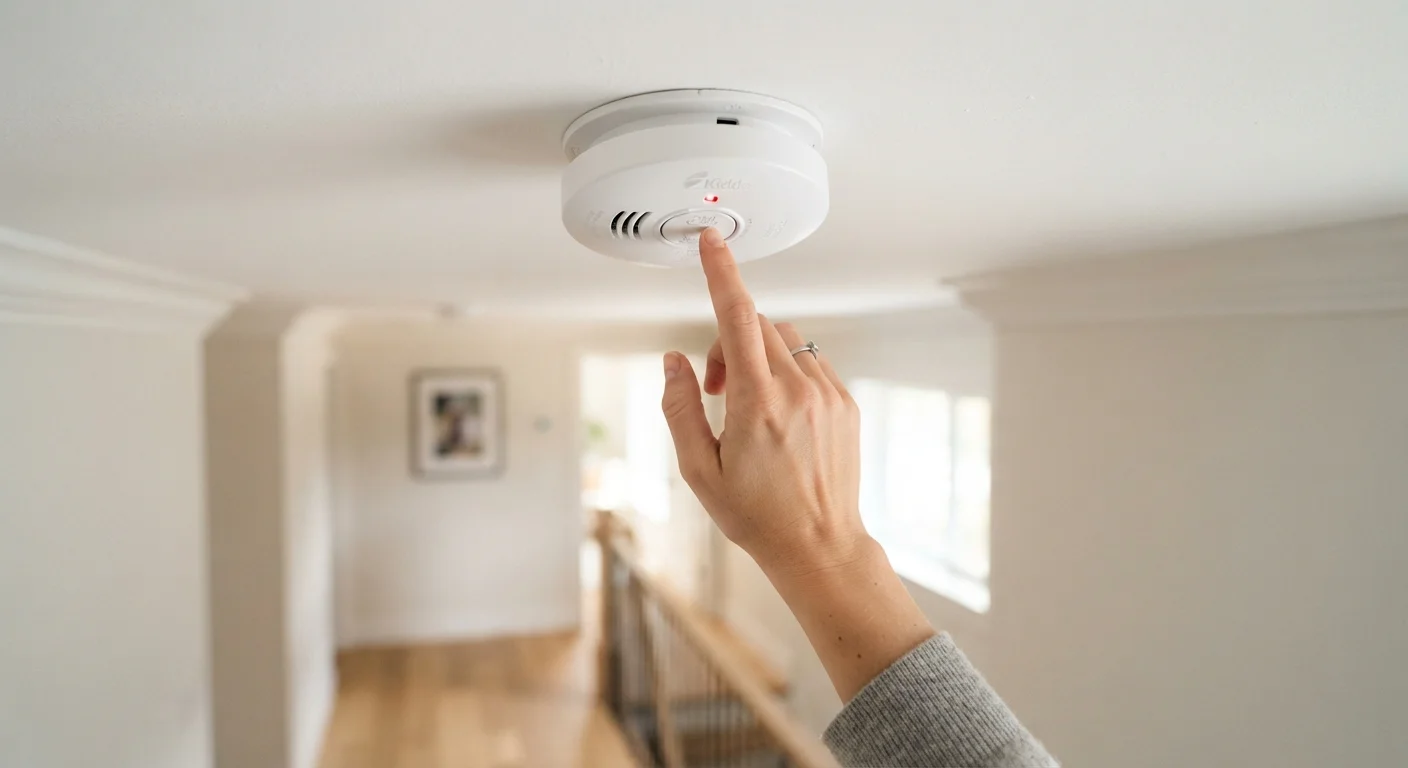
Test every detector once a month using the built-in test button.
The test button verifies the alarm circuit, sounder, and battery connection are all functional. Monthly testing catches failures early — long before a real emergency reveals the problem. This is the single most effective maintenance habit you can build.
Replace batteries at least once per year, even if no low-battery chirp has sounded.
Batteries can lose capacity gradually without triggering a warning. An annual proactive swap removes this uncertainty. Many homeowners tie battery replacement to a recurring date such as the start of daylight saving time or a birthday.
Respond to a low-battery chirp immediately — do not silence it and move on.
A chirping detector is communicating a specific warning. Removing the battery to stop the noise without replacing it leaves the home unprotected. Most detectors will chirp intermittently for days before the battery fully fails.
Check the manufacture date on every detector and replace units that have exceeded their service life.
Aging sensors lose sensitivity and reliability, often without any obvious sign of failure. A detector that looks intact and passes a button test may still have a degraded sensor that won't respond to actual smoke or CO at dangerous concentrations.
Vacuum detector vents gently once or twice per year to remove dust and debris.
Accumulated dust can interfere with sensor sensitivity and cause false alarms or reduced response. A quick pass with a vacuum's brush attachment keeps the sensing chamber clear without damaging the internal components.
Never paint over, cover, or obstruct a detector.
Paint and decorative covers block the vents that allow smoke or CO to reach the sensor. Even a thin coat of paint can significantly impair detection capability and may void the manufacturer's warranty.
The Core Maintenance Practices Every Homeowner Should Follow
Proper upkeep isn't complicated, but it does require consistency. The practices below reflect guidance from fire safety authorities and building code standards across the U.S.
Understanding Detector Lifespan and Placement
Even a perfectly maintained detector has a limited working life. Smoke detectors — regardless of whether they use ionization or photoelectric sensing technology — should be replaced every 10 years from the manufacture date printed on the unit. Carbon monoxide detectors have shorter lifespans, typically 5 to 7 years, because the electrochemical sensors degrade over time. Check the label on the back of each unit to find its manufacture date.
3 in 5
Home fire deaths with non-working smoke alarms
According to the U.S. Fire Administration, three out of five home fire deaths occur in homes with no smoke alarms or non-working smoke alarms.
10 years
Maximum recommended smoke detector lifespan
The National Fire Protection Association (NFPA) recommends replacing smoke alarms no later than 10 years from the manufacture date on the unit.
Placement is equally important. The U.S. Fire Administration recommends installing smoke detectors on every level of the home, inside each sleeping room, and outside each sleeping area. CO detectors should be placed near sleeping areas so occupants can hear them. Avoid placing smoke detectors within 10 feet of cooking appliances to reduce nuisance alarms, and keep both types away from bathrooms where steam can trigger false alerts.
If you're new to managing a home's full maintenance calendar, Your First Year as a Homeowner: What Maintenance Actually Looks Like provides a practical overview of where these tasks fit into your routine. Similarly, Home Maintenance as a Long-Term Investment: The Full Picture explains how consistent safety upkeep contributes to overall home value and comfort.
Combination Units: Convenient but Check Both Lifespans
Combination smoke-and-CO detectors are increasingly common, but the two sensor types have different lifespans. The CO sensor typically expires before the smoke sensor does. Check the manufacturer's documentation for each unit to understand when the CO sensing function specifically needs replacement — it may be sooner than the full 10-year smoke detector window.
Interconnected Detectors and Smart Features Worth Knowing About
Modern homes increasingly use interconnected detector systems, where triggering one unit causes all others to sound. This is particularly valuable in larger homes or multi-story layouts where a detector in the basement may not be heard from an upstairs bedroom. Interconnection can be achieved through hardwired systems (common in newer construction) or through wireless radio-frequency models that communicate without wiring.
Some detectors now include digital displays showing CO concentration levels, smart-home integration for remote alerts, or voice alarms that describe the hazard type. While these features can add useful context, the fundamental maintenance requirements — monthly testing, annual battery replacement, and timely unit replacement — remain the same regardless of how advanced the device is.
Just as your HVAC filter requires regular attention to keep your home's air systems working properly, detector upkeep is a non-negotiable part of a safe home. Combining both into a regular maintenance schedule makes neither task feel like a burden.
Pair Detector Maintenance with Another Routine Task
It's easy to forget detector upkeep when nothing seems wrong. Try pairing it with a task you already do regularly — changing your HVAC filter, for instance, is a natural companion task. See Why Your HVAC Filter Is the Most Overlooked Thing in Your House for guidance on that task's schedule. Grouping home safety checks makes each one easier to remember and harder to skip.
The content on this site is for informational purposes only and is not a substitute for professional advice. Always consult a qualified professional for guidance specific to your situation.