

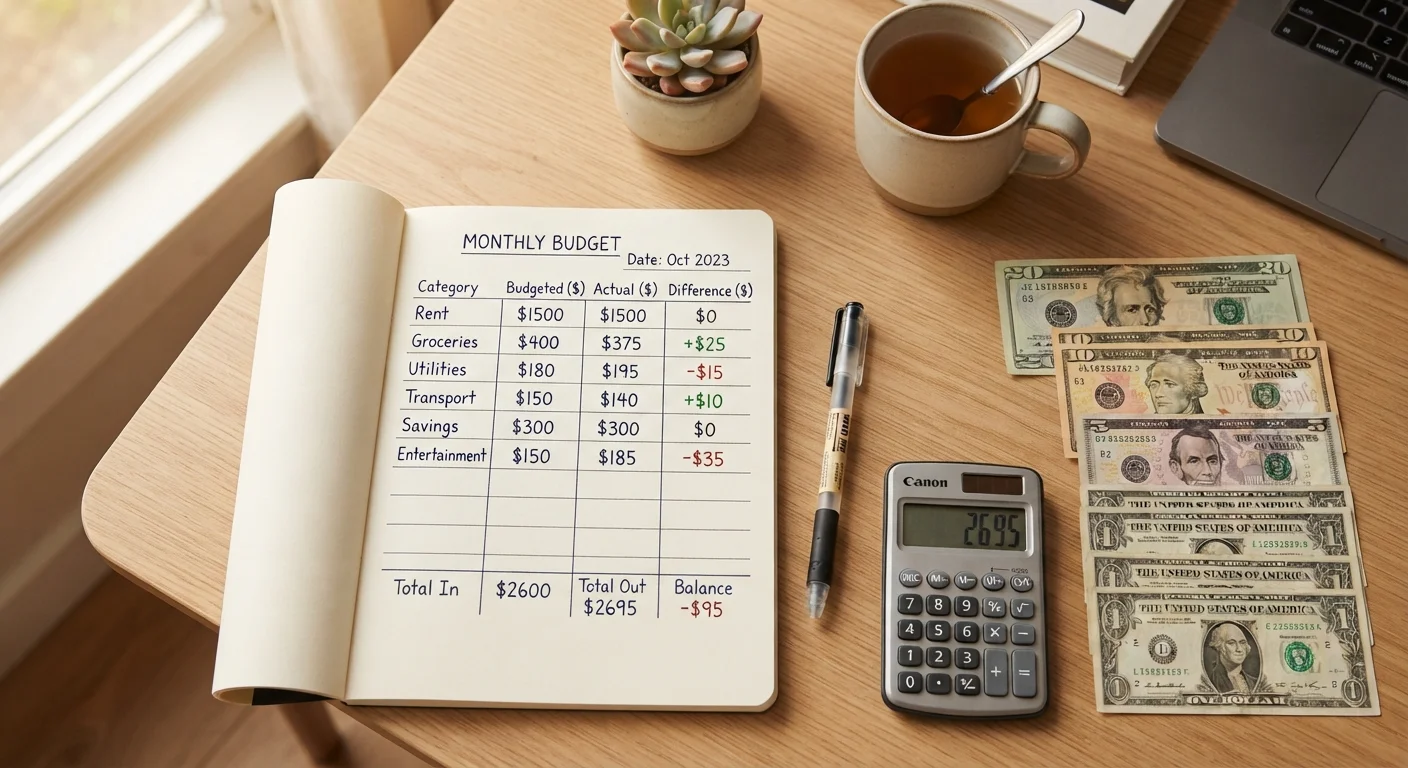
How Zero-Based Budgeting Works
The core rule is simple: income minus every assigned category equals zero. If you bring home $3,800 this month, you assign all $3,800 across your categories — rent, utilities, food, transportation, savings, debt payments, entertainment, and anything else that applies to your life. When the assignments add up to $3,800, you're done. Nothing floats.
This is different from tracking spending after the fact. With zero-based budgeting, you plan before you spend. That shift — from reactive to proactive — is what gives the method its edge. You decide in advance where your money goes rather than wondering where it went.
If you're new to budgeting altogether, the six-step monthly budget guide walks through the foundational mechanics of setting up income and expense categories before you layer in a zero-based approach.
33%
Americans with no monthly budget
A survey by the National Foundation for Credit Counseling found roughly one-third of U.S. adults do not follow any budget, leaving spending largely untracked.
$500+
Average monthly untracked discretionary spending
Research from the Bureau of Labor Statistics Consumer Expenditure Survey consistently shows a significant gap between what Americans think they spend and what they actually spend in discretionary categories.
Setting Up Your Zero-Based Budget
Start with your take-home income — the amount actually deposited after taxes and deductions. List every expense you know is coming: fixed costs like rent and car payments, then variable costs like groceries, gas, and dining out. Include irregular but predictable expenses like annual subscriptions or car registration by dividing the yearly total by 12 and budgeting that monthly amount.
After fixed and variable expenses, assign money to savings and debt payoff. These aren't optional categories — they're jobs your dollars need to perform. An emergency fund contribution, retirement savings, and any extra debt payment all belong on the list.
Once every category is filled in, add it all up. If the total is less than your income, assign the remaining dollars somewhere — savings, a sinking fund for a future goal, or extra debt reduction. If the total exceeds your income, trim categories until the numbers balance. The budget must reach zero.
Budget Before the Month Starts
The most effective time to build your zero-based budget is a few days before the new month begins — not on day one when spending has already started. Treat it like a brief planning meeting with yourself. Even 30 minutes of preparation can prevent weeks of financial guesswork.
Who Benefits Most From This Method
Zero-based budgeting suits people who want to understand exactly where their money goes and feel frustrated by vague financial drift. If you've ever reached the end of the month wondering where your paycheck disappeared, this method forces the answer upfront.
It works particularly well for people paying down debt, building an emergency fund from scratch, or working toward a specific savings goal. The intentionality baked into the process helps prioritize those goals before lifestyle spending fills the gaps.
It's less naturally suited to highly irregular income — though it can be adapted. If your monthly earnings vary significantly, consider budgeting from a conservative baseline. Any income above that baseline can be assigned when it arrives. For a comparison of zero-based budgeting against another popular hands-on approach, see zero-based vs. envelope budgeting.
It also demands consistency. You'll need to check in mid-month to see if any categories are running over and adjust accordingly. A structured end-of-month review — like the monthly budget audit checklist — makes that habit easier to maintain.
Common Pitfalls and How to Avoid Them
The most common mistake in the first month is forgetting irregular expenses. A $180 car registration or a quarterly insurance premium can blow a budget that otherwise looks balanced. Build sinking fund categories — small monthly contributions toward known future costs — to prevent these from catching you off guard.
Another pitfall is setting unrealistic category amounts. If you consistently spend $400 on groceries but budget $200, you're not building a functional plan — you're just setting yourself up to feel like you failed. In the early months, track your actual spending first, then use those real numbers to set your category targets.
Finally, don't confuse a perfect budget with a useful one. Zero-based budgets get adjusted — sometimes several times a month, especially at the start. That's not failure; that's the system working. The goal is to stay engaged and keep every dollar assigned, not to predict spending perfectly on the first try.
This article is for general informational purposes only and does not constitute personalized financial advice. For guidance specific to your situation, consider consulting a qualified financial professional.
Frequently Asked Questions
No. It means every dollar is assigned a purpose — including savings, investments, and an emergency fund. If you assign $300 to savings, that $300 has a job. You're not spending it; you're directing it intentionally.
Traditional budgeting often starts with last month's numbers and adjusts from there. Zero-based budgeting starts from scratch each month, requiring you to justify and assign every dollar of income fresh. This prevents old spending habits from silently carrying forward.
It requires more planning for variable earners, but it's still workable. A common approach is to budget based on your lowest expected monthly income, then assign any additional earnings as they arrive. This keeps your baseline plan conservative and manageable.
Most people spend 30–60 minutes setting up their monthly budget and a few minutes each week tracking spending. It's more hands-on than passive methods, but that engagement is part of what makes it effective for many people.
You move money from another category to cover the overage — this is called a budget adjustment. The total still needs to equal zero. This is normal, especially in the first few months while you're calibrating your spending patterns.
No. A simple spreadsheet or even a handwritten notebook works fine. Some people prefer budgeting apps that automate the tracking, but the method itself has no technology requirement.
The content on this site is for informational purposes only and is not a substitute for professional advice. Always consult a qualified professional for guidance specific to your situation.