

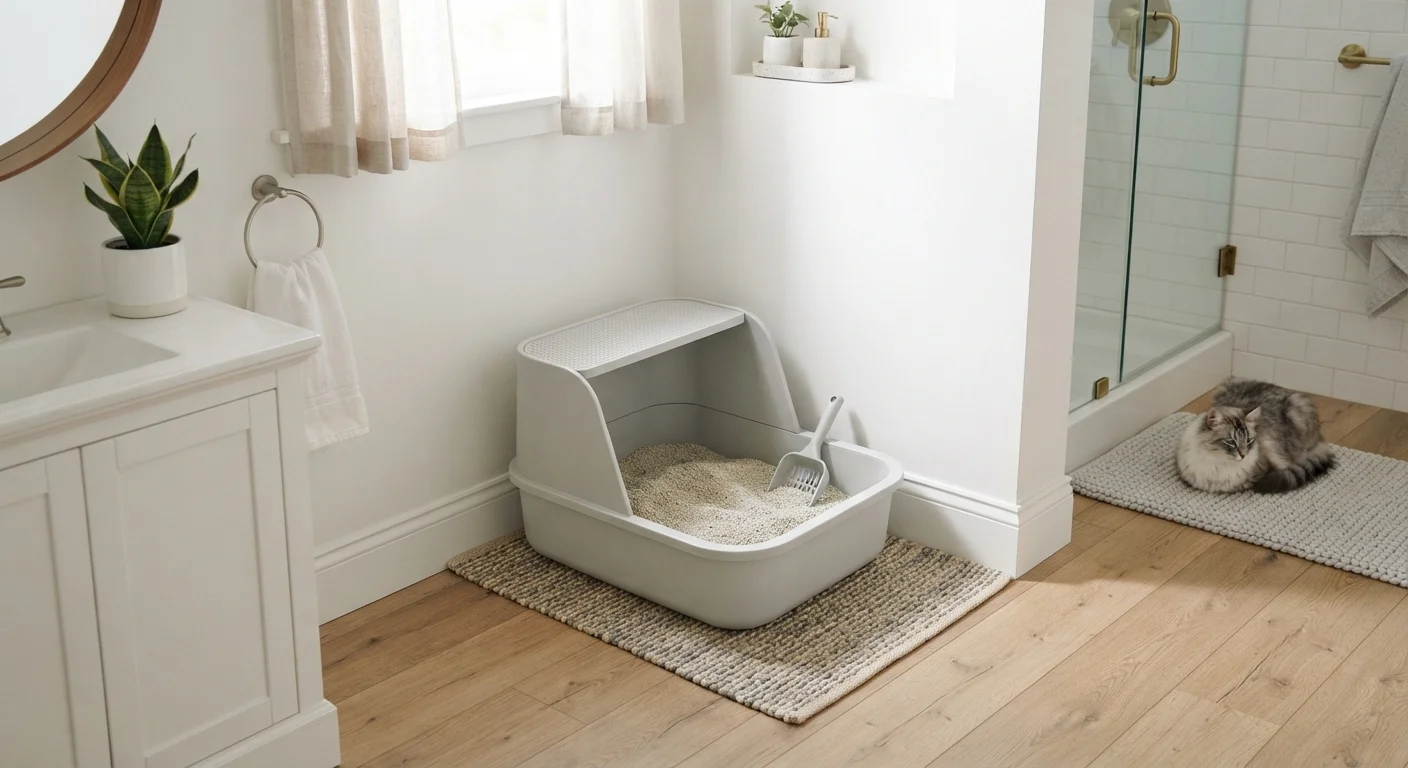
Why Setup Decisions Actually Matter
Cats are not difficult about their litter boxes by choice — they respond to instinct and sensory input in ways that are entirely predictable once you understand what drives them. Unlike dogs, cats don't need to be trained to use a box; they need the box to meet their preferences closely enough that it feels like the obvious and comfortable choice.
When a box is wrong in size, location, cleanliness, or scent, many cats will find an alternative — behind the sofa, in a corner of the closet, or on a soft rug. These aren't acts of spite. They're a cat communicating clearly that something about the setup isn't working.
Getting the setup right from the beginning is far easier than correcting ingrained avoidance behavior later. If you're bringing home your first cat, the steps below are especially worth getting right in week one.
What you will need
What You'll Need Before You Start
Litter box (open or covered)
The primary container for waste — size and style affect whether your cat will use it willingly.
Clumping, unscented litter
Forms solid clumps for easy scooping and keeps the box fresh without overwhelming a cat's sensitive nose.
Slotted litter scoop
Used for daily removal of waste clumps while leaving clean litter behind.
Litter mat
Placed outside the box to catch litter tracked on paws and reduce scatter on floors.
Mild dish soap or white vinegar
Safe, low-odor cleaning agents for washing the box during full litter changes.
Having the right materials on hand before your cat arrives — or before you overhaul a current setup — removes the temptation to improvise. A box that's too small, a scoop that doesn't clump well, or a harsh cleaner used once can set back acceptance significantly.
Step-by-Step: Setting Up the Box
Choose the right box size and style
Select a box large enough for your cat to step in, turn a full circle, and dig without touching the sides. A general guideline is a box that is at least 1.5 times the length of your cat from nose to tail base. Kittens, senior cats, and cats with mobility issues often do best with low-entry boxes that don't require a high step-over.
Open boxes (without a lid) are preferred by most cats because they allow a clear sightline and good ventilation. Covered boxes can trap odors and make some cats feel cornered — though a small number of cats do prefer the privacy. Start open if you're unsure.
Pick a litter your cat will accept
Unscented, clumping clay litter is what most cats gravitate toward naturally, and it's the baseline most veterinarians and feline behaviorists recommend starting with. It mimics the texture of sand or loose soil, which cats are instinctively drawn to for elimination.
Fill the box to approximately two inches deep — enough for digging and covering without excess that gets kicked out. Silica gel crystals and plant-based litters (corn, wheat, pine) are alternatives some cats accept well, but introduce any new litter type gradually.
Place the box in the right location
Location is one of the most underestimated factors in litter box acceptance. Cats need to feel safe and unhurried when they use the box. Place it in a quiet area away from their food and water bowls — cats instinctively avoid eliminating near where they eat.
Avoid placing boxes next to loud appliances like washing machines or HVAC units. A surprise spin cycle can startle a cat mid-use and create a lasting aversion. Basements, laundry rooms near dryers, and tight closets are common problem spots.
Make sure the box is always accessible — never behind a closed door or in an area the cat cannot reach freely at night.
Determine how many boxes you need
The widely recommended formula is one box per cat, plus one extra. So one cat needs two boxes; two cats need three. This reduces competition, territorial guarding, and the chance that a box becomes too soiled before it's cleaned.
Spread boxes across different locations rather than clustering them together. Two boxes side-by-side in the same room effectively function as one resource to a cat that feels territorial.
Establish a cleaning routine
Scoop waste clumps at least once daily — twice daily is better for multi-cat homes or cats that are particularly fastidious. Cats will avoid a dirty box much the way people avoid a dirty public restroom, and some cats will begin eliminating elsewhere if the box isn't kept clean.
Do a full litter change — empty the box completely, wash it with mild soap or dilute white vinegar, rinse thoroughly, dry, and add fresh litter — every one to two weeks depending on how quickly it becomes soiled. Avoid bleach or strong disinfectants, which can leave residue that deters cats.
Introduce the box to your cat
Most cats — especially kittens — will investigate and use a properly set-up litter box without any coaching. After placing the box, gently carry your cat to it and set them inside so they can sniff and explore at their own pace. Do not force them to stay or simulate digging with their paws — this can cause stress.
If your cat is new to your home, confine them initially to a smaller space that includes the litter box so they can locate it easily before being given access to the full home. This is a common and effective approach outlined in first-week setup guides like bringing home your first cat.
Avoid Scented Litter and Strong Cleaners
Heavily perfumed litters and harsh chemical cleaners — including ammonia-based products — can deter cats from using their box entirely. A cat's sense of smell is far more sensitive than ours. Stick to unscented litter and mild dish soap or a dilute white vinegar solution when cleaning the box itself.
Troubleshooting and When to Call the Vet
Even with an ideal setup, some cats take time to adjust — particularly if they've had a previous negative experience or if they're adapting to a new home environment. Give a new setup at least a week before concluding it isn't working, and change only one variable at a time so you can identify what helps.
If your cat was using the box reliably and stops without an obvious environmental change, treat it as a potential health signal first. Litter box avoidance can indicate urinary issues, gastrointestinal problems, or pain that makes posturing in the box uncomfortable.
Litter Box Avoidance Can Signal Health Problems
If a cat that previously used their litter box reliably suddenly stops, it isn't always a behavioral issue. Urinary tract infections, kidney disease, and arthritis can all make the box uncomfortable or difficult to reach. Contact your veterinarian if avoidance is sudden, persistent, or paired with other symptoms like straining, crying, or blood in urine.
For households with more than one cat, competition over litter boxes is a frequent and underappreciated trigger for avoidance. See our guide on managing resources in multi-cat homes for specific strategies around spacing, box distribution, and territorial dynamics.
Transitioning to a New Litter Type
If you need to switch litter brands or types, do it gradually over one to two weeks by mixing increasing amounts of the new litter into the old. An abrupt change can cause cats to reject the box entirely, especially if the texture or scent differs significantly from what they're used to.
The content on this site is for informational purposes only and is not a substitute for professional advice. Always consult a qualified professional for guidance specific to your situation.