

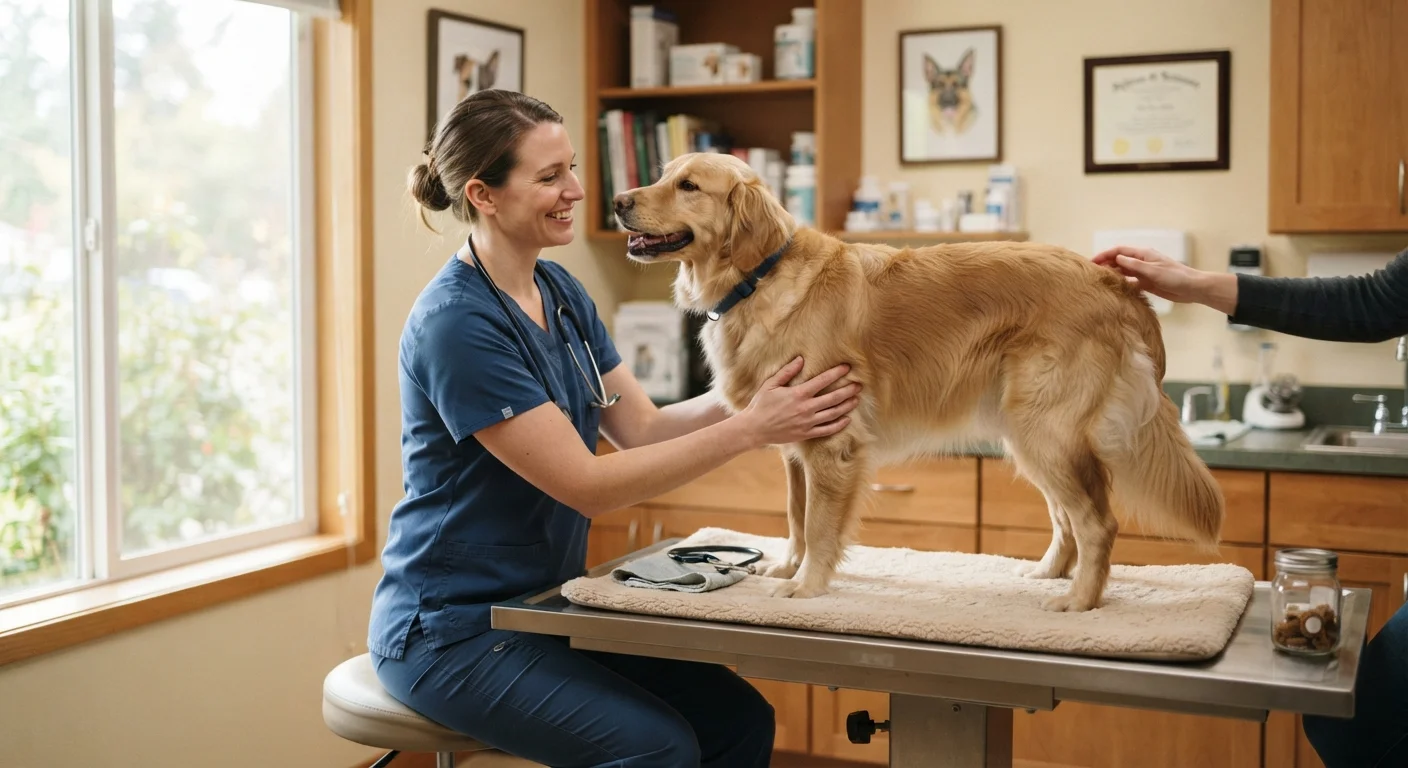
What Spaying and Neutering Actually Involves
Spaying (ovariohysterectomy) is the surgical removal of a female dog's ovaries and uterus. Neutering (orchiectomy) removes a male dog's testicles. Both procedures are performed under general anesthesia by a licensed veterinarian and are considered routine in American veterinary practice.
Spaying is a more involved abdominal surgery and typically requires a slightly longer recovery than neutering, which is generally a quicker procedure. Some veterinary schools and clinics also offer ovary-sparing spays or vasectomies as alternatives, though these are far less common and carry their own considerations worth discussing with your vet.
If you're bringing home a new dog for the first time, our guide for first-time dog owners covers what early vet appointments typically look like and how to prepare.
Health Benefits and Real Risks
Spaying and neutering are widely recommended, but the health picture is more nuanced than a simple pros-and-cons list.
~27,000
Dogs and cats entering U.S. shelters daily
According to the ASPCA, approximately 6.3 million companion animals enter U.S. shelters each year, underscoring the role of spay/neuter in reducing pet overpopulation.
~4x
Increased mammary tumor risk in unspayed females
Research cited by veterinary oncology sources suggests intact female dogs face a substantially higher risk of mammary tumors compared to those spayed early in life.
10–14 days
Typical recovery time after surgery
Most healthy dogs return to normal activity within two weeks, provided post-operative care instructions are followed consistently.
Potential Benefits
- Spayed females: Eliminated risk of uterine infections (pyometra) and ovarian cancer; reduced risk of mammary tumors, particularly when spayed before the first heat cycle.
- Neutered males: Eliminated risk of testicular cancer; reduced risk of certain prostate conditions.
- Both: No risk of reproductive cancers in removed organs; contributes to reducing pet overpopulation.
Documented Risks Worth Knowing
- Some studies — particularly those from UC Davis involving golden retrievers, Labrador retrievers, and other large breeds — have linked early spay/neuter to increased rates of certain orthopedic conditions (like hip dysplasia and cranial cruciate ligament tears) and some cancers (such as hemangiosarcoma and mast cell tumors).
- Spayed and neutered dogs may have a higher tendency toward weight gain due to hormonal changes affecting metabolism.
- Urinary incontinence occurs in a subset of spayed females.
The Science Is Evolving — Talk to Your Vet
Blanket recommendations about spay/neuter timing are being refined as new research emerges, particularly for large and giant breeds. What was standard advice a decade ago may not be the best guidance for your specific dog today. An individualized conversation with your veterinarian — factoring in breed, size, sex, and lifestyle — is the most responsible path forward.
The takeaway is not that spaying or neutering is harmful — it's that the decision deserves individualized thought, not a default assumption.
The Timing Debate: When Should You Schedule the Procedure?
For decades, six months was the standard recommended age for spaying and neutering dogs. That guideline is now actively debated among veterinary professionals, and current thinking is more nuanced.
For small and medium breeds, spaying or neutering around six months remains broadly appropriate. For large and giant breeds, emerging research suggests waiting until the dog reaches skeletal maturity — often 12 to 24 months — may reduce the risk of certain joint and orthopedic problems. Sex hormones play a role in bone and joint development, and removing them too early may affect growth plate closure.
Ask your vet specifically about research on your dog's breed before scheduling surgery. Large-breed and giant-breed dogs may genuinely benefit from waiting longer than the traditional six-month guideline.
Breed-specific studies — particularly from UC Davis — have shown elevated orthopedic risks in certain large breeds when neutered early, making individualized timing conversations essential.
If your dog is going to be around intact dogs of the opposite sex before the procedure, discuss management strategies with your vet rather than rushing into early surgery.
Unplanned litters are a real risk with intact dogs in the same household, but the solution isn't always to operate before the dog is physically ready — temporary management and supervision can bridge the gap.
Female dogs spayed before their first heat cycle have a significantly reduced risk of mammary tumors compared to those spayed later — this is one factor that can pull timing in the earlier direction for some dogs.
There's no universally correct answer. Breed, size, individual health history, and your lifestyle (for example, whether an intact female will be around intact males) all factor in. Discuss the current evidence with your veterinarian rather than defaulting to a calendar-based rule.
Behavioral Changes: What to Realistically Expect
Spaying and neutering do affect behavior — but often less dramatically than owners expect, and the changes depend heavily on the individual dog and their baseline habits.
What Typically Changes
- Roaming and mounting: Hormone-driven behaviors like roaming to find mates and mounting are often reduced after neutering, though not always eliminated.
- Marking: Urine marking indoors may decrease in neutered males, especially if the procedure happens before the behavior becomes deeply ingrained.
- Heat-related behaviors: Spayed females no longer experience heat cycles, eliminating associated behavioral shifts (restlessness, attracting male dogs).
What Doesn't Change
Spaying or neutering is not a substitute for training. Aggression rooted in fear, resource guarding, or learned behavior is unlikely to resolve with surgery alone. Anxiety, reactivity, and social behavior are shaped more by genetics, socialization, and training than by reproductive hormones.
Recovery: What Happens After Surgery
Most dogs recover from spay or neuter surgery within 10 to 14 days. The first 48 to 72 hours are the most critical period for rest and monitoring.
Standard Post-Op Care
- Restrict exercise — no running, jumping, or rough play — until your vet clears the dog.
- Use an Elizabethan collar (e-collar) or surgical recovery suit to prevent licking or chewing at the incision site.
- Check the incision daily for signs of redness, swelling, discharge, or opening.
- Follow all medication instructions from your veterinarian precisely, including any prescribed pain relief.
- Keep the incision area clean and dry — no baths until fully healed.
When to Call Your Vet Post-Surgery
Contact your veterinarian promptly if your dog shows excessive lethargy beyond 24 hours, refuses food for more than a day, vomits repeatedly, or has an incision that appears red, swollen, or is seeping. These signs fall outside the normal recovery range and should be evaluated quickly to prevent complications.
Contact your veterinarian promptly if your dog shows signs of lethargy beyond 24 hours post-surgery, refuses to eat for more than a day, vomits repeatedly, or if the incision looks inflamed or is seeping. These are not normal parts of recovery.
Questions to Ask Your Vet Before Deciding
Rather than arriving at your vet appointment looking for a simple yes or no, come prepared with informed questions. The conversation should be tailored to your dog specifically.
- Given my dog's breed and size, what age do you recommend for the procedure?
- Are there any health factors in my dog's history that affect timing?
- What are the realistic tradeoffs for my dog in particular?
- Are alternatives like ovary-sparing spay or vasectomy appropriate in my situation?
- What does the post-operative care involve, and what signs of complications should I watch for?
Staying current on your dog's overall health — including preventive care like vaccination schedules and dental care — gives your vet a fuller picture when making recommendations. If you have a cat and are researching the same topic, our overview of spaying and neutering cats covers what differs for feline patients.
This article is for general informational purposes only and is not a substitute for professional veterinary advice. Always consult a licensed veterinarian for guidance specific to your pet's health and circumstances.
The content on this site is for informational purposes only and is not a substitute for professional advice. Always consult a qualified professional for guidance specific to your situation.