

Our Verdict
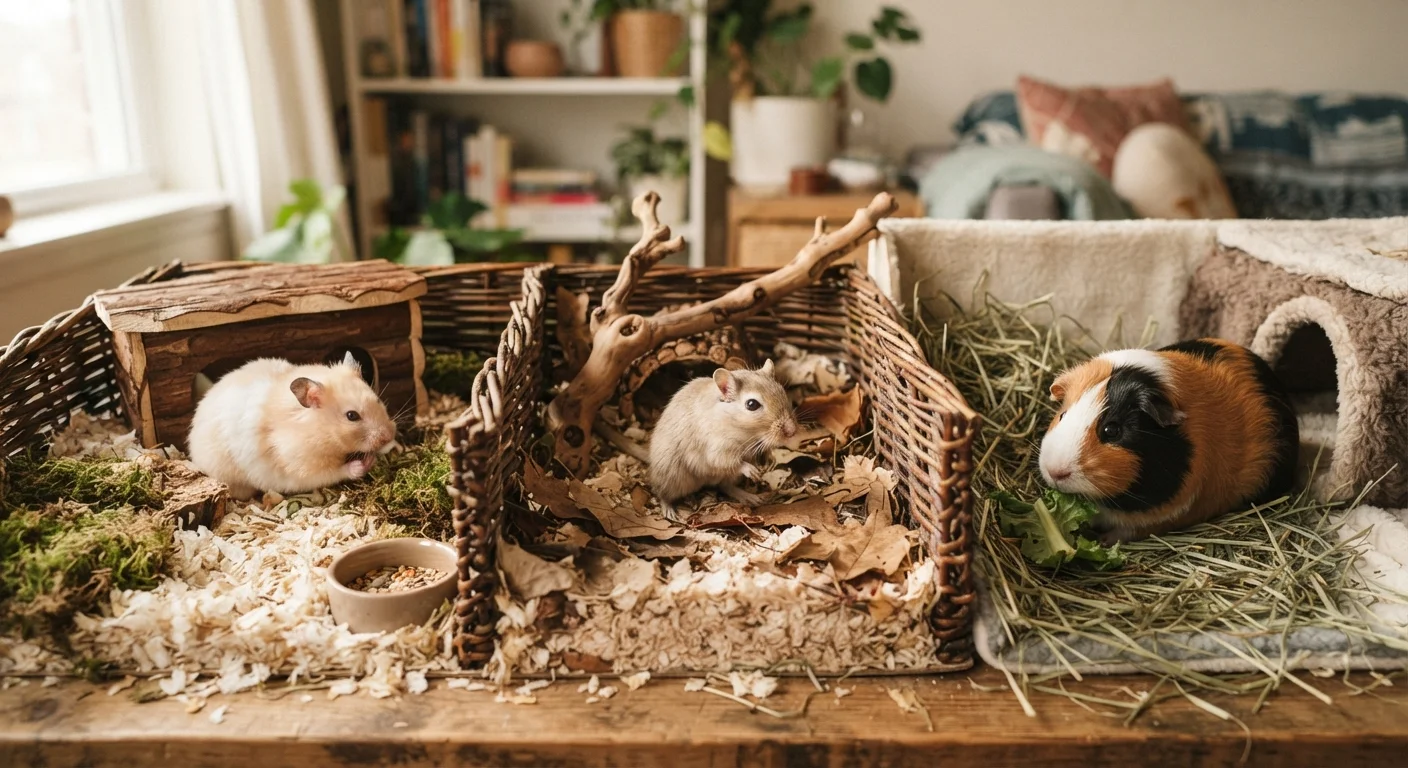
No single small mammal is universally the right pet — each suits a different lifestyle, schedule, and level of commitment. Understanding the differences in sociability, activity patterns, space needs, and dietary requirements is essential before bringing any of these animals home.
| Best for | Recommended |
|---|---|
| Owners with limited space and a more hands-off approach | Hamster |
| Families or owners who enjoy watching interactive, active animals | Gerbil |
| Owners ready for a longer commitment and daily social interaction | Guinea Pig |
Social Needs: Who Wants Company and Who Doesn't
One of the most important — and most misunderstood — differences between these three animals is how they relate to others of their kind.
Hamsters (particularly Syrian hamsters, the most common pet variety) are solitary by nature. In the wild, adults maintain their own territories and will fight if housed together. Keeping two Syrian hamsters in the same cage typically leads to serious injury. Dwarf hamster species can sometimes coexist in pairs if introduced very young, but conflicts are still common and require careful monitoring.
Gerbils are highly social and should be kept in same-sex pairs or small groups. A lone gerbil is likely to experience chronic stress. Ideally, gerbils are adopted together from the same litter or bonded before sale. Introducing adult gerbils who don't know each other is difficult and carries a real risk of fighting — a process called declanning can occur even in established pairs.
Guinea pigs are among the most socially dependent small mammals commonly kept as pets. Many animal welfare organizations recommend that guinea pigs should not be kept alone under normal circumstances. A bonded same-sex pair or a neutered male-female pair is generally considered the standard of care. See our guide to what new guinea pig owners get wrong for more on meeting their social needs.
| Hamster | Gerbil | Guinea Pig | |
|---|---|---|---|
| Social needs | Solitary (most species) | Pair or small group | Requires a companion |
| Activity pattern | Nocturnal | Active day and night | Active during the day |
| Average lifespan | 2–3 years | 3–5 years | 4–8 years |
| Minimum enclosure size | 40" x 20" recommended | 20-gallon tank (pair) | 7.5 sq ft floor space (pair) |
| Vitamin C requirement | Not required in diet | Not required in diet | Essential — daily supplement |
| Handling tolerance | Variable, can nip | Fast but tolerant | Generally gentle when socialized |
| Noise level | Wheel noise at night | Digging and occasional calls | Vocalizes frequently |
| Veterinary availability | Exotic vet needed | Exotic vet needed | Exotic vet needed |
Activity Patterns and Handling
Understanding when your pet is naturally active helps set realistic expectations — especially for families with children.
Hamsters are nocturnal. They spend most of the day sleeping and become active after dark. This makes them poor companions for young children who want daytime interaction, and their running wheel can be noisy at night. Hamsters that are woken suddenly can bite out of stress, so handling requires patience and a calm approach.
Gerbils are active in short, unpredictable bursts throughout the day and night. They are quick, curious, and entertaining to watch, but their speed makes them harder to handle safely — especially for younger children. With consistent, gentle handling from a young age, many gerbils become tolerant and inquisitive companions.
Guinea pigs are active during daylight hours, which aligns more naturally with a household's daily rhythm. They are generally the most handleable of the three, vocalizing clearly with squeaks and purrs that signal their mood. Consistent socialization from a young age makes them comfortable being held, though they still need secure, gentle support and should never be grabbed from above, which mimics predator behavior.
For all three animals, enrichment beyond handling is critical to wellbeing. Our enrichment guide for small pets covers practical ways to keep caged animals mentally stimulated.
Always Source an Exotic Vet Before Adopting
Hamsters, gerbils, and guinea pigs are all considered exotic animals in veterinary practice — not every vet clinic treats them. Before bringing any small mammal home, identify a local exotic animal veterinarian and confirm they see your specific species. Emergency care can be difficult to access if you haven't planned ahead.
Diet and Nutritional Requirements
All three species eat plant-based diets, but their nutritional requirements differ enough that species-specific food is essential — not optional.
Hamsters are omnivores in the wild and benefit from a varied diet including high-quality hamster pellets, small amounts of fresh vegetables, and occasional protein sources such as plain cooked egg or mealworms. Seeds and mixes are popular but can lead to selective feeding — hamsters will often eat only the high-fat seeds and ignore the more nutritious elements.
Gerbils have similar omnivorous tendencies and do well on a seed-and-pellet mix formulated for gerbils, supplemented with fresh greens and occasional protein. Because gerbils naturally live in arid environments, they get much of their water from food — but a fresh water source should always be available.
Guinea pigs have one critical dietary distinction: they cannot synthesize their own vitamin C, a condition shared with humans and a few other species. Without adequate dietary vitamin C, guinea pigs develop scurvy — a serious, preventable illness. Fresh leafy greens such as romaine lettuce, bell peppers (especially red), and parsley are excellent natural sources. Vitamin C can also be provided through specific supplements, though water-soluble vitamin C degrades quickly in a water bottle.
Don't House Different Species Together
Hamsters, gerbils, and guinea pigs have different social hierarchies, dietary needs, and stress responses. Housing them in the same enclosure — or even within sight of one another — can cause chronic stress, injury, or disease transmission. Each species should have its own dedicated, species-appropriate habitat.
Housing, Space, and Enclosure Setup
Each of these animals has minimum space requirements that are often underestimated by first-time owners — and frequently underserved by commercially sold starter cages.
Hamsters are instinctive burrowers and explorers. Many exotic animal and small mammal welfare organizations recommend at least 40 inches by 20 inches of floor space, with several inches of deep, loose bedding — enough to allow natural burrowing behavior. Wire cages with narrow bar spacing, solid-bottom enclosures, and large wheels (at least 10–11 inches in diameter for Syrian hamsters, to prevent spinal curvature) are widely recommended by small mammal specialists.
Gerbils also burrow and benefit from deep substrate. A 20-gallon glass tank or equivalent is a starting point for a pair, with cross-ventilation provided by a secure mesh lid. Gerbils chew constantly, so wooden furniture and cardboard enrichment items should be replenished regularly. Glass or metal enclosures hold bedding better than wire cages and reduce scatter.
Guinea pigs need significantly more space than most small mammal cages provide. A minimum of 7.5 square feet of floor space for two guinea pigs is commonly cited by cavy welfare groups — larger is better. They do not climb or burrow deeply, so a wide, low enclosure with solid flooring and ample bedding is appropriate. Wire flooring should always be avoided, as it can cause a painful condition called bumblefoot. If you're thinking about the spatial demands of housing social animals, our article on housing a pet rabbit indoors offers useful perspective on how much space social small mammals actually need.
4–8 years
Guinea pig average lifespan
Guinea pigs typically live significantly longer than most other pocket pets, according to veterinary references from the Merck Veterinary Manual.
10–20 mg
Daily vitamin C guinea pigs need
The Merck Veterinary Manual notes that guinea pigs require 10–20 mg of vitamin C per day, rising to 30 mg during illness or pregnancy.
This article is for general informational purposes only and is not a substitute for advice from a qualified exotic animal veterinarian. Always consult a vet familiar with small mammals for health concerns related to your specific pet.
The content on this site is for informational purposes only and is not a substitute for professional advice. Always consult a qualified professional for guidance specific to your situation.