

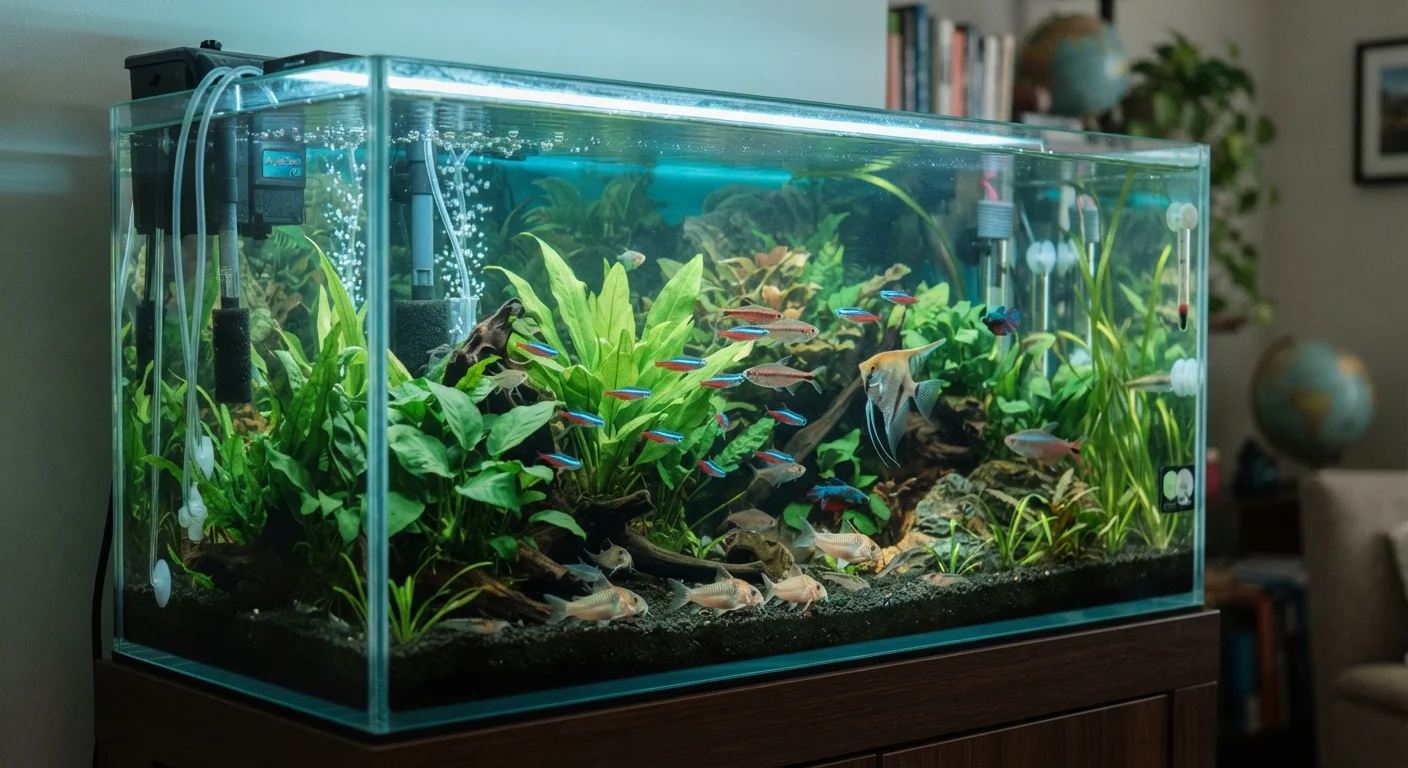
Why the Nitrogen Cycle Matters More Than Any Other Aquarium Concept
New fish owners often focus on tank size, décor, or which fish look appealing — and overlook the invisible process that determines whether those fish survive. The nitrogen cycle is the biological foundation of every aquarium. Without it, fish waste accumulates as ammonia, a compound that is toxic even at very low concentrations. Understanding this cycle isn't optional; it's the starting point for keeping any aquatic animal alive and healthy.
Fish continuously produce waste through respiration, urine, and feces. Uneaten food and decaying plant matter add to this load. In a natural body of water, the sheer volume of water dilutes these toxins. In a closed aquarium, there's nowhere for the waste to go — unless beneficial bacteria are present to process it.
0.25 ppm
Ammonia level that can stress most fish
Many aquatic references cite 0.25 ppm as the threshold at which ammonia begins causing measurable physiological stress in freshwater fish.
4–8 weeks
Typical time to fully cycle a new tank
This range is widely cited in aquarium husbandry literature and varies based on temperature, bacterial seeding, and ammonia source.
0 ppm
Target ammonia and nitrite in a cycled tank
A fully cycled, healthy aquarium should consistently read zero ammonia and zero nitrite on a reliable liquid test kit.
The Three Stages: Ammonia, Nitrite, and Nitrate
The nitrogen cycle moves through three distinct chemical stages, each involving a different bacterial population.
Stage 1: Ammonia
Ammonia (NH₃) is the first byproduct of fish waste and decomposing organic matter. Even at concentrations as low as 0.25 ppm (parts per million), ammonia can burn fish gills and suppress immune function. A group of bacteria — primarily Nitrosomonas species — begin consuming ammonia as a food source and colonize your filter media and substrate over time.
Stage 2: Nitrite
As ammonia is consumed, it's converted to nitrite (NO₂⁻). Nitrite is also highly toxic; it interferes with the ability of fish blood to carry oxygen, a condition sometimes called brown blood disease. A second bacterial group, primarily Nitrospira, then converts nitrite into the final product.
Stage 3: Nitrate
Nitrate (NO₃⁻) is far less toxic to most fish at typical aquarium concentrations. It accumulates gradually and is removed through regular partial water changes. Keeping nitrate under 40 ppm is a widely recommended general guideline, though some sensitive species prefer lower levels. Always consult species-specific care guidelines and verify with your aquatic veterinarian if you have concerns.
See our step-by-step aquarium setup guide for practical advice on cycling a new tank safely.
How to Cycle Your Tank Before Adding Fish
The goal of cycling is to establish a thriving bacterial colony before any fish are introduced. This approach — called fishless cycling — is the safest method.
- Set up all equipment: Run your filter, heater, and any aeration. Bacteria need oxygenated, warm water to grow efficiently.
- Add an ammonia source: Pure ammonia drops (free of surfactants) or a small pinch of fish food left to decompose will feed bacteria. Target an ammonia reading of around 2–4 ppm to start.
- Test water every few days: Use a liquid test kit — not strip tests, which are less accurate — to track ammonia, nitrite, and nitrate levels.
- Watch for nitrite, then nitrate: As ammonia drops, nitrite will rise. As nitrite then drops, nitrate will appear. This confirms both bacterial populations are active.
- Confirm completion: When both ammonia and nitrite read 0 ppm after adding your ammonia source, the cycle is complete. Perform a partial water change to lower nitrate before introducing fish.
Speed Up Cycling With Bacterial Seeding
You can shorten the cycling process significantly by adding a handful of gravel or a piece of filter media from an already-established, disease-free tank. Commercially available bottled bacteria products can also help jumpstart colonization, though results vary by product formulation. Always verify that any donated media comes from a healthy tank to avoid introducing pathogens.
If you're choosing which fish to start with, our goldfish vs. betta comparison covers their very different water chemistry needs, which affects how quickly nitrate builds up in your tank.
Maintaining the Cycle Long-Term
Once established, the bacterial colony is self-sustaining — as long as conditions support it. Several common mistakes can crash a cycle and send ammonia and nitrite levels spiking again.
- Avoid tap water on filter media: Chlorine and chloramine in tap water kill beneficial bacteria. Rinse media only in tank water removed during a water change.
- Don't over-clean the substrate: A gentle gravel vacuum during water changes is fine; scrubbing every surface removes bacteria unnecessarily.
- Avoid overstocking: Adding too many fish at once overwhelms the bacterial colony's capacity to process waste, temporarily spiking ammonia.
- Keep the filter running: Beneficial bacteria are aerobic — they need oxygen. A filter that stops running for more than a few hours can begin to lose its bacterial population.
Regular water testing remains your most important tool. Even a well-cycled tank can experience fluctuations due to illness, overfeeding, or equipment problems. Testing weekly gives you early warning before levels become dangerous to your fish.
Testing Kits: Liquid vs. Strip
Liquid test kits are consistently more accurate than paper test strips for measuring ammonia, nitrite, and nitrate. Strips can degrade with humidity and light exposure, leading to false readings. For critical monitoring during cycling and troubleshooting, a quality liquid kit is considered the standard by most aquarium care references.
Frequently Asked Questions
Most aquariums take between 4 and 8 weeks to fully cycle. The timeline depends on tank temperature, the ammonia source used, and whether you seed the tank with established filter media or bacteria products. Warmer water (around 77–82°F) generally speeds up bacterial growth.
Adding fish before cycling is complete exposes them to ammonia and nitrite spikes, which can cause stress, gill damage, and death. If you must fish-in cycle, keep stocking levels very low and perform frequent water changes to keep toxins in check. Test water daily in that case.
New tank syndrome refers to the ammonia and nitrite spikes that occur when fish are added to an uncycled aquarium. Without an established bacterial colony, toxins build up rapidly and can quickly sicken or kill fish. Proper cycling prevents this entirely.
Your tank is cycled when a liquid test kit reads 0 ppm ammonia, 0 ppm nitrite, and a detectable but manageable level of nitrate (usually under 20–40 ppm). This reading should be stable over several days before adding fish.
Large, frequent water changes during cycling can slow the process by diluting ammonia, which bacteria need as a food source. Once cycled, regular partial water changes (typically 20–30% weekly) are essential for keeping nitrate at safe levels without disrupting the bacterial colony.
Beneficial bacteria colonize surfaces throughout the tank — filter media, substrate (gravel or sand), decoration, and even the tank walls. Filter media houses the largest and most important colony, which is why you should never rinse it under tap water, as chlorine kills these bacteria.
The content on this site is for informational purposes only and is not a substitute for professional advice. Always consult a qualified professional for guidance specific to your situation.