

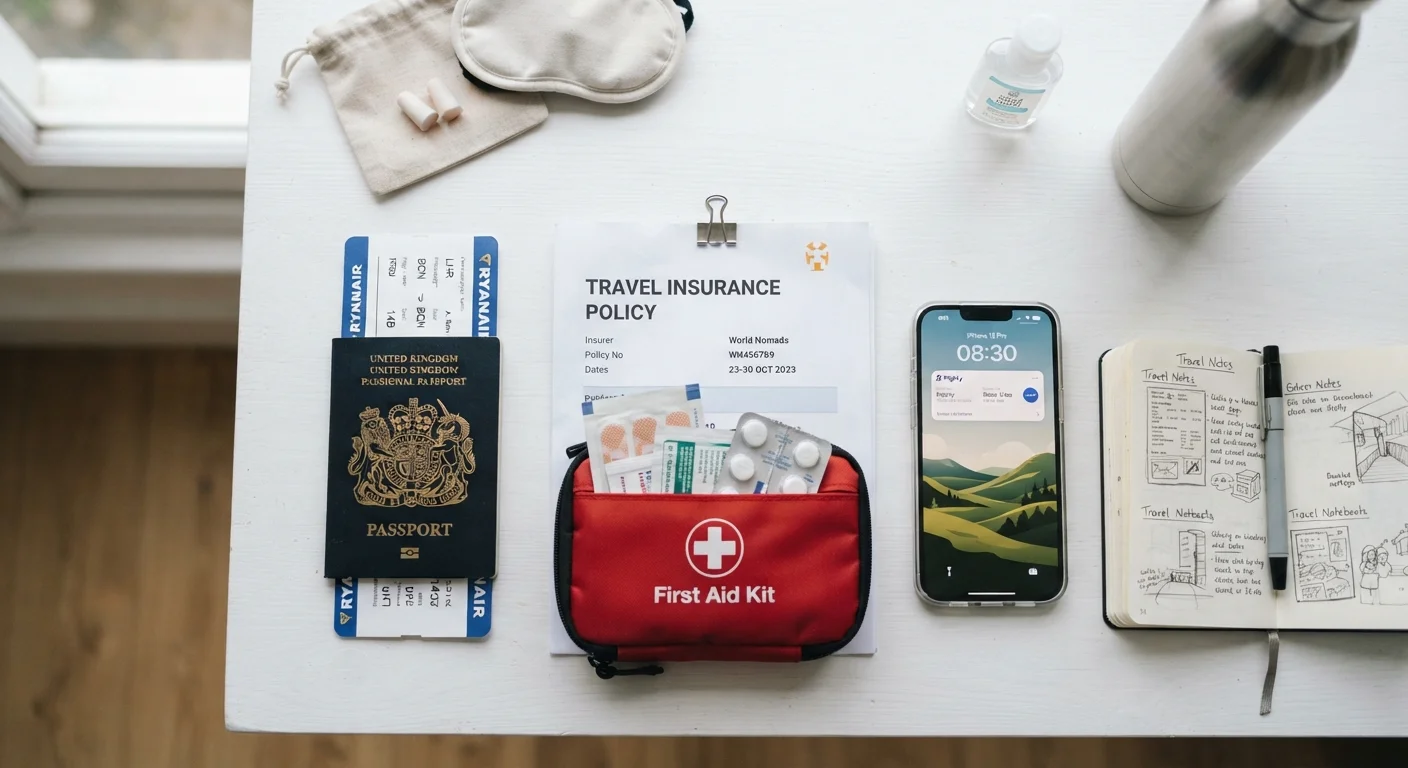
Summary
24 items · 45–90 minutes
Why a Pre-Trip Checklist Is Worth Your Time
Most travel hiccups — missed connections, denied boarding, lost medication — aren't random bad luck. They're the result of skipped steps that felt low-priority until they weren't. A structured pre-departure check takes less than two hours and can prevent the kind of problems that derail an otherwise well-planned trip.
This checklist is designed to work for domestic getaways and international journeys alike, though international travelers will find the documents and health sections especially critical. It pairs naturally with the broader full trip-planning process — think of this as the final audit before wheels up.
Work through each group in the days leading up to departure rather than the morning of. Some items — like renewing a passport or scheduling a travel clinic visit — need lead time you won't have at the last minute.
Cloud Storage Service
Store scanned or photographed copies of your passport, visa, insurance, and itinerary so they're accessible from any device.
Travel Insurance Policy
Covers trip interruption, medical emergencies abroad, and lost baggage — review what your policy includes before departure.
Password Manager
Securely stores account credentials so you can access important accounts while traveling without writing passwords down.
Offline Maps App
Download destination maps for offline use so you can navigate without relying on data or Wi-Fi.
Travel Wallet or Document Organizer
Keeps passports, boarding passes, insurance cards, and foreign currency in one accessible, secure place.
The Complete Pre-Trip Checklist
The items below are grouped by category so you can tackle them in focused sessions. Mark off each one as complete — don't rely on memory when you're already juggling departure logistics.
Documents and Entry Requirements
Health and Medical Prep
Emergency Contacts and Communication
Financial and Tech Readiness
Passport Validity: Don't Assume You're Fine
A common — and costly — mistake is assuming a valid passport is sufficient without checking the expiration date against destination requirements. Many countries require your passport to be valid for six months beyond your planned return date. Airlines may deny boarding if this rule isn't met, regardless of whether you have a visa. Check your passport's expiration date the moment you start planning, not the week before you fly.
A Note on Health Prep and Medications
Health preparation deserves its own pause. If you take prescription medications, confirm you have enough supply for the full trip plus a few buffer days, and review what to know about traveling with medications — especially for international crossings where documentation and storage rules vary.
Travelers heading abroad should contact a travel medicine clinic or their primary care provider at least four to six weeks before departure. Vaccination needs depend on your destination and personal health history — only a qualified healthcare professional can advise you on what's appropriate for your specific situation. This checklist is general travel guidance, not medical advice; consult your doctor before making any health decisions related to travel.
Travel Insurance Is Not One-Size-Fits-All
Many travelers purchase travel insurance without reading what's actually covered. Standard policies vary widely — some exclude pre-existing conditions, adventure activities, or specific regions under active travel advisories. Read the policy terms carefully before departure, and contact your insurer directly if you have questions about coverage gaps. Do not assume medical evacuation is included unless it is explicitly stated.
Families traveling internationally with children should pay particular attention to documentation and health prep details covered in traveling internationally with kids.
Before You Pack, Before You Go
Once this checklist is complete, your pre-departure energy is better spent on what you're actually bringing. Our smart packing strategies guide covers how to organize your bag efficiently across different trip types without overpacking or leaving essentials behind.
For destination-specific prep — such as entry rules, regional safety conditions, and local health considerations — verify information through official government sources (U.S. State Department travel advisories, destination country embassy websites) rather than relying solely on any single article or booking platform. Conditions and requirements can change, and only official sources reflect the most current status.
Travel confidently: the goal of this checklist isn't to create anxiety, but to replace it with the quiet assurance that comes from knowing you've covered your bases.
The content on this site is for informational purposes only and is not a substitute for professional advice. Always consult a qualified professional for guidance specific to your situation.