

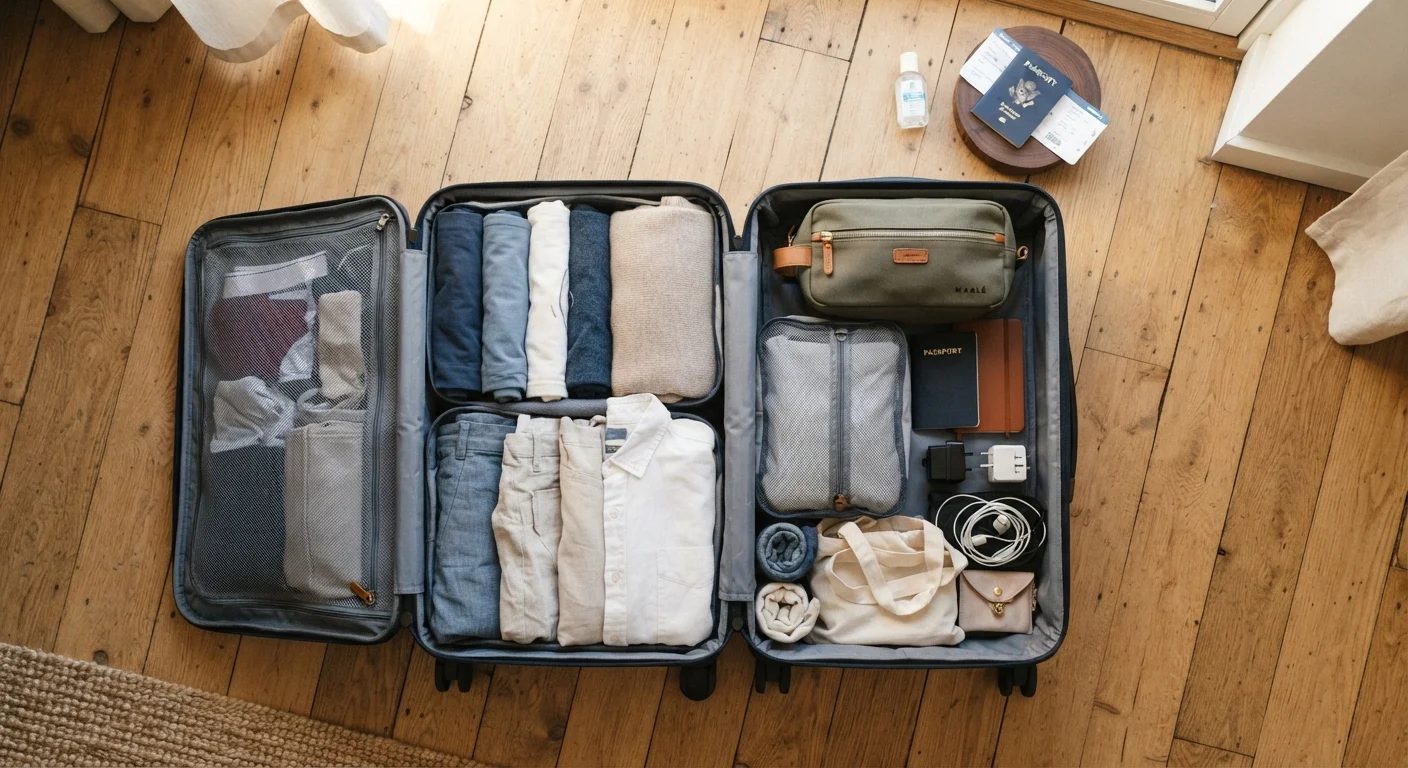
Why Most Packing Stress Is a Planning Problem
Packing anxiety rarely comes from not having enough stuff — it usually comes from not having a system. Whether you're throwing a bag together for a long weekend or preparing for two weeks abroad, the same root problem shows up: decisions get deferred until the last hour, and then everything feels urgent at once.
The fix isn't a longer packing list. It's starting earlier and thinking through your trip in concrete terms before you open a single drawer. What's the weather range? Will you be walking miles a day or mostly seated at meetings? Is laundry accessible mid-trip? Answering these questions shifts packing from guesswork to logistics. Our core packing principles guide explores the foundational thinking behind building any efficient packing system.
The sections below walk through specific, tested strategies that hold up across road trips, flights, family travel, and international journeys alike.
Match Your Bag to the Trip Before You Pack Anything
Luggage choice is a decision that shapes everything downstream. A rolling suitcase is practical for airport travel and hotel stays with smooth floors; a backpack wins on cobblestones, public transit, and active itineraries. Committing to your bag type before packing forces realistic limits on what you bring.
If you're flying, weigh the real trade-offs between carry-on and checked luggage early — airline policies, trip length, and layover complexity all factor in. Carry-on travel removes baggage claim delays and loss risk, but imposes strict volume and liquid rules. Checked luggage gives flexibility at the cost of time and fees. Neither is universally better.
Start your packing list at least five days before departure
Starting early lets you identify gaps while stores are still open and you have time to borrow or acquire items without panic. It also surfaces conflicts — like realizing your hiking boots need re-waterproofing — before they become emergencies.
Lay everything out before it goes into the bag
Seeing all items spread on a bed or floor makes it much easier to spot redundancies and make cuts. Items that seemed necessary in a drawer often look excessive when laid out together.
Use packing cubes or compression bags to organize by category
Grouped packing reduces the time spent rooting through your bag at every stop, and makes repacking significantly faster after each hotel stay. It also helps you stay aware of what you have without unpacking everything.
Apply the one-third rule: leave one-third of bag space open
Souvenirs, laundry, and incidental purchases are a near-universal reality of travel. A bag packed to the limit becomes a stressful problem on the return trip, especially if you're flying with weight restrictions.
Pack a small, separate personal item with essentials for the travel day
Delays, connection scrambles, and long transit days are far more manageable when your most-needed items — snacks, phone charger, a change of clothes — are within arm's reach and not buried in an overhead bin.
One practical rule: if you can't carry your bag comfortably for three city blocks, it's too heavy. That threshold keeps you mobile and prevents the trip-within-a-trip of managing unwieldy luggage.
Build a Wardrobe, Not a Pile of Clothes
The most common packing mistake is grabbing individual outfits instead of thinking in terms of a coordinated wardrobe. When every item works with at least two others, you dramatically increase outfit combinations without adding weight.
Neutral base colors — navy, grey, khaki, white — pair easily across tops and bottoms. Add one or two pieces with personality (a printed shirt, a bold scarf) to avoid looking uniform. For most trip types, three to four bottoms and five to six tops cover a week comfortably, especially if you plan to hand-wash or use laundry services.
Layering is especially important for trips that span different climates or activities. A lightweight down jacket, a rain layer, and a base fleece can combine into functional warmth across a wide temperature range — and all three compress into less space than a single heavy coat.
Protect the Non-Negotiables First
Before you think about clothes, identify what absolutely cannot be left behind or replaced easily mid-trip. This category typically includes: prescription medications, travel documents, chargers for essential devices, and any items with no local substitute at your destination.
If you're traveling with prescription medications, always pack them in your carry-on regardless of overall bag strategy — checked luggage can be delayed or lost. Our guide on traveling with medications covers documentation and storage considerations worth reviewing before any trip, especially internationally.
For documents: carry physical copies of your passport, insurance information, and key reservations separately from originals. A digital backup in cloud storage adds another layer. The pre-trip safety checklist is a useful reference for covering all document and health prep bases before departure.
~2M
Bags mishandled by U.S. airlines annually
Data from the U.S. Department of Transportation's Air Travel Consumer Reports consistently records millions of mishandled baggage reports per year, underscoring the case for carry-on packing of essentials.
1 in 3
Travelers who forget a key item on trips
Travel surveys frequently find that a significant portion of travelers report forgetting at least one important item per trip, with medications and chargers among the most commonly cited.
Adapt Your System for Different Trip Types
A universal packing list doesn't exist — but a universal process does. The key is treating each trip type as a variable that modifies a consistent starting framework.
- Weekend road trips: Volume limits matter less, but access to your bag mid-drive does. Pack a separate day bag at the top for easy grabs at rest stops.
- Business travel: Wrinkle-resistant fabrics and a small steamer or wrinkle-release spray earn their weight. Keep your outfit for day one in carry-on even if you check a bag.
- Family and group travel: Distribute shared items (first aid kit, snacks, adapters) across multiple bags so one lost bag doesn't strand everyone. See our group trip coordination guide for broader logistics advice.
- International trips: Research power adapter requirements, local climate norms, and any destination-specific dress considerations before finalizing your list. Also confirm visa and entry documentation needs — common planning assumptions about entry requirements have derailed many otherwise well-organized trips.
Use the Trip to Improve the Next One
The most underused packing tool is a debrief. When you return home, note what you never touched, what you wish you'd brought, and what caused friction. A simple note in your phone builds into a personalized packing reference over several trips — far more reliable than a generic list from the internet.
Experienced travelers often report that their bags get lighter with each trip, not heavier. That's not minimalism for its own sake — it's the natural result of learning exactly what you actually use. Fewer choices mid-trip also means less decision fatigue, which tends to make the travel itself more enjoyable.
If you want to dig deeper into how weight and bag efficiency play out in real carry-on situations, this breakdown of why carry-on bags exceed limits offers useful perspective on where hidden weight typically hides.
The content on this site is for informational purposes only and is not a substitute for professional advice. Always consult a qualified professional for guidance specific to your situation.