

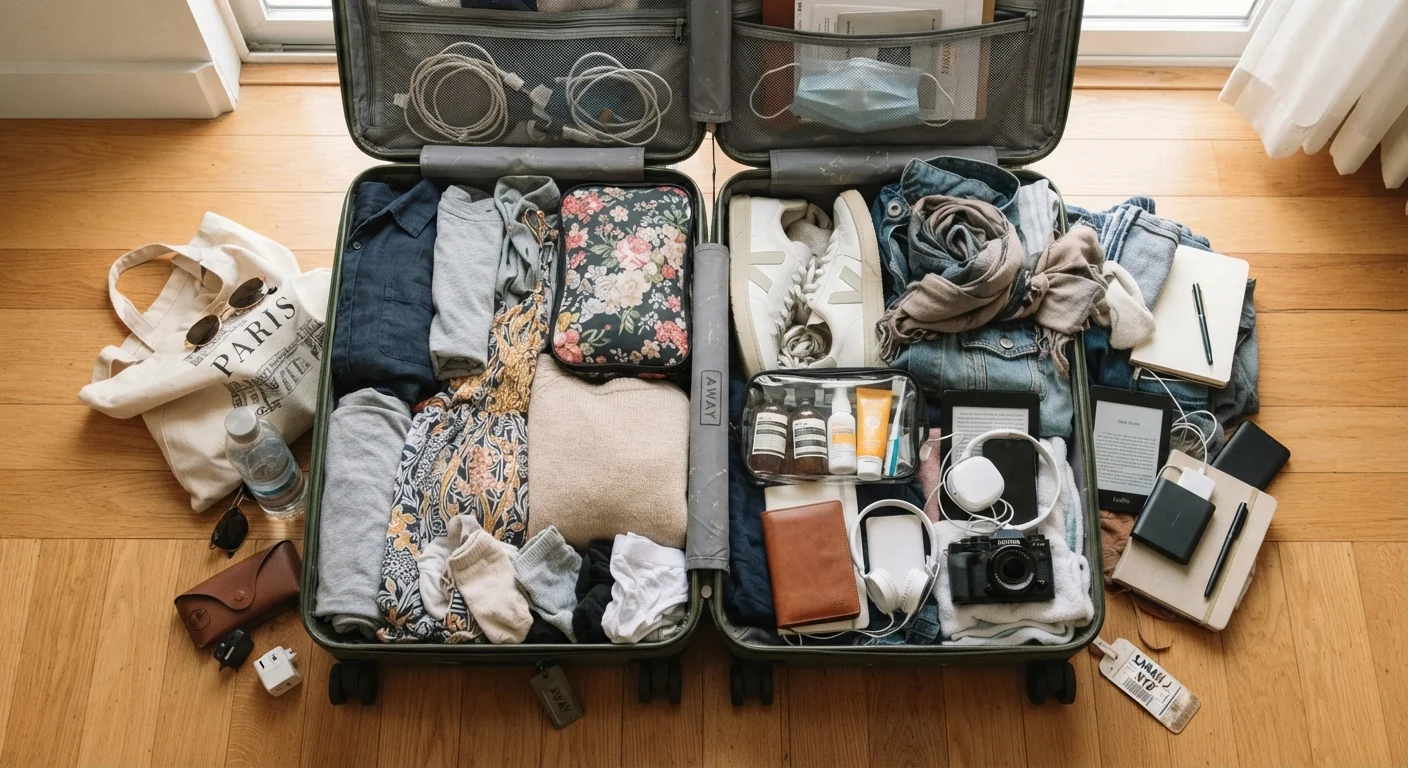
The Hidden Weight Problem Nobody Warns You About
Here's a number worth knowing before your next flight: a fully-packed carry-on that feels reasonable in your bedroom can easily weigh 22 to 25 pounds. Many airlines — especially budget and international carriers — cap carry-on weight at 15 to 22 pounds. Do the math and you'll see how quickly things go sideways at the gate.
The sneaky part isn't what you pack. It's the bag itself. Many popular hard-shell carry-ons weigh between 7 and 10 pounds empty. That means before you've added a single shirt, you may have already used up nearly half your allowance. Lighter soft-sided bags can shave 3 to 5 pounds off that baseline immediately.
For a fuller look at when a carry-on is even the right call, see Checked Luggage vs. Carry-On: Choosing the Right Approach for Your Trip — the decision matters more than most people realize.
Ignoring the weight of the bag itself before packing a single item.
Why it happens: Travelers focus on what goes inside and rarely think to weigh the empty bag, assuming the shell is negligible.
Assuming all airlines share the same carry-on weight and size limits.
Why it happens: Domestic U.S. flights have historically been permissive about carry-on weight, which creates a false sense that all routes follow the same rules.
Packing 'just in case' items that duplicate things already in the bag.
Why it happens: Uncertainty about the trip creates anxiety, and bringing extras feels like smart preparation rather than excess weight.
Loading the heaviest items — laptops, books, cameras — into the carry-on without distributing weight to a personal item.
Why it happens: The carry-on feels like the 'main' bag, so dense electronics and gear land there by default.
Skipping a home weigh-in and only discovering the problem at the airport.
Why it happens: Travelers assume the bag feels light enough or have never been stopped before, so they skip the step.
What Experienced Travelers Do Differently
Seasoned travelers treat packing as an editing process, not a loading process. The goal is to question every item, not simply fit everything in. A few habits separate chronic overpackers from those who glide through boarding:
- Weigh before you go. A simple luggage scale costs under $15 and removes all guesswork. Weigh your fully packed bag at home, then adjust — not at the check-in counter.
- Audit for duplicates. Two pairs of jeans for a five-day trip, three chargers, four pairs of shoes — duplicates are where most weight hides. One pair of versatile shoes worn on the plane is often enough.
- Shift heavy items to your personal item. Books, laptops, and cameras are dense. Distributing weight between your carry-on and personal item (a backpack or tote) keeps each individual bag lighter, even if the combined load is similar.
- Check the specific airline's policy before every trip. Weight and size limits vary significantly between carriers and even between fare classes on the same airline. Always verify with official airline sources before you travel.
7–10 lbs
Typical empty weight of a hard-shell carry-on
Many popular hard-sided carry-ons weigh between 7 and 10 pounds before any items are packed, significantly cutting into airline weight allowances.
15–22 lbs
Common carry-on weight limits across airlines
Weight limits vary widely by carrier and fare class; budget and international airlines tend to enforce stricter caps than major U.S. domestic carriers.
For strategies that go beyond just lightening your load, Smart Packing: Principles That Work Across Every Type of Trip covers rolling vs. folding, capsule wardrobes, and other tested approaches that reduce both weight and decision fatigue.
Planning Ahead Makes the Difference
Overpacking is rarely about poor intentions — it's usually the result of under-planning. When you're unsure what you'll need, the brain defaults to "bring it just in case." A concrete packing plan tied to your actual itinerary breaks that cycle.
Start with your agenda: list the activities, weather range, and dress codes you'll actually encounter. Build your clothing list from that, not from a general sense of how long you'll be gone. Five nights in a warm coastal city requires a very different kit than five nights split between a city and a mountain hiking trail.
Packing Without the Panic is a useful companion if your trips vary a lot in type — the strategies there adapt across weekend getaways and longer international travel alike.
Gate-Check Fees Can Catch You Off Guard
When overhead bins fill up or your bag exceeds size limits, airlines may gate-check your carry-on — sometimes charging the standard checked-bag fee on the spot. This can range from $30 to $75 or more depending on the carrier and route. Always verify current fee policies with your airline before travel, as these charges change frequently.
One often-overlooked cost: an overweight carry-on that gets gate-checked doesn't just cost time — it can mean checked-bag fees you didn't budget for. Keeping your packing in check is genuinely a financial habit as much as a logistical one. See Building a Travel Budget That Holds Up on the Road for a framework that accounts for exactly these kinds of trip surprises.
The content on this site is for informational purposes only and is not a substitute for professional advice. Always consult a qualified professional for guidance specific to your situation.