

Why Medication Planning Deserves Its Own Checklist
Most travelers think about passports, visas, and power adapters — but medications often get tossed into a bag without much thought. That's a risk worth addressing before you leave home. A prescription that's completely unremarkable in the U.S. may be classified as a controlled substance in another country, and crossing a border with it undeclared or improperly documented can create real legal complications.
This isn't meant to alarm you — millions of travelers carry medications internationally every year without incident. The goal here is to help you do it confidently, with the right paperwork and awareness in place. For a broader look at international trip prep, see our guide to sorting out logistics before your first international trip.
Best Practices for Carrying Medications Across Borders
These practices apply whether you're managing a chronic condition, traveling with over-the-counter (OTC) allergy pills, or carrying a single prescription for a short trip.
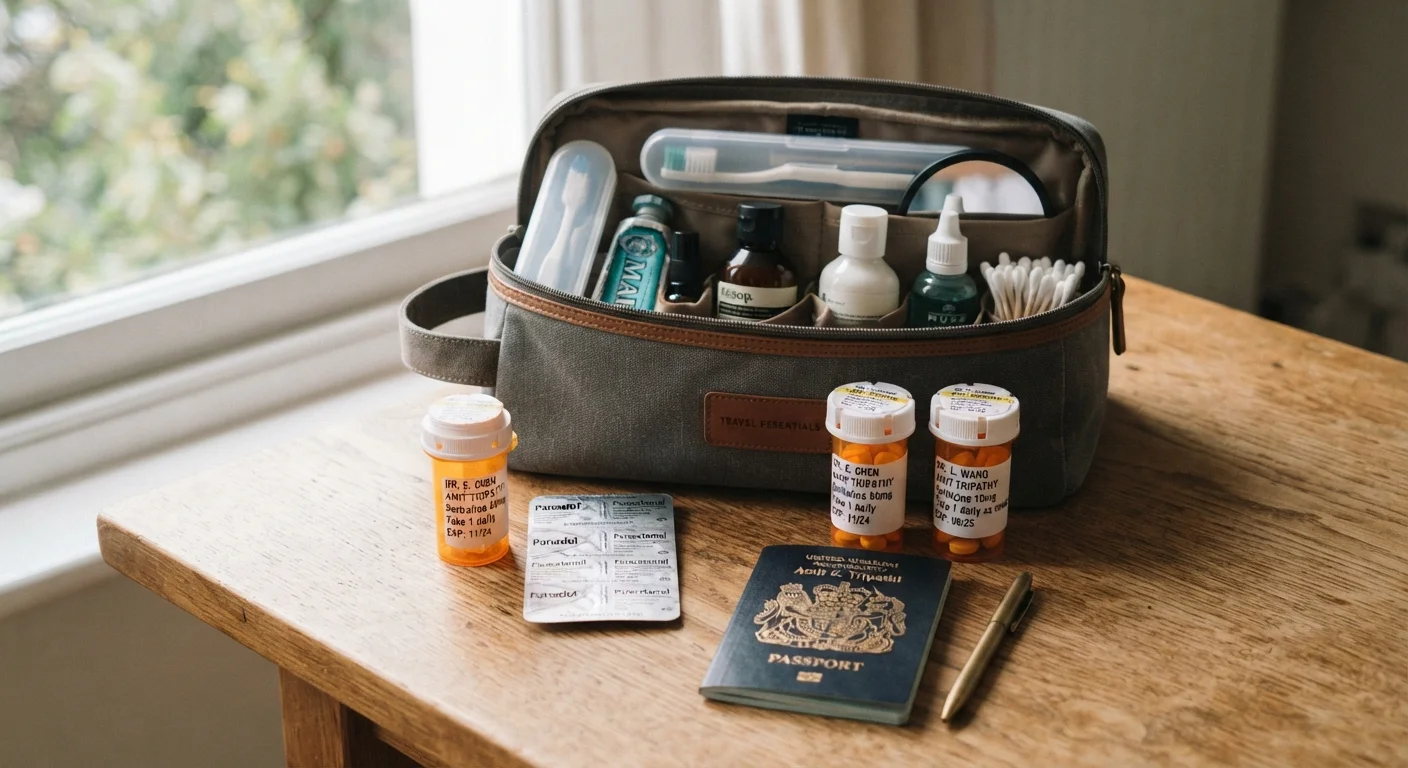
Keep all medications in their original, pharmacy-labeled containers
Customs officers and security personnel rely on labels to verify what a substance is and who it was prescribed to. Generic containers, unlabeled bags, or loose pills can raise immediate red flags and slow or stop your entry. Original packaging also helps if a medication needs to be identified by a doctor or pharmacist abroad.
Carry a signed letter from your prescribing physician for any prescription medication
A doctor's letter — ideally on clinic letterhead — explaining your diagnosis, the medication name, dosage, and medical necessity provides an official paper trail that supplements your prescription label. This is especially important for controlled substances, injectable medications, or anything that might require declaration.
Research your destination's specific rules on controlled or restricted substances
Some medications that are legal and common in the U.S. — including certain pain relievers, ADHD medications, or anxiety medications — are classified as controlled or even prohibited in other countries. Possession without proper authorization can result in confiscation or more serious consequences.
Pack enough medication for the full trip plus a buffer supply, split between carry-on and checked luggage
Access to your specific prescription abroad may be difficult, expensive, or impossible — especially for brand-name medications or formulations not available internationally. Splitting your supply reduces the risk of losing everything if one bag is lost or delayed.
Understand and comply with quantity limits for the medications you're carrying
Many countries set a maximum supply travelers may import — often 30 to 90 days' worth, depending on the country and substance type. Carrying more than the permitted quantity, even with a valid prescription, can trigger customs issues.
Store temperature-sensitive medications appropriately throughout the journey
Insulin, certain biologics, and some liquid medications require refrigeration or protection from heat. Cargo holds can get extremely cold or hot, and checked baggage isn't a reliable temperature-controlled environment. Plan your storage strategy before departure.
For families heading abroad with children, medication planning takes on additional layers — check dosing conversions, pediatric formulations available at the destination, and any country-specific rules on common children's medications. Our article on traveling internationally with kids covers this in more detail.
Start With Official Sources — Not Just Travel Blogs
Regulations change. A country's rules on importing specific substances can shift without much public fanfare, and information on travel forums or general websites may be outdated. The most reliable sources are:
- The destination country's embassy or consulate website — many publish specific rules for importing medications.
- The U.S. Embassy in the destination country — useful for understanding what support exists if something goes wrong.
- The U.S. Centers for Disease Control and Prevention (CDC) traveler health pages — for health-related entry considerations.
- Your airline's carry-on policies — especially for liquid medications or medical devices like auto-injectors.
Always verify before you go, and revisit even destinations you've visited before. For a broader pre-departure checklist, our pre-trip safety and preparedness checklist is a useful companion.
TSA Rules Are Just the Starting Point
Passing through U.S. airport security with your medications is typically straightforward — the TSA generally allows prescription and OTC medications in carry-on bags, including liquids exceeding the standard 3.4 oz limit when medically necessary. However, TSA rules only govern the U.S. departure side. Customs rules at your destination are a separate matter entirely and are set by each country's own government. Always research both.
Quick Steps You Can Take Right Now
If your trip is coming up soon, here are the highest-leverage actions to complete first.
If you're heading to a specific region with particular health considerations — like Mexico, for example — it's worth reading destination-specific guidance. Our article on what to consider before booking a Mexico beach resort covers health prep alongside entry and safety considerations.
This article provides general travel information only and is not medical or legal advice. Always consult a qualified healthcare provider about your specific medications and conditions before travel, and verify requirements with official government and embassy sources.
The content on this site is for informational purposes only and is not a substitute for professional advice. Always consult a qualified professional for guidance specific to your situation.