

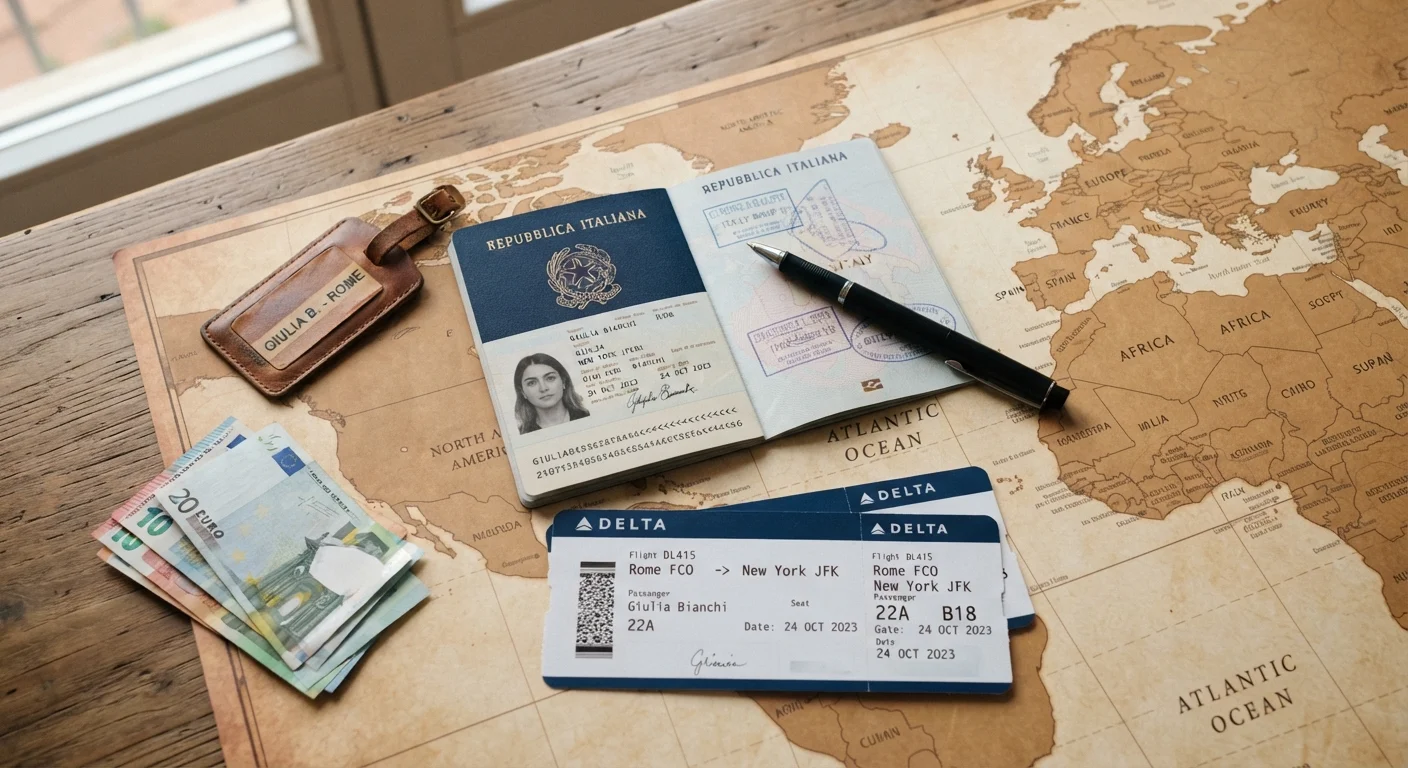
Passport Basics: What to Check Before You Book
Your passport is the foundation of every international trip — and passport-related problems are almost always preventable. Before you book flights or accommodation, retrieve your passport and confirm two things: its expiration date and its remaining blank pages.
| Standard U.S. Passport Validity | 10 years (adults); 5 years (under 16) (U.S. Department of State) |
| Common Destination Validity Requirement | 6 months beyond planned return date (Varies by country — verify for each destination) |
| Countries in U.S. Visa Waiver Program | 42 countries (U.S. Department of Homeland Security) |
| ESTA Authorization Duration | 2 years or until passport expires (whichever comes first) (U.S. Customs and Border Protection) |
| Official U.S. Travel Info Source | travel.state.gov (U.S. Department of State) |
| Routine Passport Renewal Time | 6–8 weeks (expedited options available) (U.S. Department of State — times subject to change) |
Many countries enforce a 6-month validity rule, meaning your passport must be valid for at least six months beyond your planned return date, not just the day you depart. Even a technically unexpired passport can get you denied boarding if it doesn't clear this threshold. Some destinations only require validity through the duration of your stay, so look up the exact rule for each country on your itinerary rather than assuming the 6-month standard applies everywhere.
Blank visa pages matter too. Several countries require one or two blank pages for entry stamps or visa stickers. If yours is nearly full, factor in renewal time before you travel. For a clear explanation of which travel document covers which trips, see our passport book vs. passport card breakdown.
Visa Categories and Electronic Authorizations: A Quick Map
"Do I need a visa?" depends entirely on your nationality and your destination. For U.S. passport holders, the options generally fall into a few categories:
Passport Validity Rule
Many countries require that your passport remain valid for at least 6 months beyond your intended departure date. Requirements vary by destination, so always confirm the specific rule.
Visa
An official authorization — stamped in your passport or issued electronically — granting permission to enter a specific country for a defined purpose and length of stay.
eTA (Electronic Travel Authorization)
A pre-travel electronic permission linked to your passport, required by some countries even when no traditional visa is needed. It is typically obtained online before departure.
Visa on Arrival
A visa issued at the port of entry rather than in advance. Eligibility depends on your nationality and the destination country's current policy — always confirm before you fly.
Biometric Passport
A passport containing an embedded microchip that stores the holder's photo and personal data. Many countries now require biometric passports for visa-free or streamlined entry.
Entry Requirement
The full set of conditions a traveler must meet to be admitted into a country, including passport validity, visa status, health documentation, and customs declarations.
- Visa-free entry: U.S. travelers can enter many countries without a visa for short tourism stays — but "visa-free" doesn't always mean no pre-travel step. Some of those same destinations require an eTA (electronic travel authorization) obtained online before departure.
- Visa on arrival: Certain countries issue a visa at the airport or land border. Eligibility is nationality-dependent and subject to change — never rely on this option without confirming it's available to you specifically.
- Visa in advance: Countries outside any waiver arrangement require you to apply through an embassy or consulate before your trip. Processing can take days to several weeks, so build in time.
For a plain-language explanation of how each system works in practice, our guide to visas, eTAs, and visa-on-arrival covers the mechanics in detail.
Where to Verify — and What Sources to Trust
Always Verify with Official Sources
Entry requirements can change rapidly due to diplomatic shifts, public health developments, or new government policies. The information in this article is general and educational. Before you travel, confirm all visa, passport, and entry requirements directly with the destination country's embassy or consulate, and check travel.state.gov for the most current U.S.-specific guidance.
Travel blogs and booking platforms are helpful for inspiration, but they are not authoritative sources for entry requirements. Rules shift, and an outdated post can cost you a trip. Use these official channels instead:
- travel.state.gov — The U.S. State Department's country pages cover passport and visa requirements, travel advisories, and local laws. This is your primary reference.
- Destination country's embassy or consulate website — For visa applications and exact documentation lists, go directly to the issuing authority.
- Your airline — Carriers can deny boarding when documents don't meet requirements (they bear the cost of returning refused passengers). Most use professional databases to verify eligibility before you board.
Families taking children abroad face additional layers — some countries require notarized consent letters or proof of custody for minors traveling with one parent. Our guide to international travel with kids covers those specifics. And if this is your first international trip, our first-time international travel guide walks through every documentation step before you search for flights.
This article is for general informational purposes only. Entry requirements change frequently — always verify current rules with official government and embassy sources before you travel.
The content on this site is for informational purposes only and is not a substitute for professional advice. Always consult a qualified professional for guidance specific to your situation.