

Start here
Why Solo Travel Is More Accessible Than You Think
Next
Choosing the Right First Destination
Then
Planning, Budgeting, and Booking
When you're ready
Safety Habits That Actually Matter
Final step
Staying Connected and Managing the Unexpected
Why Solo Travel Is More Accessible Than You Think
The idea of traveling alone can feel daunting — no one to navigate with, no backup when things go sideways. But solo travel has become one of the most common trip formats for Americans of all ages, and for good reason: it puts you entirely in charge of the pace, the itinerary, and the experience.
The barriers are mostly psychological. Yes, solo travel requires more personal responsibility. But it also rewards preparation more directly than group travel does — every hour you spend planning pays off when you're actually on the ground making decisions on your own. Start with our end-to-end trip planning framework to understand the full scope of what planning a trip actually involves, then layer your solo-specific decisions on top.
Single supplement
An extra fee charged by hotels or tour operators when only one person occupies a room or service designed for two. Solo travelers frequently encounter this cost and should factor it into their budget.
Travel advisory
An official government warning about safety or entry conditions at a destination. The U.S. Department of State publishes these for every country, rated on a scale from normal precautions to do-not-travel.
Hostel
A budget lodging option that typically offers shared dormitory-style rooms as well as private rooms. Many hostels have communal spaces where solo travelers naturally meet others.
Itinerary
A day-by-day plan of where you'll be and what you'll do during a trip. For solo travelers, sharing a copy with someone at home is a key safety practice.
Contingency buffer
A reserve amount of money set aside specifically for unexpected costs or emergencies during travel. Most travel planners suggest adding 10–20% on top of your estimated trip cost.
Choosing the Right First Destination
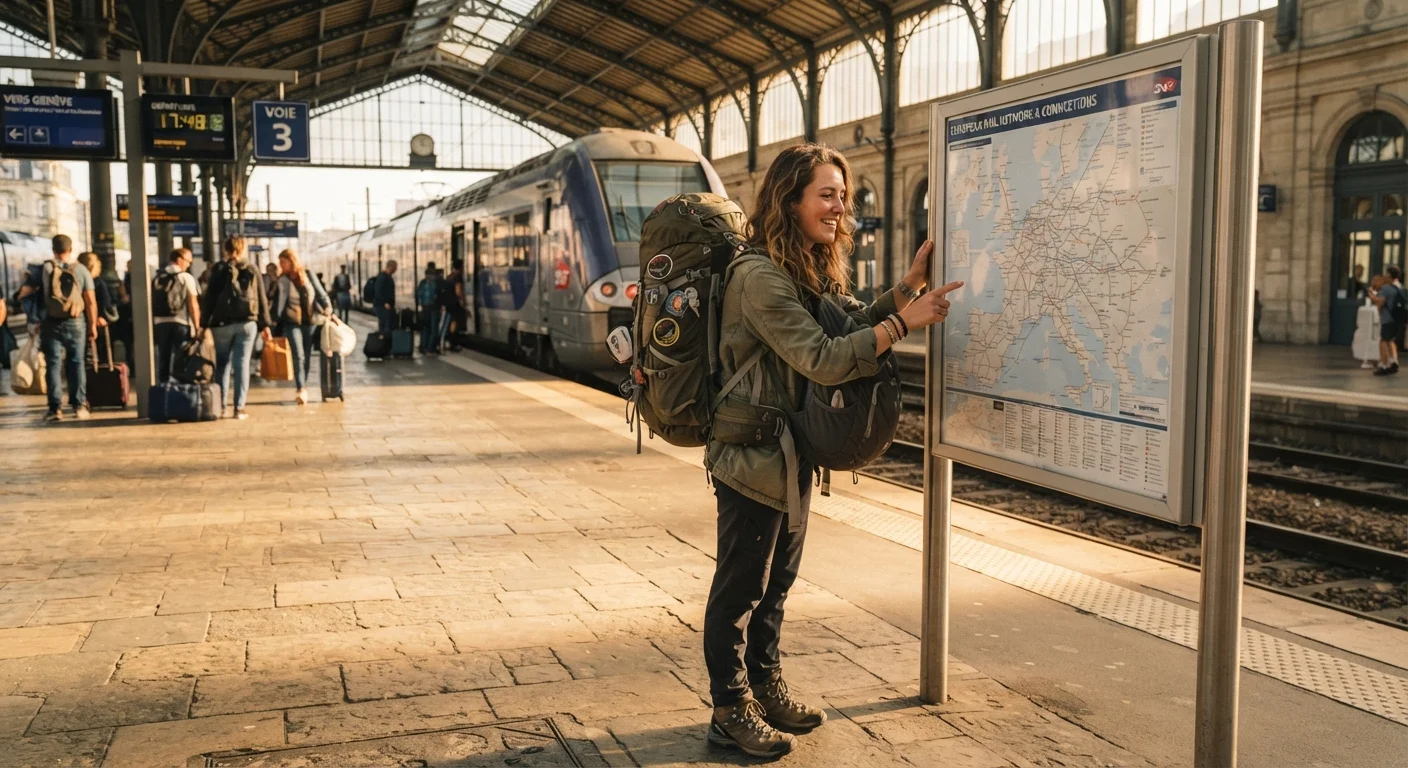
Your first solo trip isn't the time to tackle the most logistically complex destination on your bucket list. Instead, look for places with a few key features: reliable public transportation, accessible tourist infrastructure, and manageable language barriers. Cities with clear transit maps and English-language signage reduce the friction of navigating alone significantly.
Think about your own interests, too. A destination that aligns with what you genuinely enjoy — food, history, hiking, urban exploration — will sustain your energy even when things don't go smoothly. Domestic trips or short international hops to countries with straightforward entry requirements are natural starting points. For example, if Europe interests you, destinations like Portugal offer strong infrastructure and a welcoming environment for first-time solo visitors. If you're considering going farther afield, our guide on what to sort out before your first international trip covers documentation and logistics in detail.
Planning, Budgeting, and Booking
Solo travelers face one financial reality that group travelers don't: you absorb the full cost of everything. No splitting a hotel room, no shared cab fare. That makes realistic budgeting especially important. Flight and lodging are obvious line items, but a complete budget also includes meals, local transit, activity fees, tips, SIM cards or data plans, and a contingency buffer for unexpected costs.
Our guide on the costs most people forget to factor in walks through the full picture — not just the headline costs, but the smaller expenses that accumulate quickly. Pair that with a framework for building a travel budget that holds up on the road so you have a practical system once you're traveling.
When booking lodging, solo travelers often do well with hostels (which offer private rooms in many cases, plus common areas for meeting other travelers) or smaller guesthouses that are easy to navigate independently. Avoid over-scheduling your days — leaving unstructured time is what allows genuine exploration to happen.
Start Flexible, Then Add Structure
For your first solo trip, book your first night's accommodation in advance so you have a confirmed place to land. After that, allow your first day or two on the ground to inform what you want to prioritize — some of the most satisfying solo travel moments happen when plans stay loose. Locking every day weeks out in advance often creates stress rather than preventing it.
Safety Habits That Actually Matter
Safety on a solo trip isn't about fear — it's about building a few reliable habits that run in the background without consuming your trip. The fundamentals are well-established and worth taking seriously.
- Share your itinerary. Before you leave, give someone at home a copy of your accommodation details, key travel dates, and a way to reach you.
- Keep copies of key documents. Digital copies of your passport, insurance card, and emergency contacts stored in secure cloud storage can be lifesavers if originals are lost or stolen.
- Stay aware of your surroundings. This means limiting headphone use in unfamiliar areas, knowing where your nearest exit or landmark is, and trusting your instincts if something feels off.
- Check official advisories. The U.S. Department of State publishes country-level travel advisories; always verify the current status before finalizing an international destination.
For international travel, understanding what travel insurance actually covers is a genuinely useful exercise — especially for solo travelers who can't rely on a companion to help manage a medical or logistical emergency.
Avoid Oversharing Your Solo Status
Being open and sociable is one of the joys of solo travel — but broadcasting that you're traveling completely alone to strangers, especially in unfamiliar or less-touristed areas, can occasionally attract unwanted attention. It's fine to be friendly without volunteering every detail of your travel arrangement to people you've just met.
Staying Connected and Managing the Unexpected
Connectivity is a practical necessity for solo travelers, not just a comfort. Having reliable access to maps, translation tools, and emergency contacts shapes how confidently you can navigate an unfamiliar place. Options include purchasing a local SIM card on arrival, activating an international data plan through your carrier, or using portable Wi-Fi devices — each has trade-offs in cost and convenience worth comparing before you go.
Even the most well-planned solo trip encounters disruptions: delayed trains, closed attractions, unexpected illness, or a neighborhood that doesn't feel right. The travelers who handle these moments best are the ones who haven't over-committed their schedule. Build buffer time into each day. Know the address of your nearest embassy or consulate if you're abroad. Identify the local emergency number at your destination — it isn't always 911.
Managing the unexpected is also a mindset. Solo travel teaches problem-solving in a way that shared travel doesn't quite replicate. Most disruptions are solvable, and working through them builds the kind of confidence that makes your second trip feel noticeably easier than your first.
Frequently Asked Questions
Solo travel carries risks like any travel, but good preparation significantly reduces them. Choosing destinations with strong tourist infrastructure, staying aware of your surroundings, and sharing your itinerary with someone at home are foundational habits. Always check official government travel advisories before you go.
Costs vary widely depending on destination, duration, and travel style. Solo travelers often pay single-room supplements and can't split costs the way groups do. Building a detailed budget that accounts for transportation, lodging, food, activities, and an emergency buffer is essential before booking anything.
Pack light but purposefully: essentials include copies of key documents, a portable charger, a basic first-aid kit, and enough local currency for your first day. Avoid overpacking — a lighter bag means more mobility and less to worry about losing.
Staying in social accommodation like hostels, joining group tours or day trips, and visiting communal spaces like local markets or cafes are reliable ways to connect. Many solo travelers find these organic encounters more memorable than planned social itineraries.
Travel insurance is strongly worth considering, especially for international trips. Policies can cover trip cancellation, medical emergencies abroad, and lost belongings — situations that are harder to absorb alone. Read policy terms carefully to understand what's actually covered before purchasing.
There's no single right answer, but destinations with well-marked transit systems, English-language signage, and established tourist infrastructure tend to reduce friction for first-timers. Matching the destination to your interests and comfort zone matters more than chasing a popular trend.
The content on this site is for informational purposes only and is not a substitute for professional advice. Always consult a qualified professional for guidance specific to your situation.