

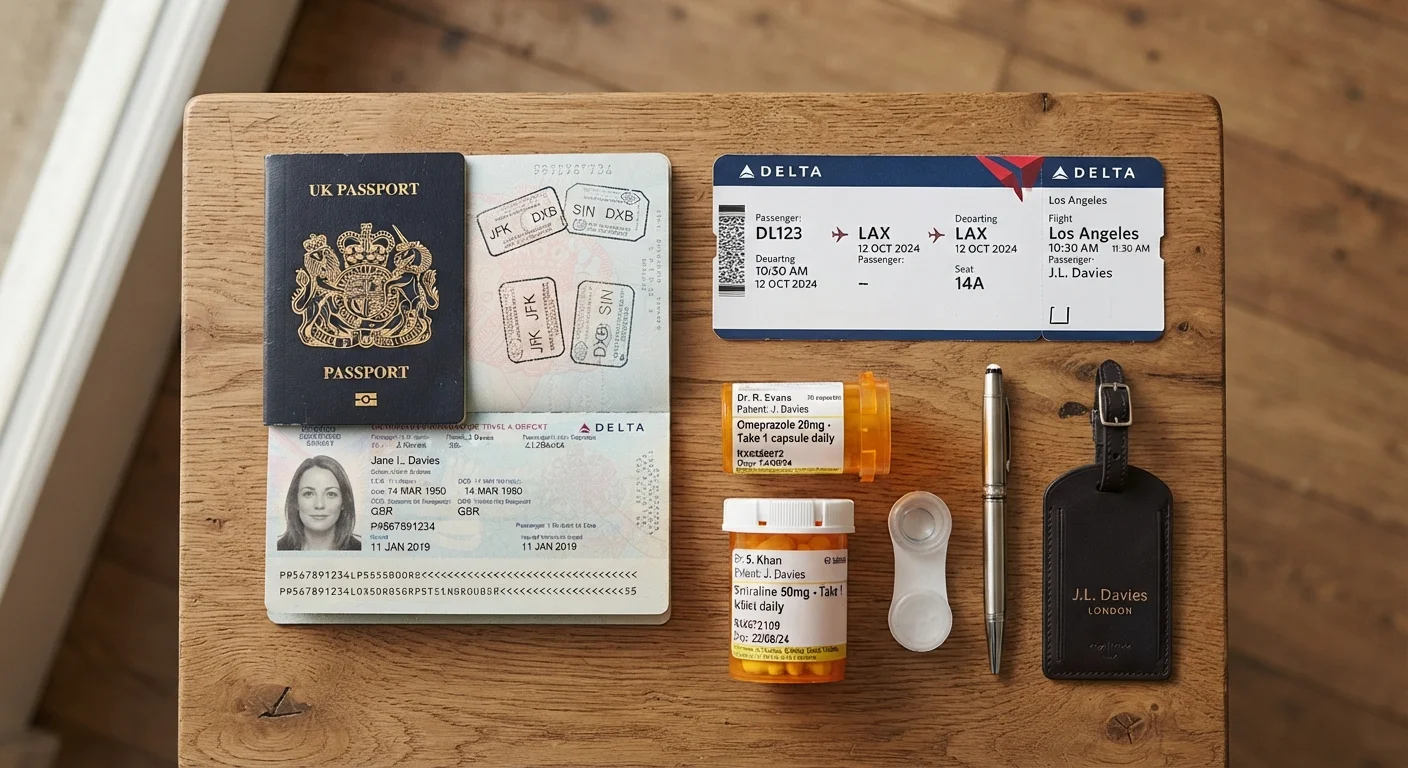
Why Medication Rules at the Border Deserve Attention
Many travelers assume that if a medication is legal at home, it's legal everywhere. That assumption can cause real problems. Some common U.S. prescription drugs — certain stimulants, opioids, anxiety medications, and even some over-the-counter antihistamines — are controlled, restricted, or outright banned in other countries. Customs officials have the authority to confiscate medications that don't meet their country's requirements, and in serious cases, travelers have faced detention.
The good news: a little preparation goes a long way. Verifying rules before you depart protects both your health and your trip. See our pre-trip safety checklist for a broader look at what to confirm before any international departure.
Documentation Every International Traveler Should Carry
Regardless of destination, the following documents are widely recommended when traveling with prescription medications:
- Original labeled pharmacy bottles — Labels should include your name, the prescriber's name, and the drug's generic name.
- A letter from your prescribing physician — This should state the diagnosis (or reason for the medication), the drug name (brand and generic), dosage, and duration of treatment.
- Copies of the actual prescription — Useful as a backup if medications are lost or need to be replaced abroad.
For controlled substances specifically, some countries require an import permit obtained before travel. These must typically be arranged weeks in advance through the destination country's health or customs authority. Always verify directly with the destination country's embassy or official health ministry — rules change, and no third-party source is a substitute for official confirmation.
Import Permits Can Take Weeks to Process
If your destination requires a permit to bring a controlled substance, applications typically go through that country's health ministry or customs authority — not through the U.S. government. Processing times vary widely and can exceed four weeks. Start this process as early as possible after booking your trip, and keep copies of all correspondence and approvals with your travel documents.
Quantity Limits and Controlled Substances
Most countries allow travelers to bring a personal supply of medication — often defined as a 30- to 90-day supply — without special permits. Carrying significantly more than needed for your trip can raise red flags at customs, regardless of what the medication is.
Controlled substances require the most careful planning. Opioids, benzodiazepines, ADHD medications like amphetamines, and certain sleep aids are regulated differently by each country. Japan, for example, restricts some stimulants and has strict rules around certain cold medications. The United Arab Emirates prohibits many substances legal in the U.S. without pre-authorization. These aren't edge cases — they affect everyday medications many Americans rely on.
The U.S. State Department and the embassy or consulate of your destination country are the most reliable sources for country-specific restrictions. Some embassies publish medication import rules directly on their websites.
Packing and Storage Considerations
Keep medications in your carry-on bag whenever possible. Checked luggage can be lost, delayed, or exposed to temperature extremes in cargo holds — a real concern for insulin, biologics, and other temperature-sensitive drugs. TSA allows medications in both carry-on and checked bags, including liquids in quantities exceeding the standard 3.4-oz limit when medically necessary, though you may be asked to declare them at the security checkpoint.
For injectable medications or medical devices like auto-injectors and insulin pumps, carry a note from your doctor and be prepared for additional screening. Some travelers find it helpful to request a TSA Notification Card, available on the TSA website, which explains the medical need without requiring you to disclose details verbally.
Traveling with children who take prescription medications adds another layer — verify that pediatric dosage forms are available if you might need a refill abroad, and carry extra documentation. Our guide on traveling internationally with kids covers health prep in more detail for families.
For a broader look at packing strategies that reduce stress, see packing without the panic.
This article provides general travel information only and is not medical or legal advice. Medication rules vary by country and change frequently. Always verify requirements with official government sources — including the destination country's embassy and relevant health authorities — and consult your healthcare provider before traveling with prescription medications.
The content on this site is for informational purposes only and is not a substitute for professional advice. Always consult a qualified professional for guidance specific to your situation.