

Why Cooking Vocabulary Matters
You're mid-recipe when you hit the word deglaze. Do you add water? Wine? And what does that even accomplish? Unfamiliar cooking terms are one of the most common reasons home cooks lose confidence or make avoidable mistakes. This reference guide defines the terms you'll encounter most often — organized by technique type so you can find what you need quickly.
Once these words become second nature, recipes stop feeling like instructions in a foreign language. You'll also be better equipped to understand the why behind techniques, which makes you a more flexible, intuitive cook. For a deeper look at how flavors come together once you have the vocabulary down, see our article on building flavor without a recipe.
Braise
A two-step cooking method where food (usually tougher cuts of meat or dense vegetables) is first seared over high heat, then cooked slowly in a small amount of liquid in a covered pot. The combination of moist heat and long cooking time breaks down connective tissue and develops deep flavor.
Sauté
Cooking food quickly in a small amount of fat over relatively high heat, stirring or tossing frequently. The word comes from the French word for "jump" — the motion keeps food moving to ensure even browning without burning.
Simmer
Cooking liquid at a temperature just below boiling, where small bubbles form and gently rise to the surface. Simmering is gentler than a full boil and is commonly used for soups, sauces, and braises.
Blanch
Briefly cooking vegetables in boiling water, then immediately transferring them to ice water to stop the cooking process. Blanching preserves vibrant color and crisp texture, and is often used before freezing vegetables.
Deglaze
Adding liquid to a hot pan after searing or roasting in order to dissolve the browned, caramelized bits stuck to the bottom (called fond). The resulting liquid forms a flavorful base for pan sauces and gravies.
Fold
A gentle mixing technique used to combine a delicate ingredient — such as whipped cream or beaten egg whites — into a heavier mixture without losing air. A rubber spatula is drawn down through the center and swept up along the sides in a folding motion.
Temper
Gradually adjusting the temperature of a heat-sensitive ingredient to prevent curdling, scrambling, or seizing. A common example is slowly adding hot soup to beaten eggs before stirring them into the pot.
Reduce
Boiling or simmering a liquid uncovered so that water evaporates, resulting in a thicker consistency and more concentrated flavor. Sauces, broths, and wine are commonly reduced.
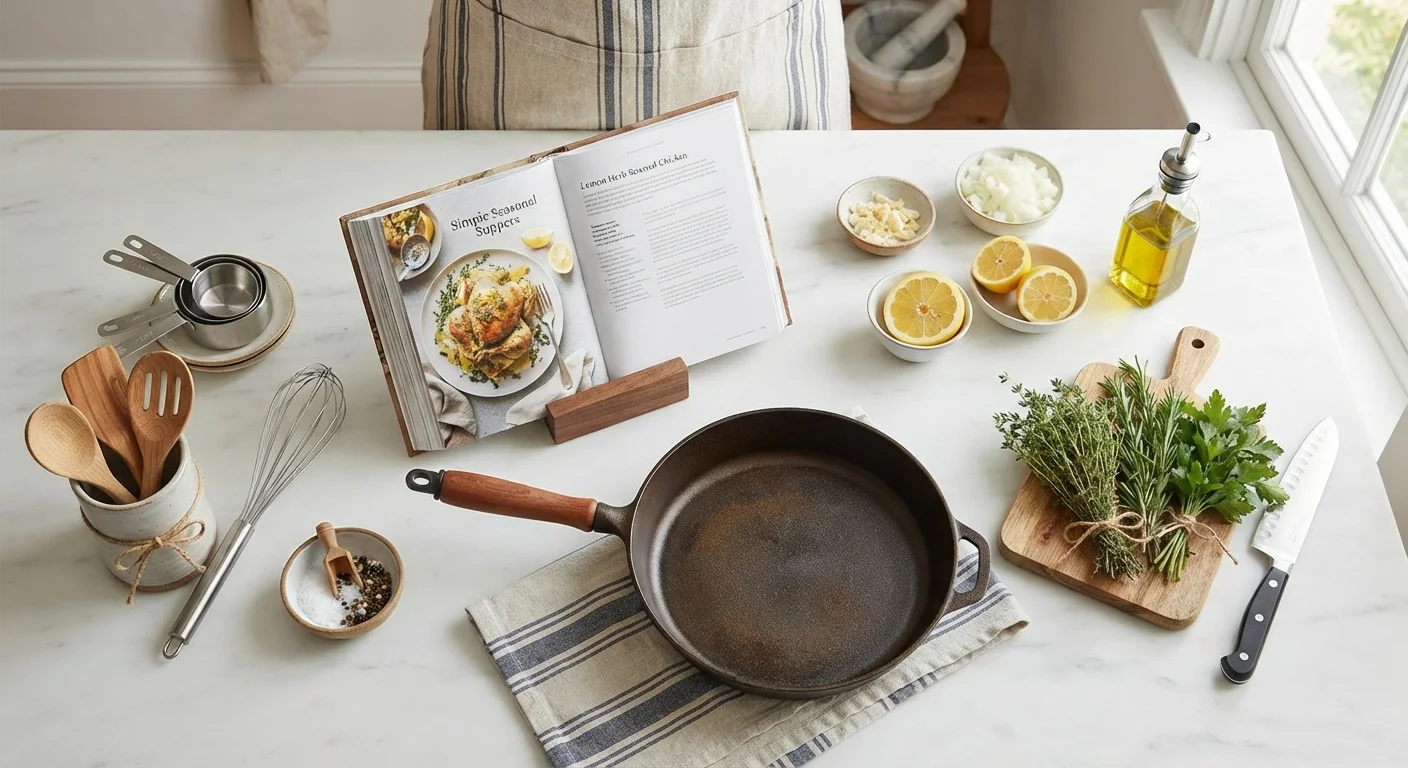
Mise en Place
A French culinary phrase meaning 'everything in its place.' It refers to the practice of measuring, prepping, and organizing all ingredients before cooking begins, which makes the cooking process smoother and less error-prone.
Fond
The browned, caramelized bits of food that stick to the bottom of a pan during searing or roasting. Fond carries intense, concentrated flavor and is dissolved into pan sauces through deglazing.
Al Dente
An Italian term meaning 'to the tooth,' describing pasta or rice cooked so that it still has a slight firmness when bitten. It is the standard of doneness for most Italian pasta dishes.
Render
Cooking fatty cuts of meat — such as bacon or duck skin — over low to medium heat so that the fat melts away from the tissue. Rendered fat is often used as a cooking medium for added flavor.
Heat and Moisture: Wet vs. Dry Cooking Methods
Many recipes are defined by how they apply heat. Understanding the distinction between wet and dry methods explains why certain foods are roasted, braised, or steamed rather than simply "cooked."
| Dry heat methods | Roasting, baking, broiling, grilling, sautéing, pan-frying |
| Moist heat methods | Braising, steaming, poaching, simmering, boiling |
| Combination methods | Braising and stewing (use both searing and moist heat) |
| Typical braising temperature | 275°F–325°F (135°C–163°C) in oven |
| Simmering temperature range | 185°F–205°F (85°C–96°C) |
| Boiling point of water | 212°F (100°C) at sea level |
Knowing which category a technique falls into also helps you substitute methods when needed — for example, understanding that braising is a low-and-slow moist-heat method tells you it's not interchangeable with a quick high-heat sear. For a clear breakdown of when to use stovetop versus oven methods, see our guide on stovetop vs. oven cooking.
It's also worth noting that some technique names carry outdated assumptions. For example, the idea that searing "seals in juices" is a persistent myth — understanding what techniques actually do can help you cook more intentionally. See common cooking myths worth letting go for more on separating kitchen lore from fact.
Prep and Finishing Terms You'll See Constantly
Beyond the cooking itself, recipes regularly call for specific prep actions and finishing moves. These terms describe how you handle ingredients before heat is applied, and how you bring a dish together at the end.
- Mise en place — French for "everything in its place." It refers to measuring, chopping, and organizing all ingredients before you begin cooking. This single habit reduces mid-recipe stress more than almost anything else. Our prep checklist for smoother meals covers this in practical detail.
- Fold — A gentle mixing technique used when you want to combine a light mixture (like whipped egg whites) into a denser one without deflating it. Use a rubber spatula in wide, sweeping, under-and-over motions rather than stirring.
- Temper — The process of gradually raising the temperature of a sensitive ingredient — such as eggs or chocolate — by slowly adding small amounts of a hot liquid before fully combining. This prevents scrambling or seizing.
- Deglaze — Adding liquid (wine, broth, or water) to a hot pan after searing to dissolve the browned bits stuck to the bottom. Those bits, called fond, carry concentrated flavor and form the base of many pan sauces.
- Reduce — Simmering a liquid uncovered so that water evaporates, concentrating flavor and thickening the consistency.
- Season to taste — Adjusting salt, acid, or other seasonings incrementally at the end of cooking until the dish tastes balanced to you. Tasting as you go is the key skill here.
Building familiarity with these terms — alongside the heat method vocabulary above — gives you a strong foundation to follow any recipe with confidence and eventually cook across the everyday recipes without needing a dictionary by your side.
The content on this site is for informational purposes only and is not a substitute for professional advice. Always consult a qualified professional for guidance specific to your situation.