

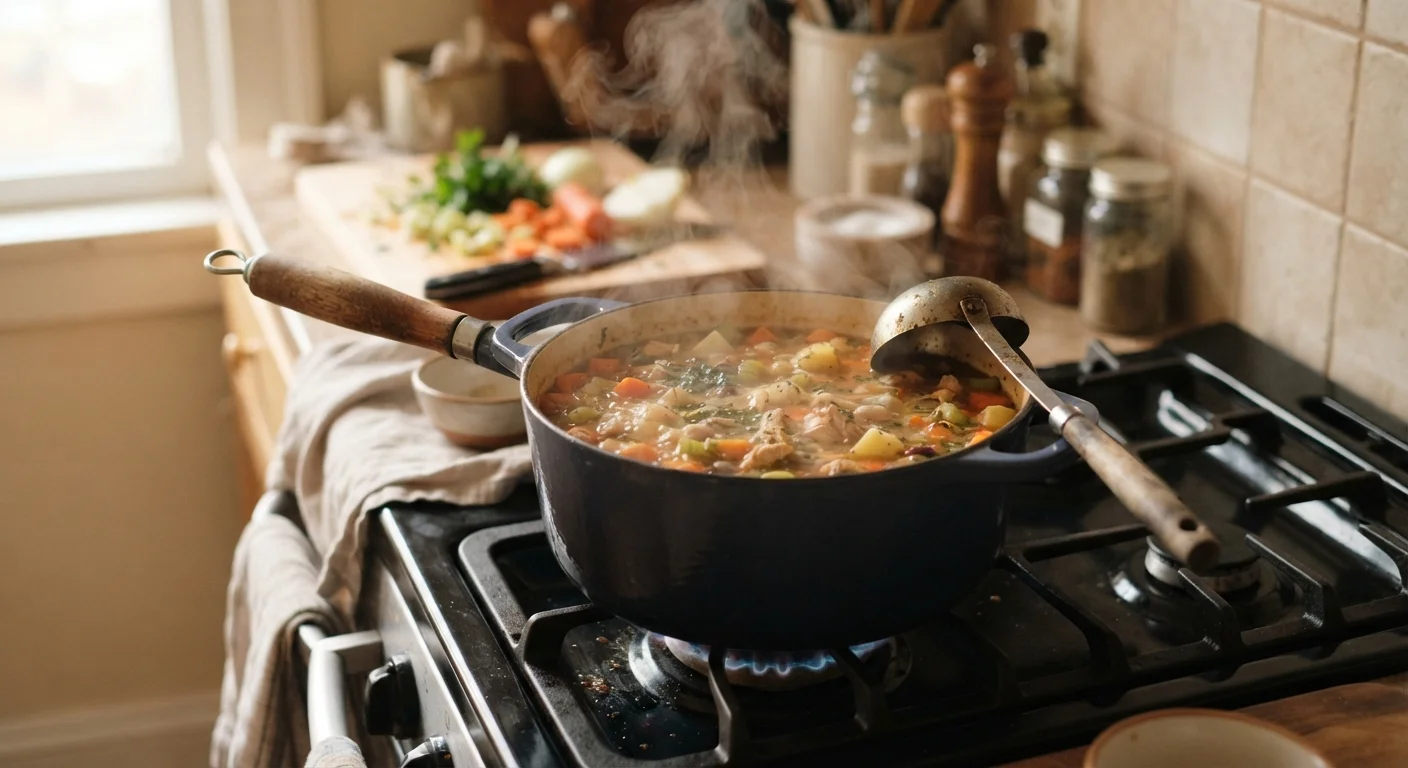
Why Homemade Soup Underperforms — and Why the Fixes Are Simpler Than You Think
Homemade soup should be one of the most forgiving dishes in the home cook's rotation. It doesn't require precise timing, specialized equipment, or expensive ingredients. Yet it's remarkably common to end up with a pot that's watery, muddled in flavor, or oddly heavy — even after hours on the stove.
The good news is that the problems almost always trace back to a small set of technique gaps, not ingredient quality. Understanding why each problem happens is more valuable than any single fix, because the same logic applies to every soup you'll ever make. For a broader look at where kitchen intuition can mislead you, see our piece on common cooking myths worth letting go.
Salt Early, Taste Often, Adjust Late
Seasoning only at the end of cooking produces sharp, surface-level salt rather than flavor that's integrated into the soup. Add a modest amount of salt early, taste at each stage, and make final adjustments off heat. This one habit change resolves the most common complaint home cooks have about their soup.
The Most Common Mistakes — and How to Correct Them
Each of the errors below has a distinct cause. Recognizing which one applies to your soup is the first step toward a consistently satisfying result.
Skipping the aromatics sweat and adding vegetables directly to the liquid.
Why it happens: It feels like an unnecessary step when water or broth is already in the pot, and home cooks often want to minimize dishes and steps.
Using water as the base without building up the liquid's flavor first.
Why it happens: Many home cooks assume a long simmer will extract enough flavor from the ingredients to make up for a plain water base.
Adding all vegetables at the same time, regardless of how long each one takes to cook.
Why it happens: Recipes often list ingredients in bulk, and it's intuitive to add everything together and let it all simmer.
Never tasting the soup until it's served, then finding it bland.
Why it happens: Cooks trust the recipe's listed amounts and assume the soup will come out right without intervention.
Not skimming fat or foam from the surface during cooking.
Why it happens: The skimming step is easy to miss if you're multitasking, and the foam doesn't always look problematic.
Overcrowding the pot with too many ingredients, diluting the overall flavor.
Why it happens: It's tempting to use up every leftover vegetable or protein in one pot, especially when building a meal around fridge leftovers.
Texture problems in soup often parallel issues in other proteins. If you're also navigating tough or chewy meat in your soup, the same overcooking principles apply — extend time gradually and test before committing.
A Few Finishing Moves That Make a Real Difference
Even a well-executed soup benefits from attention in the final minutes. These are not elaborate techniques — they're small adjustments that pull everything together.
~70%
Of soup flavor comes from the base liquid
Culinary educators consistently emphasize that the quality and seasoning of stock or broth is the single biggest determinant of finished soup flavor.
3–5 min
Time to sweat aromatics properly
Food science sources note that allowing onions, celery, and carrots to soften in fat for at least three minutes before adding liquid releases significantly more flavor compounds than adding them raw.
- Acid: A small squeeze of lemon juice or a teaspoon of wine vinegar stirred in just before serving lifts the entire pot. This is especially effective when salt alone isn't solving a flatness problem.
- Fat: A drizzle of good olive oil, a spoonful of butter, or a swirl of full-fat yogurt added off heat gives the soup richness and a smoother finish.
- Fresh herbs: Tender herbs like parsley, basil, or chives added after the heat is off retain their bright color and aroma rather than cooking down into the background.
- Rest time: Like most braises and stews, soup improves after 10–15 minutes off heat before serving. Flavors integrate and the temperature becomes more enjoyable to eat.
Soup is also one of the best vehicles for using starchy pasta water if you're adding noodles — stir in a ladleful rather than plain water to adjust consistency without diluting flavor.
Boiling Broth Too Hard Has Consequences
A hard, rolling boil forces fat and proteins into suspension, producing a cloudy, greasy broth that's difficult to correct after the fact. Soups and stocks should simmer gently — small bubbles breaking the surface occasionally is the target. If you're using a slow cooker, see our guide to slow cooker timing and heat for how gentle heat applies in that context.
The content on this site is for informational purposes only and is not a substitute for professional advice. Always consult a qualified professional for guidance specific to your situation.