

Our Verdict
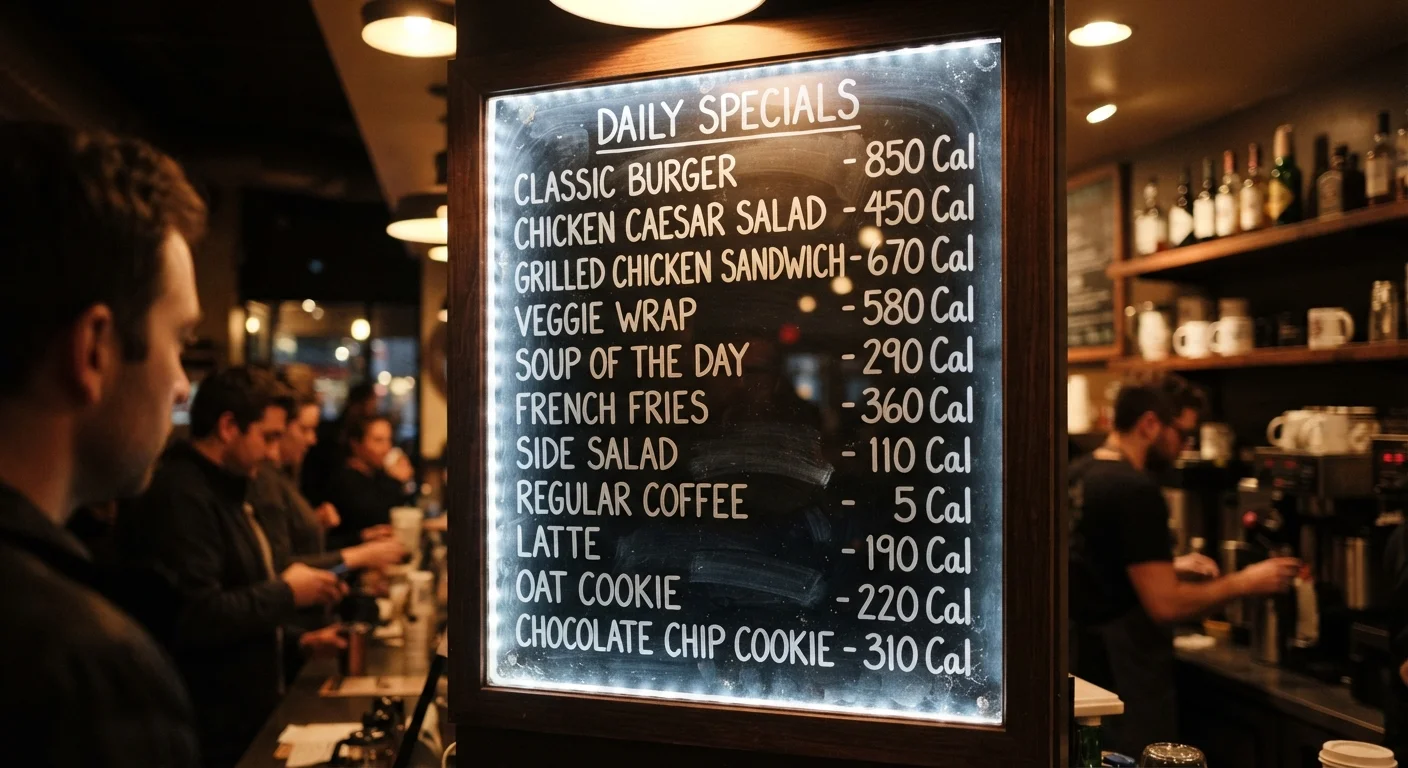
Menu calorie counts are a genuine transparency tool — they make it easier to gauge the rough energy content of a meal without doing mental math. But they're a starting point, not a full assessment. Sodium levels, fat composition, added sugars, and fiber content all matter for a balanced diet and simply don't appear on the menu board.
Calorie counts are most useful for readers who want a quick reference point when dining out and understand that the number is an estimate, not a precise measurement of nutritional value.
How Menu Calorie Labeling Works in the U.S.
Since 2018, a federal rule enforced by the U.S. Food and Drug Administration (FDA) has required chain restaurants, grocery store delis, movie theaters, and similar establishments with 20 or more locations to display calorie counts on their menus and menu boards. The rule was part of the Affordable Care Act's provisions aimed at giving consumers better information at the point of ordering.
The calorie figure shown is required to reflect the food as typically prepared — a standard serving as the establishment defines it. Restaurants must also make additional nutritional information (such as total fat, sodium, and carbohydrates) available in writing upon request, though that detail doesn't have to appear on the menu itself. Smaller, independent restaurants are not covered by the federal rule, though some states and cities have their own local requirements.
For a broader breakdown of how to interpret nutritional numbers in general, see our guide to what the Nutrition Facts label is actually telling you.
What Calorie Counts Do Well
Adds transparency at the point of ordering
Displaying calorie counts gives diners a concrete reference before they order, reducing the guesswork that often leads to underestimating a meal's energy content.
Enables easier comparison between menu items
Side-by-side calorie figures make it straightforward to compare two similar dishes and make a more deliberate choice without needing to research later.
Can modestly reduce average calorie selection
Public health research has found that calorie labeling is associated with modest reductions in calories ordered, particularly when consumers are already motivated to pay attention.
Useful reference for those tracking energy intake
For people working with a dietitian or healthcare provider to manage calorie intake, menu figures provide a practical starting estimate when dining out.
The clearest benefit is visibility. Before labeling requirements, most people dramatically underestimated how many calories restaurant meals contained — in some cases by several hundred calories per meal. Having a number printed on the menu removes that guesswork and allows for more deliberate comparisons. Choosing between two sandwiches or two entrées becomes a more informed decision when the figures are side by side.
There's also evidence that the presence of calorie labels modestly reduces calorie selection at the population level, according to research published in peer-reviewed public health journals. Even if the effect per individual is small, scaled across millions of restaurant visits it represents a meaningful shift. And for people actively managing their energy intake under the guidance of a healthcare provider or registered dietitian, having a reliable estimate at the point of ordering is practically useful.
What Those Numbers Leave Out
Hides sodium, fat, sugar, and fiber content
A menu calorie figure tells you nothing about sodium levels, saturated fat, added sugars, or fiber — all of which are nutritionally significant, especially for people managing specific health conditions.
Accuracy can vary from the printed figure
Actual calorie content in a served dish may differ from the labeled amount due to ingredient variation, portion inconsistency, and preparation differences across kitchen staff or locations.
Creates a false equivalence between different foods
Equal calorie counts on two different dishes can mask major differences in nutritional quality — a misleading signal if a diner uses the number as a proxy for overall healthfulness.
Daily reference point doesn't fit everyone
The 2,000-calorie daily benchmark used as context is a population average and does not reflect the actual needs of any specific individual based on age, size, activity, or health status.
Doesn't apply to independent restaurants
The federal rule covers chains with 20 or more U.S. locations, meaning independent restaurants — a significant portion of dining options — have no requirement to display calorie information.
A calorie count is a single dimension of a food's nutritional profile. A 600-calorie grilled salmon bowl and a 600-calorie basket of loaded fries are not nutritionally equivalent — but the menu treats them identically. What doesn't appear on most menu boards includes sodium content, saturated fat, added sugars, fiber, and micronutrients. For people managing blood pressure, heart health, or blood sugar, those figures can matter more than calories alone.
Accuracy is another limitation. The FDA allows a reasonable variation in reported calorie figures, and studies have found that actual calorie content can differ from labeled amounts — sometimes by 100 calories or more in either direction — depending on portion size, ingredient variation, and preparation. A "standard" portion assembled by a busy kitchen at lunch rush may not match the portion used when the calorie figure was calculated.
For a closer look at how serving size errors compound these issues, see how serving size misreads skew nutrition numbers.
Additional Info Is Available on Request
Federal rules require covered restaurants to make fuller nutritional information — including total fat, saturated fat, cholesterol, sodium, total carbohydrates, fiber, sugars, and protein — available in writing upon customer request. You won't always see it on the menu board, but you can ask for it. Knowing this option exists is worth keeping in mind when the calorie count alone isn't enough context for your needs.
The Bigger Picture: Calories Aren't the Whole Story
20+
Locations triggering FDA calorie labeling rule
The FDA's menu labeling rule applies to restaurant chains and similar food establishments operating 20 or more U.S. locations doing business under the same name.
~100+ kcal
Possible variance from labeled calorie count
Studies measuring actual versus labeled calorie content in restaurant meals have found differences of 100 calories or more in either direction, depending on preparation and portioning.
Nutrition science has moved well beyond simple calorie-counting as a framework for healthy eating. Food quality — the type of fat, the source of carbohydrates, the sodium load, the presence or absence of fiber — affects how the body processes a meal in ways that a calorie figure doesn't capture. Two people eating identical calorie counts can have very different metabolic responses depending on what those calories are made of.
Menu labels also don't account for individual variability. A 2,000-calorie daily reference point (the standard used on nutrition labels) is a general population average, not a universal target. Age, activity level, body size, and health status all affect how many calories a given person needs — and that's a conversation for a healthcare provider or registered dietitian, not a menu board.
If you want to go deeper on the nutrients that calorie counts leave off, our guide to added sugar and how to read a Nutrition Facts label fill in useful context.
This article is for general informational purposes only and is not medical or dietary advice. For guidance specific to your health needs, consult a qualified healthcare provider or registered dietitian.
The content on this site is for informational purposes only and is not a substitute for professional advice. Always consult a qualified professional for guidance specific to your situation.