

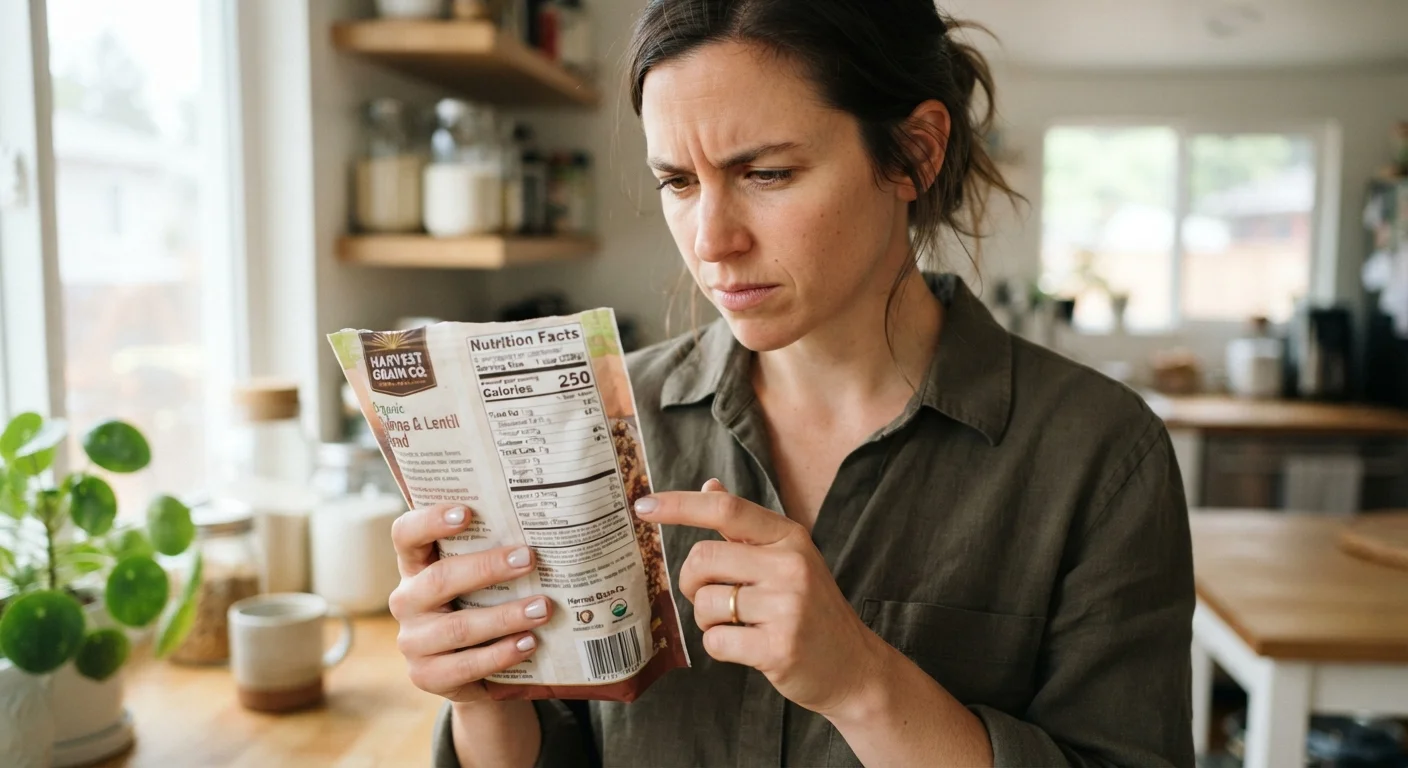
Why Serving Size Errors Have an Outsized Impact
The Nutrition Facts label is designed to help you make informed decisions — but only if you're reading it correctly from the very first line. That first line is the serving size, and it anchors everything else on the panel. Get it wrong, and every number that follows — calories, sodium, saturated fat, added sugars — is off by the same margin.
This matters more than most people realize. A small misread that doubles your perceived calorie count can quietly skew a full day's worth of food decisions. If you're trying to keep tabs on sodium for health reasons, or you're managing how much added sugar you're taking in, starting with the wrong baseline means you're working with flawed data throughout. For a deeper look at how each section of the label connects, see how a Nutrition Facts label is structured.
Serving Size Is Not a Diet Recommendation
A serving size on a Nutrition Facts label reflects a standardized reference amount set by the FDA, based on how much of a food people typically consume — not how much they should consume. Treating it as a dietary target or an endorsement of that quantity can lead to significant miscalculations in your overall intake.
The Most Common Serving Size Mistakes — and How to Fix Them
These errors aren't signs of carelessness — they're genuinely easy to make. Packaging design, familiar habits, and ambiguous label language all contribute. Understanding where the confusion typically enters is the first step to getting more accurate readings.
Treating the entire package as one serving when it contains multiple.
Why it happens: Many packages — especially drinks, snack bags, and small containers — look like they're meant to be consumed in one sitting, leading people to assume one container equals one serving.
Eyeballing volume measurements instead of actually measuring them.
Why it happens: Most people develop a rough mental estimate of what a cup or tablespoon looks like, but that estimate tends to creep upward over time, especially with calorie-dense foods like nuts, granola, or pasta.
Ignoring whether a measurement refers to the food dry, cooked, or raw.
Why it happens: Many packaged foods — rice, pasta, oats, dried beans — are measured in their dry state on the label, but people serve and eat them after cooking, when the volume and weight have changed significantly.
Confusing fluid ounces with ounces by weight.
Why it happens: Both use the word 'ounce,' so it's easy to mix them up. Fluid ounces measure volume; ounces measure mass. They are not interchangeable except in very specific cases like water.
Not accounting for added ingredients that change the serving's nutrition profile.
Why it happens: People read a label for plain oatmeal, cereal, or yogurt — then add honey, milk, fruit, or mix-ins without factoring those into their total.
2–3×
How much people underestimate portions
Research published in nutrition journals has consistently found that people underestimate portion sizes by a factor of two to three for energy-dense foods like nuts, cheese, and baked goods.
~20%
Allowed calorie variance on food labels
Under FDA regulations, the calorie and nutrient values on Nutrition Facts labels are permitted to vary by up to 20% from the stated amount, meaning the label is always an estimate.
Once you've got the serving size right, it's worth applying that same careful reading to ingredient lists. Our guide to reading an ingredient list without getting lost explains what order, groupings, and label terms actually tell you.
How Accurate Serving Size Reading Fits Into the Bigger Picture
Serving size accuracy is one piece of a broader nutritional literacy puzzle. Even precise label reading has limits — for instance, the calorie and nutrient values on labels are estimates based on standardized testing, not exact figures for every batch of a product. And when eating out, the numbers get even fuzzier. Menu calorie counts — where required — are helpful but incomplete.
The goal isn't mathematical perfection. It's developing enough label-reading fluency that your choices are grounded in a reasonably accurate understanding of what you're eating. That means checking servings per container, measuring when it counts, and knowing when the label is describing a dry versus prepared food. Small habits, consistently applied, make the information on the label actually useful.
This article is for general informational and educational purposes only and is not intended as nutritional, medical, or dietary advice. Consult a qualified healthcare professional or registered dietitian for personalized guidance.
The content on this site is for informational purposes only and is not a substitute for professional advice. Always consult a qualified professional for guidance specific to your situation.