

Your Most Important Plumbing Location: The Main Shutoff
Before any pipe bursts or fitting fails, every person in your household should know where the main water shutoff valve is located. In most American homes, it sits near the water meter — often in the basement, utility room, crawl space, or on an exterior wall facing the street. Turning it fully clockwise stops all water flow to the house within seconds.
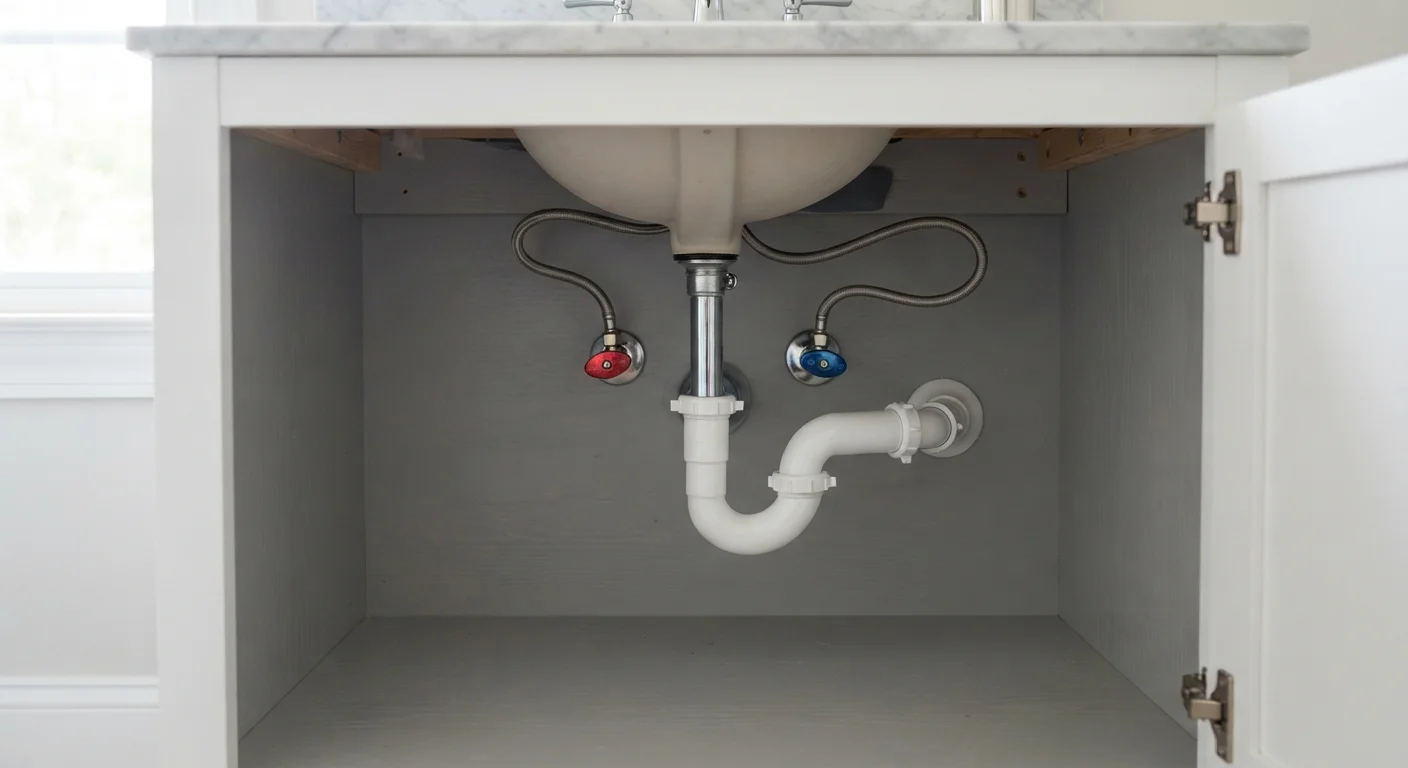
In addition to the main shutoff, most fixtures have their own fixture shutoff valves — the small oval or football-shaped valves under sinks and behind toilets. These let you isolate a single fixture without cutting water to the entire home. Test them once a year; valves that go untouched for years can seize when you need them most.
| Main shutoff location | Near the water meter — basement, utility room, crawl space, or exterior wall |
| Fixture shutoff valves | Under sinks and behind toilets; isolate a single fixture without cutting whole-home water |
| P-trap function | Holds water to block sewer gases; dry traps cause drain odors |
| Running toilet waste | Can waste hundreds of gallons per day — often caused by a worn flapper |
| When a permit is typically required | Water heater replacement, re-piping, sewer line work — verify local codes |
| Safe DIY tasks | Faucet aerator swap, toilet flapper, P-trap cleaning, plunging a drain |
Understanding these two valve types is the foundation of plumbing literacy. A slow drip under a sink becomes far less stressful when you can shut off just that line in under a minute. Unaddressed leaks, however small, can quietly snowball — much like the spending leaks that erode a household budget without obvious warning signs.
Key Components You Should Recognize
Plumbing systems divide into two subsystems: supply lines (pressurized pipes delivering fresh water) and drain-waste-vent (DWV) lines (gravity-fed pipes removing wastewater). Most household issues involve one or the other — rarely both at once.
P-trap
A curved, P-shaped pipe section installed beneath sinks and drains. It holds a small amount of water to block sewer gases from rising into the home while still allowing wastewater to flow through.
Supply line
A pressurized pipe or flexible hose that carries fresh water from the main supply to a fixture such as a faucet, toilet, or appliance.
Drain-waste-vent (DWV)
The network of gravity-fed pipes that carries wastewater out of the home and uses vent pipes to equalize air pressure, preventing siphoning of P-trap seals.
Fixture shutoff valve
A small valve located directly beneath a sink or behind a toilet that allows you to stop water flow to one fixture without shutting off water to the entire house.
Flapper
A rubber seal inside a toilet tank that opens to allow water to flow into the bowl during a flush and closes to allow the tank to refill. A worn flapper is one of the most common causes of a running toilet.
Aerator
A small mesh screen screwed onto a faucet tip that mixes air into the water stream. It reduces water usage, limits splashing, and can be removed for cleaning or replacement.
The P-trap is the curved pipe section under every sink and shower drain. That U-shaped bend holds a small reservoir of water at all times, creating a seal that blocks sewer gases from entering your living space. If a drain smells but drains fine, a dry P-trap is often the culprit — simply running the water for 30 seconds usually restores the seal.
Other components worth recognizing include supply stop valves, ballcock or fill valves inside toilet tanks, wax ring seals at the toilet base, and aerators at faucet tips. Each is a replaceable part a confident DIYer can address. Familiarity with these components is a core piece of first-year homeowner maintenance.
What You Can Handle Yourself — and What You Cannot
Many routine plumbing tasks fall within DIY territory when approached carefully: replacing a faucet aerator, swapping a toilet flapper, tightening a slip-joint nut under a sink, or clearing a simple drain clog with a plunger or hand snake. These repairs require basic tools, no permits, and carry limited risk if done methodically.
Other work genuinely requires a licensed plumber. Any task involving main supply lines, gas-adjacent water heaters, sewer lines, pipe soldering, or work inside walls carries real risk of injury, code violations, or damage that far exceeds the repair cost. Many jurisdictions also require permits for water heater replacements or re-piping — skipping permits can affect homeowner's insurance coverage and complicate future home sales. When in doubt, consult the DIY vs. hiring a pro framework before starting.
A useful rule of thumb: if the repair requires cutting into a wall, touching a gas line, or involves water heaters, main drains, or anything downstream of your meter, get a licensed professional involved. That advice aligns with the broader guidance in our article on home maintenance myths that cost real money.
Routine Maintenance That Prevents Most Emergencies
Most plumbing emergencies don't appear without warning — they follow a period of ignored signals. Inspect under sinks every few months for moisture, staining, or mineral deposits on supply lines. Check toilet tank components annually; a running toilet can waste hundreds of gallons per day without making obvious noise.
Clean faucet aerators and showerheads by unscrewing them and soaking in white vinegar to dissolve mineral buildup. This simple step restores flow without replacing fixtures. Avoid chemical drain cleaners as a routine solution — they can degrade older pipes and rarely address the root cause of slow drains. A drain snake or removal of the P-trap for manual cleaning is more effective and far gentler on your plumbing. Proper sealing around tub and sink surrounds also matters; see our guide on caulking and sealing around fixtures for practical detail.
Knowing your system's baseline — what sounds normal, what pressure feels right, what a dry cabinet floor looks like — is what allows you to catch changes early, when repairs are still small.
The content on this site is for informational purposes only and is not a substitute for professional advice. Always consult a qualified professional for guidance specific to your situation.