

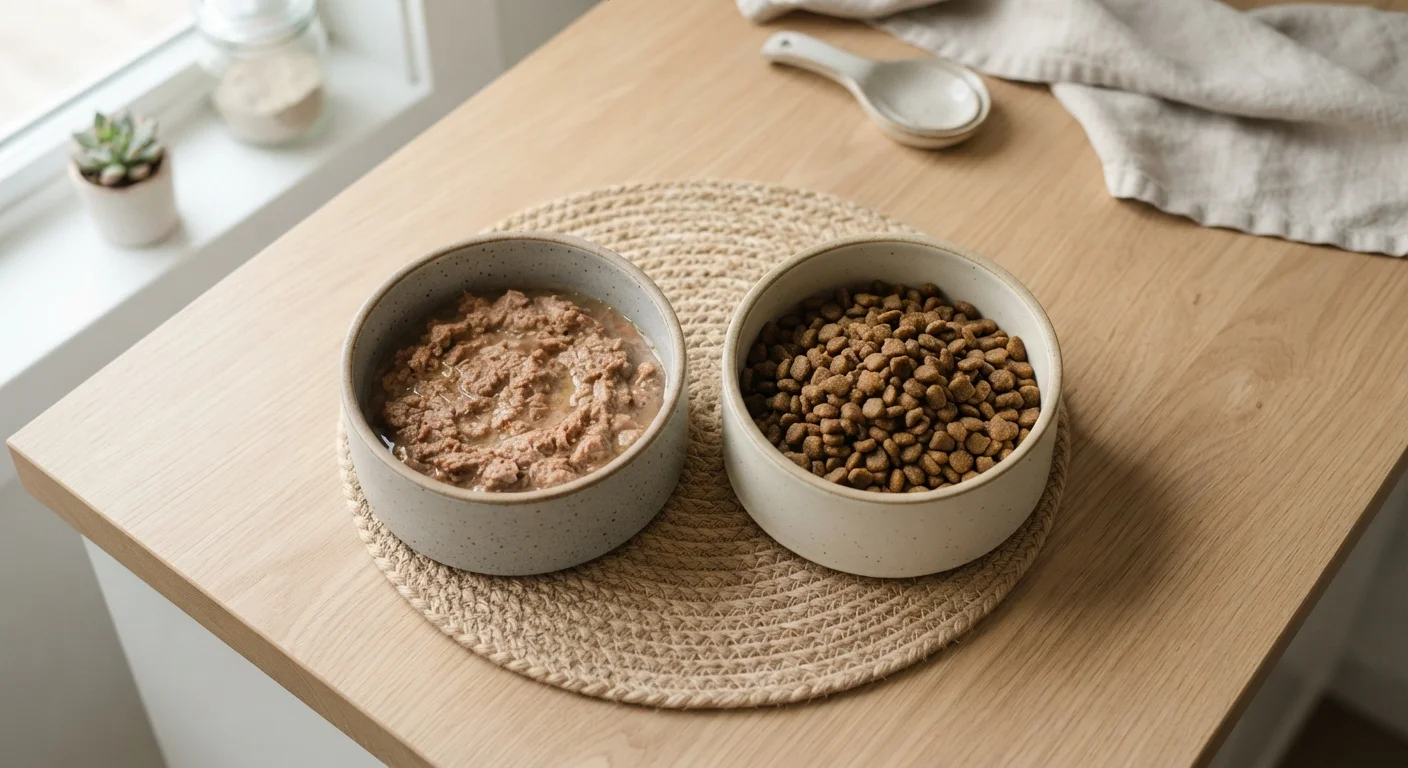
Option A
Wet Cat Food
The moisture-rich, protein-forward option.
Best for: Cats who need extra hydration, are picky eaters, or have urinary, kidney, or dental concerns.
Option B
Dry Cat Food
The convenient, calorie-dense everyday staple.
Best for: Owners seeking a shelf-stable, budget-friendly option for healthy adult cats with no hydration issues.
How Wet and Dry Cat Food Differ at a Glance
The most fundamental difference between wet and dry cat food is moisture content. Wet food — sold in cans or pouches — is typically composed of 70–80% water. Dry kibble, by contrast, contains only about 10% moisture. For cats, who evolved as desert animals and have a naturally low thirst drive, this distinction carries real health implications.
Beyond water content, the two formats differ in ingredient composition and caloric density. Wet food tends to be higher in animal-based proteins and lower in carbohydrates, which aligns well with a cat's obligate carnivore biology. Dry food often contains more carbohydrates — from starches used to hold the kibble shape — and delivers more calories per ounce. For a deeper look at what nutrients cats actually require, see our guide to feline nutrition fundamentals.
| Criterion | Wet Cat Food | Dry Cat Food |
|---|---|---|
| Moisture content | 70–80% | ~10% |
| Protein level (typical) | High (animal-based) | Moderate to high |
| Carbohydrate content | Generally low | Moderate to high |
| Caloric density per ounce | Lower | Higher |
| Shelf life once opened | 2–3 days refrigerated | Weeks at room temperature |
| Cost per serving (general) | Higher | Lower |
| Palatability for picky cats | Often higher | Variable |
| Suitability for kidney/urinary issues | Preferred (vet guidance needed) | Less ideal without added water |
Hydration: Why Moisture in Food Matters
Cats are not inclined to drink large amounts of water from a bowl. In the wild, they obtain most of their fluid from prey. This means a cat eating only dry kibble may live in a state of mild chronic dehydration — a condition that can, over time, contribute to urinary crystals, kidney strain, and bladder disease.
Wet food addresses this directly. A cat eating canned food receives a meaningful portion of their daily fluid needs through the food itself. For cats already diagnosed with kidney disease or recurrent urinary tract issues, veterinarians frequently recommend wet food as part of a management strategy — though any dietary change for a health condition should be discussed with your vet.
70–80%
Moisture in typical wet cat food
Compared to roughly 10% in dry kibble, this difference significantly affects a cat's total daily fluid intake.
~3x
More calories per ounce in dry food
Because moisture adds weight without calories, dry kibble is far more calorie-dense, making portion control critical.
Low
Natural water intake drive in cats
Veterinary behaviorists note cats evolved to obtain most fluids from prey, not standing water sources.
Protein, Carbohydrates, and the Obligate Carnivore Equation
Cats require a high-protein diet with minimal reliance on carbohydrates for energy — their digestive systems are built around metabolizing animal protein and fat, not plant-based starches. Wet food typically mirrors this biology more closely, with meat, poultry, or fish as the dominant ingredients and a lower carbohydrate load overall.
Dry food formulations have improved over the years and many meet established nutritional standards, but the starch needed to bind kibble means carbohydrate content is generally higher. For healthy adult cats, this isn't necessarily a crisis, but for cats managing diabetes or obesity, lower-carbohydrate wet food may be worth exploring with a veterinarian.
Dental Health: Does Kibble Really Clean Teeth?
A common belief is that dry food mechanically cleans cats' teeth as they chew. The evidence for this is limited. Most cats swallow kibble with minimal chewing contact on tooth surfaces, so the abrasive effect is minimal. Some specially formulated dental kibbles — larger, textured pieces designed to increase contact — show modest benefits in clinical studies, but they're a specific category, not a property of dry food in general.
Wet food doesn't clean teeth either, and the soft texture leaves residue that can contribute to plaque if dental hygiene is neglected. The honest takeaway: neither format replaces regular tooth brushing or veterinary dental cleanings. Dental health is best managed as a separate, dedicated routine regardless of which food you choose.
Dental Care Goes Beyond Food Choice
Regardless of whether you feed wet or dry food, the most effective ways to support your cat's dental health are tooth brushing with a vet-approved cat toothpaste and regular professional dental cleanings. Ask your veterinarian to evaluate your cat's teeth at each annual visit, as dental disease is one of the most common — and often overlooked — conditions in adult cats.
Life Stage and Special Considerations
Age and health status often tip the balance between wet and dry. Kittens have high energy needs and benefit from nutrient-dense food in either format, though wet food can be easier for very young cats transitioning from mother's milk. Senior cats — particularly those over age 10 — may benefit from wet food's softer texture and stronger aroma, especially if they've developed dental issues or a reduced sense of smell. Our senior cat care guide covers how a cat's nutritional needs evolve with age.
For households with multiple cats, feeding logistics matter too. Wet food spoils within a few hours if left out, which can complicate free-choice feeding setups. See feeding strategies for multi-cat homes for practical advice on managing mealtime in shared spaces.
Many veterinarians support a mixed feeding approach: wet food once or twice daily for hydration and palatability, supplemented with measured portions of dry food. This can balance practical convenience with nutritional benefits — but portion sizes still need to be monitored to avoid overfeeding.
This article is for general informational purposes only and is not a substitute for veterinary advice. Always consult your veterinarian before making significant changes to your cat's diet, especially if your pet has an existing health condition.
The content on this site is for informational purposes only and is not a substitute for professional advice. Always consult a qualified professional for guidance specific to your situation.