

Why the Dial Doesn't Tell the Whole Story
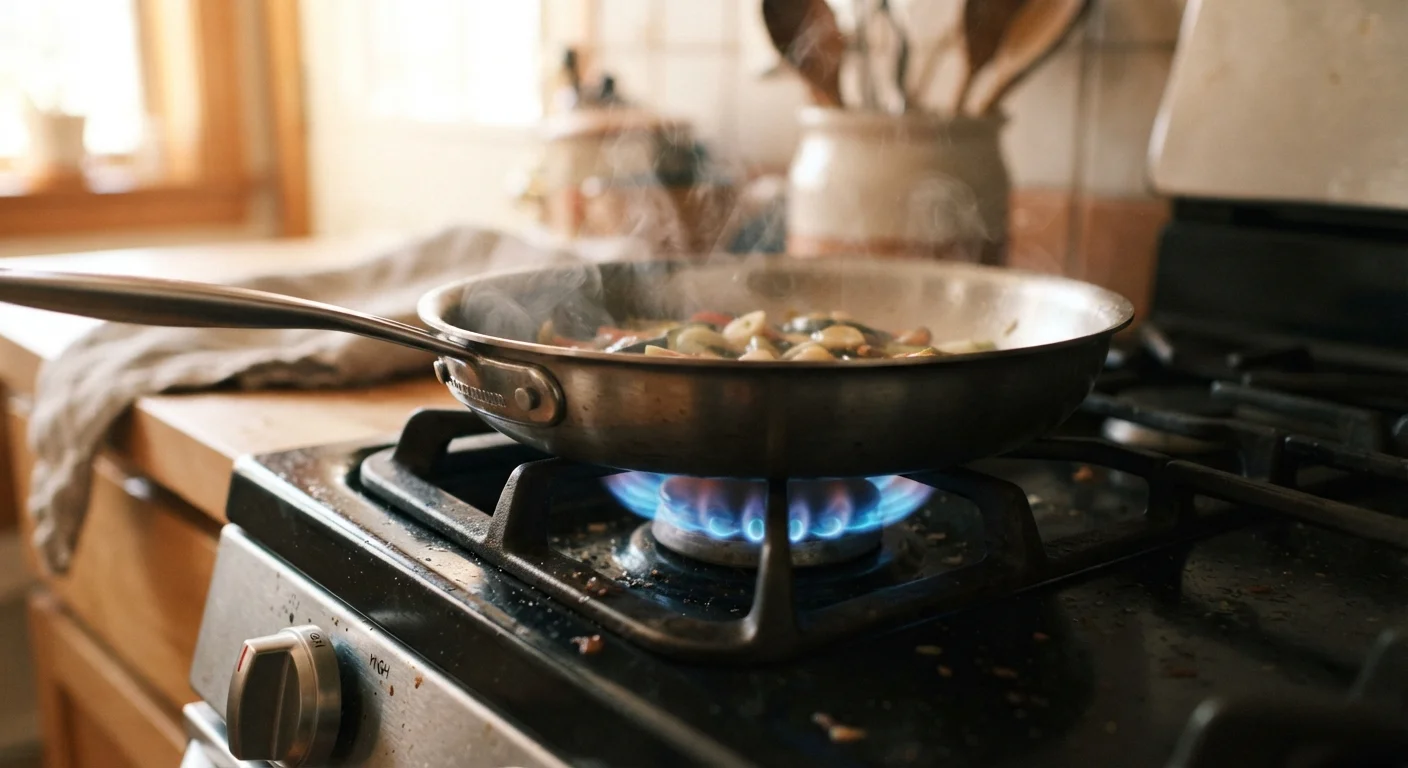
Recipe writers assume a consistent stove. Home cooks rarely have one. A gas burner on one range can run noticeably hotter than the identically-labeled burner on the range next door. Electric coils take time to climb and fall in temperature. Induction cooktops respond almost instantly. This variation is why experienced cooks focus less on the dial and more on what's happening in the pan.
Two observable signals are the most useful: how oil or butter behaves, and whether food is browning, steaming, or doing nothing at all. Build the habit of checking the pan rather than the setting, and your cooking will become more consistent regardless of which stove you're working on.
Test Your Stove Before You Need To
Take five minutes on a day when you're not mid-recipe to run the water-drop test at low, medium, and high settings on each burner. Note which burners run hot and which run cool. This small exercise pays dividends every time you cook — especially when following a recipe written for a different stove.
Low Heat: Gentle and Patient
Low heat sits roughly in the 200–300°F range at the pan surface. At this level, butter melts slowly, soups maintain a lazy bubble, and delicate sauces hold without breaking. It's the right choice when time is doing the work — not the temperature.
Common applications include simmering broth, cooking scrambled eggs slowly for a creamy texture, melting chocolate, and warming leftovers without scorching. Low-and-slow cooking leverages this principle across a wide range of dishes, from braises to barbecue.
A tell-tale sign you've overshot low: butter browns quickly, or a sauce develops a hard simmer instead of a gentle one. Dial back and give the pan a moment to settle — it won't drop temperature instantly.
Medium Heat: The Everyday Workhorse
Medium heat — roughly 300–375°F — handles the widest variety of everyday cooking. Sautéing vegetables, cooking pancakes, pan-searing chicken breasts to a golden crust, and reducing sauces all fall in this range. If a recipe gives no instruction, medium is usually a safe starting assumption.
The key visual cue: oil added to a preheated pan should shimmer and move fluidly when you tilt the pan. It shouldn't smoke, and it shouldn't just sit there inert. Food placed in the pan should sizzle audibly within a second or two. If there's no sizzle, the pan needs more time. If there's aggressive spattering and smoking, pull back the heat.
For technique-specific uses of medium heat, sautéing, pan-frying, and stir-frying each rely on it differently. A solid grasp of medium heat opens up the majority of stovetop recipes.
~310°F
Temperature where oil visibly shimmers
A pan surface at this temperature — typical of medium heat — will cause most neutral cooking oils to shimmer and flow, a reliable visual cue used by culinary instructors.
~285°F
Maillard reaction onset temperature
The Maillard reaction, which drives browning and flavor development in foods, generally begins around 280–300°F — underlining why medium and high heat produce better color and depth than low.
High Heat: Fast, Focused, and Unforgiving
High heat — above 375°F and often considerably higher — is for tasks that require rapid browning or boiling. Searing a steak, charring vegetables, bringing a pot of pasta water to a rolling boil, and stir-frying over intense heat all depend on temperatures that low and medium simply can't deliver.
The Maillard reaction — the chemical process behind browning and flavor development — accelerates dramatically at high heat. But so does the risk of burning. High heat requires you to stay close, keep food moving or flip it at the right moment, and have your next steps ready before the pan goes on.
One important pairing consideration: oil choice matters enormously at high heat. Oils with lower smoke points — like extra-virgin olive oil — are generally not well-suited for searing or stir-frying. Understanding smoke points helps you choose the right fat for the right temperature.
Practical Tips for Reading Your Own Stove
Getting calibrated to your specific stove takes a little deliberate practice, but the process is straightforward. Start with a simple test: heat a dry stainless or cast iron pan on what you consider medium for two minutes. Flick a few drops of water in. If they dance and evaporate in about two seconds, you're in the right range. If they evaporate instantly, the pan is running hot. If they just sit there, you need more heat.
A few habits that help across all heat levels:
- Preheat before you add fat or food. An evenly preheated pan prevents sticking and promotes uniform browning.
- Don't crowd the pan. Packed food steams instead of browns because it traps moisture — even at high heat.
- Adjust between steps. Many dishes start high to get a sear, then drop to medium or low to finish cooking through. Follow the food, not the timer.
- Give the pan time to adjust. Electric and ceramic cooktops in particular respond slowly. Reduce heat a step earlier than you think you need to.
For dishes like rice — which depend on a precise transition from boil to low simmer — these habits become critical. Getting consistently good rice on the stovetop is a useful case study in how heat management shapes the final result.
Induction Cooktops Behave Differently
Induction burners heat the pan directly through electromagnetic energy rather than an open flame or radiant coil. They respond much faster to dial changes than gas or electric, and they tend to run more precisely. If you're cooking on induction for the first time, expect to dial back your usual settings slightly — and be ready to adjust more frequently until you learn how your specific unit performs.
Frequently Asked Questions
Medium heat generally corresponds to a pan surface temperature of roughly 300–375°F, though this varies by stove and pan type. A reliable sign: a drop of water flicked into a dry pan will evaporate within a couple of seconds, and a small amount of oil will shimmer but not smoke.
Watch for visual cues. For medium heat, oil should shimmer and flow freely in the pan. For high heat, a faint wisp of smoke from the oil signals you're near or above the oil's smoke point. For low heat, butter should melt slowly and foam gently without browning.
Not necessarily. On many residential stoves, the lowest dial setting can be too low even for simmering — food may barely stay warm. True low heat means a gentle, steady bubble for liquids or slow melting for solids. Adjust incrementally until you see those cues.
Smoking at medium usually means the oil you're using has a lower smoke point than the temperature you've reached. Switching to an oil with a higher smoke point — such as refined avocado or vegetable oil — resolves this. See <a href="/food-cooking/cooking-basics/cooking-oil-smoke-points-what-they-mean-and-why-they-matter">our guide to smoke points</a> for details.
For most stovetop cooking, yes. Preheating a dry pan for 30–60 seconds on medium before adding oil helps the pan reach an even temperature, reducing hot spots. Add oil and let it heat briefly before adding food — you'll get better browning and less sticking.
Yes, but with close attention. Boiling water, blanching vegetables, and quickly searing proteins all call for high heat and are manageable with practice. The key is to stay present — high heat moves fast and leaves little margin for walking away from the stove.
The content on this site is for informational purposes only and is not a substitute for professional advice. Always consult a qualified professional for guidance specific to your situation.