

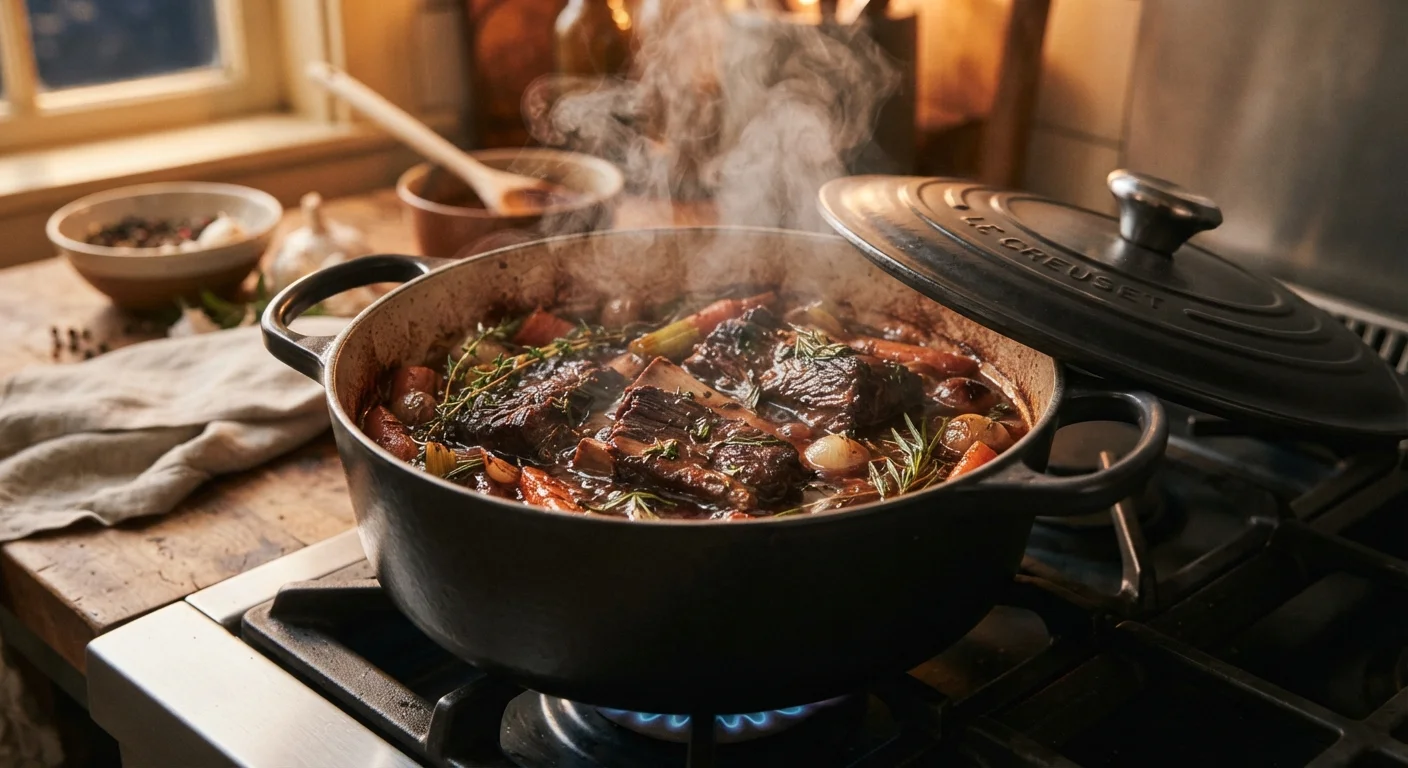
The Science Behind the Phrase
When heat hits meat, several things happen at once. Muscle fibers contract and push out moisture, while connective tissue — primarily collagen — begins a slower transformation. At high temperatures, muscle fibers tighten rapidly before collagen has had time to convert, leaving meat tough and dry. Low and slow sidesteps that problem by keeping temperatures in a range where collagen gradually converts into gelatin while the muscle fibers don't seize up too aggressively.
Gelatin is the magic ingredient here. It coats the meat's protein strands with a slippery, lubricating richness that reads as moistness on the palate, even if some liquid has technically been lost. That's why a well-braised pork shoulder can seem juicy even after several hours in the oven. The texture isn't accidental — it's chemistry working on a schedule that only time can keep.
For a broader look at the vocabulary used in these techniques, see our cooking terms glossary, which covers braising, deglazing, and other foundational methods.
Food Safety Still Applies
Cooking low and slow does not mean cooking at unsafe temperatures. Even though these methods run below traditional roasting heat, the extended time at temperature ensures safe internal temps are reached. The USDA recommends a minimum internal temperature of 145°F for whole muscle beef, pork, and lamb (with a 3-minute rest), and 165°F for poultry. Collagen-rich cuts cooked for tenderness will far exceed these minimums. Always use a food-safe thermometer to confirm.
What Temperatures and Times Actually Look Like
"Low" is relative depending on the cooking method. In a home oven, low and slow typically means 275–325°F. For traditional barbecue — think brisket or pulled pork on a smoker — pitmasters usually work between 225–250°F, extending cook times to eight hours or more. Slow cookers operate between roughly 170–280°F depending on the low or high setting.
Time ranges vary widely by cut and starting temperature. A 3-pound braised chuck roast might be fork-tender in 3 hours at 300°F. A whole packer brisket on a smoker can take 12–16 hours. The internal temperature of the meat matters more than the clock — most collagen-rich cuts reach full tenderness somewhere between 195–205°F internal temperature, which is well above the safe-to-eat threshold but necessary for texture.
160–180°F
Temperature range for collagen-to-gelatin conversion
Food science literature establishes this as the sustained internal temperature range at which collagen in connective tissue begins converting to gelatin.
195–205°F
Internal temp for pull-apart tenderness
Collagen-rich cuts like brisket and pork shoulder typically reach fully tender, shreddable texture when held at an internal temperature in this range.
225–250°F
Classic outdoor barbecue smoker range
Traditional barbecue pitmasters generally maintain smoker temperatures in this range, often for 8–16 hours depending on the size of the cut.
Understanding how heat behaves at different intensities also helps. Our article on stovetop heat levels explains how to read your pan rather than just the dial — useful context even when your dish ultimately moves to the oven.
Which Foods Benefit Most — and Why
Not every ingredient rewards a slow cook. Delicate proteins like fish fillets or chicken breasts are better suited to quick, moderate heat. Low and slow is specifically valuable for cuts and ingredients that are high in collagen and connective tissue.
- Beef: Brisket, short ribs, chuck roast, oxtail
- Pork: Shoulder (Boston butt), spare ribs, shanks
- Lamb: Shoulder, leg (bone-in), shanks
- Poultry: Whole legs, thighs, and drumsticks benefit far more than breasts
- Vegetables and legumes: Dried beans, root vegetables, and caramelized onions all develop deeper flavor with prolonged gentle heat
The common thread is structure. Cuts that contain more collagen and fat can withstand hours of heat because those components protect the protein and contribute flavor. Leaner, more tender cuts simply don't have enough collagen to make the wait worthwhile — and they'll dry out before anything interesting happens.
Check for Tenderness, Not Just Time
The best way to test a low-and-slow dish is with a fork or a probe thermometer — not the clock. Insert a fork and twist gently; if the meat resists, it needs more time. If it gives with little effort, it's done. Internal temperature is a reliable guide: most braised and smoked cuts reach ideal texture between 195–205°F.
Common Mistakes and How to Avoid Them
The most frequent error is impatience — turning up the heat to speed things along. Raising your oven from 300°F to 375°F doesn't just cook faster; it fundamentally changes what's happening inside the meat. Higher temperatures cause muscle proteins to tighten before collagen dissolves, and the result is dry, stringy texture instead of the silky pull-apart quality you were after.
A close second is cooking uncovered when the recipe calls for a lid. Moisture trapped inside the pot creates a humid environment that slows evaporation and helps the collagen conversion happen evenly. Losing that steam — by using a loose lid or going uncovered — raises the effective temperature around the meat and speeds up moisture loss.
It's also worth noting that searing before a braise is about flavor, not moisture retention. The cooking myths worth letting go article explains why the old idea that searing "seals in juices" doesn't hold up — but the Maillard browning it creates still adds real depth to the finished dish.
After your low-and-slow cook is done, don't skip resting. Our piece on resting meat after cooking explains exactly why a brief rest before slicing or pulling makes a measurable difference in the final result.
Frequently Asked Questions
For most home oven braises, low and slow means 275–325°F. This range is hot enough to sustain collagen conversion but gentle enough not to tighten muscle fibers too aggressively. Outdoor barbecue smoking runs even lower, typically 225–250°F.
Yes. Slow cookers are specifically designed for this approach. The low setting on most models runs between 170–200°F, and most recipes call for 6–10 hours. The sealed lid traps moisture, which helps replicate the humid environment of a covered Dutch oven.
Sustained low heat allows collagen — the connective tissue in tougher cuts — to gradually convert into gelatin. Gelatin coats the protein fibers and creates the silky, tender texture. High heat cooks too quickly for this conversion to happen fully, leaving the meat tough.
Cuts with high collagen content benefit most: beef brisket, chuck roast, and short ribs; pork shoulder and spare ribs; lamb shanks and shoulder. Leaner, tender cuts like chicken breast or pork loin don't have enough collagen to benefit and tend to dry out with extended cooking.
In most cases, this backfires. Higher temperatures cause muscle proteins to tighten before the collagen converts, producing dry, stringy meat rather than the tender result you're after. A pressure cooker is a better option if you need to cut time — it speeds up collagen conversion without the drawbacks of higher dry-oven heat.
Searing is optional but often worthwhile for flavor. Browning the exterior through the Maillard reaction creates complex, savory notes that enhance the finished dish. However, searing does not "seal in moisture" — that's a common myth. Skip it if you're short on time and the dish will still turn out tender.
The content on this site is for informational purposes only and is not a substitute for professional advice. Always consult a qualified professional for guidance specific to your situation.